

Catalina Lopez
Director of the Aquatic Animal Alliance
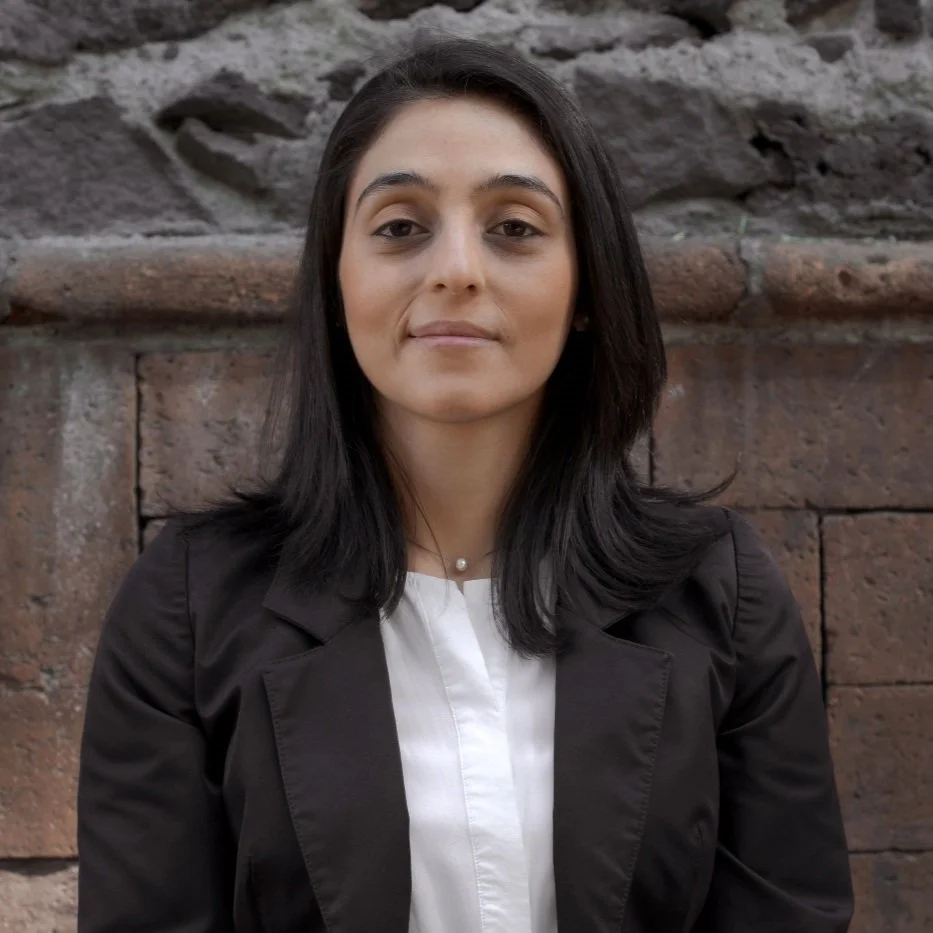
Catalina Lopez is the Director of the Aquatic Animal Alliance, a coalition of over 160 organizations in more than 70 countries working to reduce the suffering of aquatic animals worldwide. Catalina is a Veterinarian from Colombia, a Certified Aquatic Veterinarian through the World Aquatic Veterinary Medical Association, and currently resides in Mexico City.
She has worked in the farmed animal protection movement for over six years, previously leading the Corporate Engagement team at Mercy For Animals Latin America in their cage-free campaigns. In 2023, she was included in the VOX Future Perfect 50 list, which highlights scientists, thinkers, scholars, writers, and activists working on solutions to today’s and tomorrow’s biggest challenges.
Catalina is also an active speaker on aquatic animal welfare, presenting at international forums including the World Ocean’s Summit, the Asia for Animals, Animal Grantmakers Conference, AVA summit, the Reducetarian Summit, and many others.
Blog Posts

At the Blue Food Innovation Summit in London this year, aquatic animals were present throughout the conversation, though often in indirect ways. They appeared through questions about production, efficiency, disease, and risk: all issues that matter deeply to the future of aquaculture. But those questions do not always lead to a more direct one: What are these systems like for the animals living inside them?
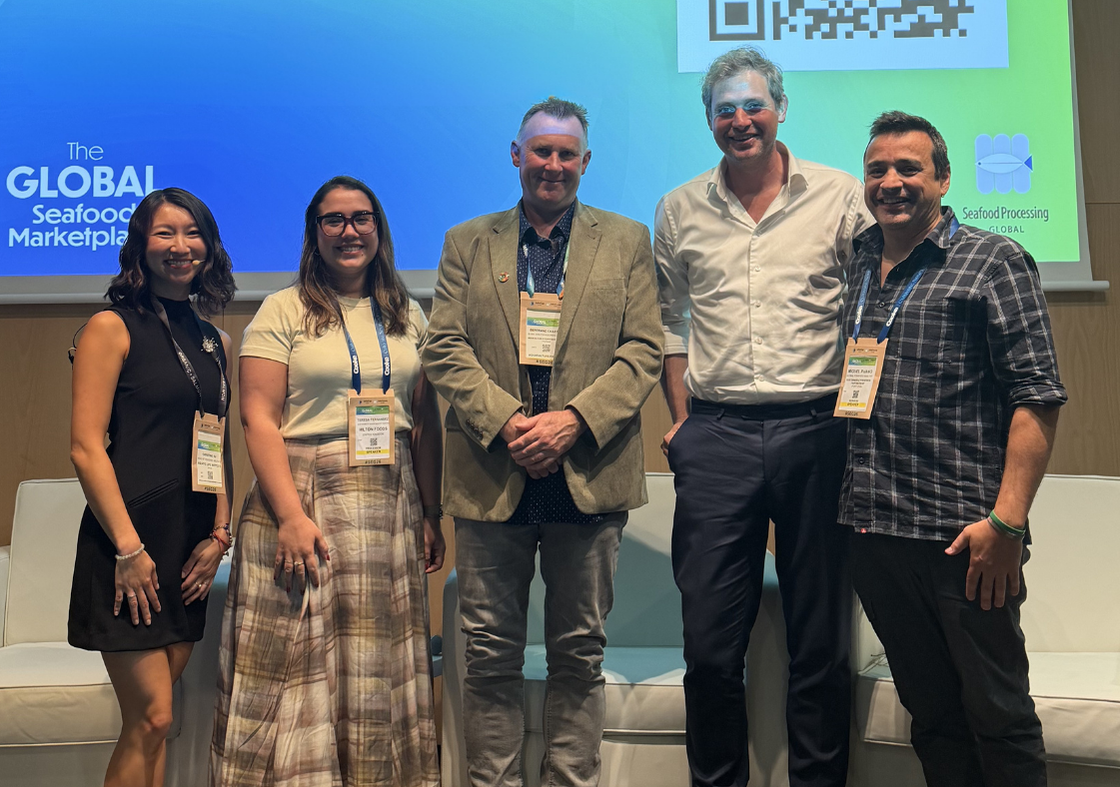
At this year’s Seafood Expo Global in Barcelona, one thing was clear: aquatic animal welfare is rapidly emerging as a core component of ESG in the seafood sector.

Through our conversations at SENA, it's clear that industry actors recognize the relevance of aquatic animal welfare. Questions are arising, and many companies are still looking for the right roadmap to adopt and implement meaningful change.
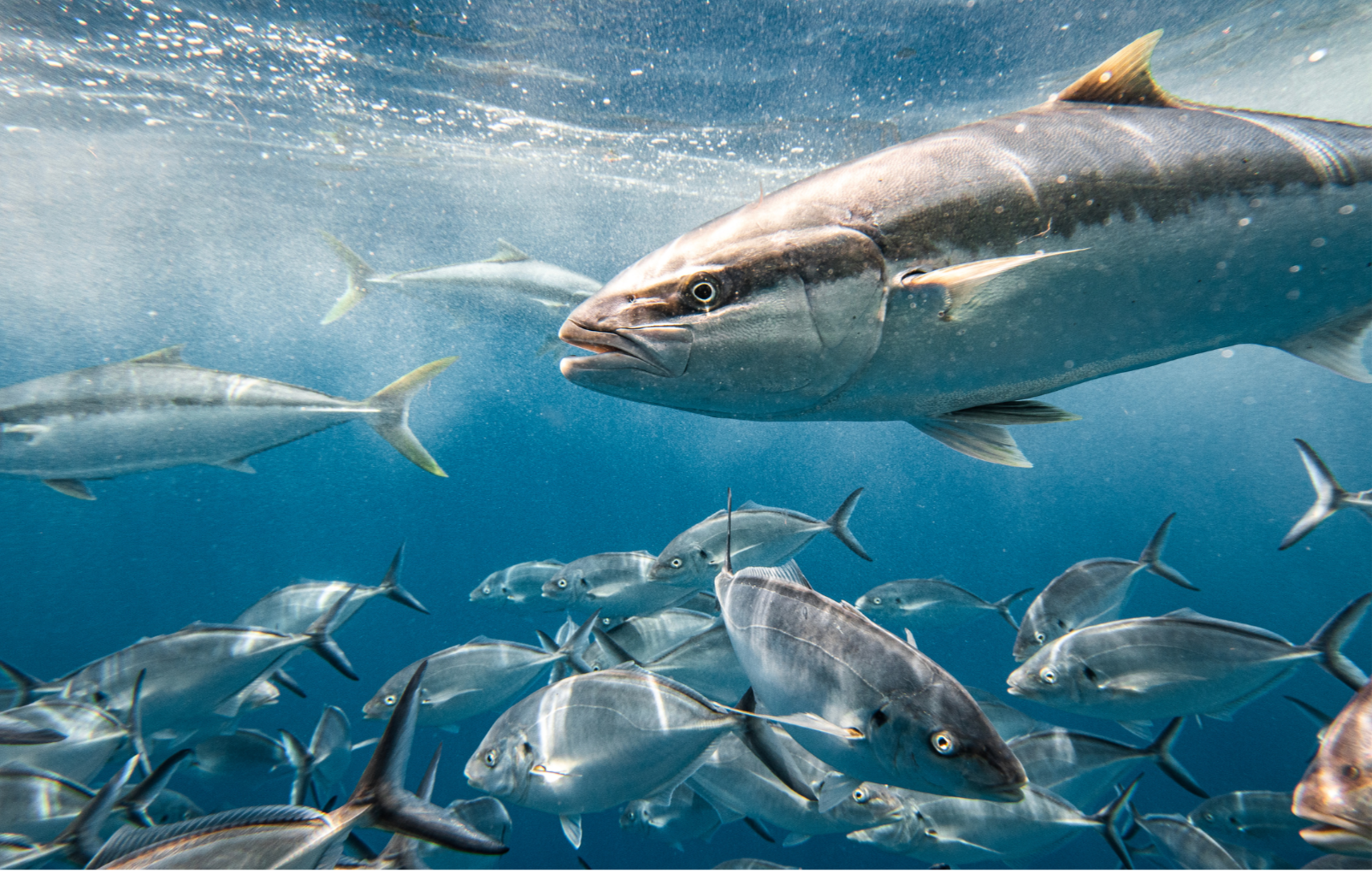
Over the past 3 years, we have witnessed unprecedented growth in corporate welfare commitments for aquatic animals. Worldwide, retailers, producers, and other market actors are increasingly recognizing that aquatic animal welfare is a central pillar to achieve a more resilient, high-quality, and ethical supply chain.
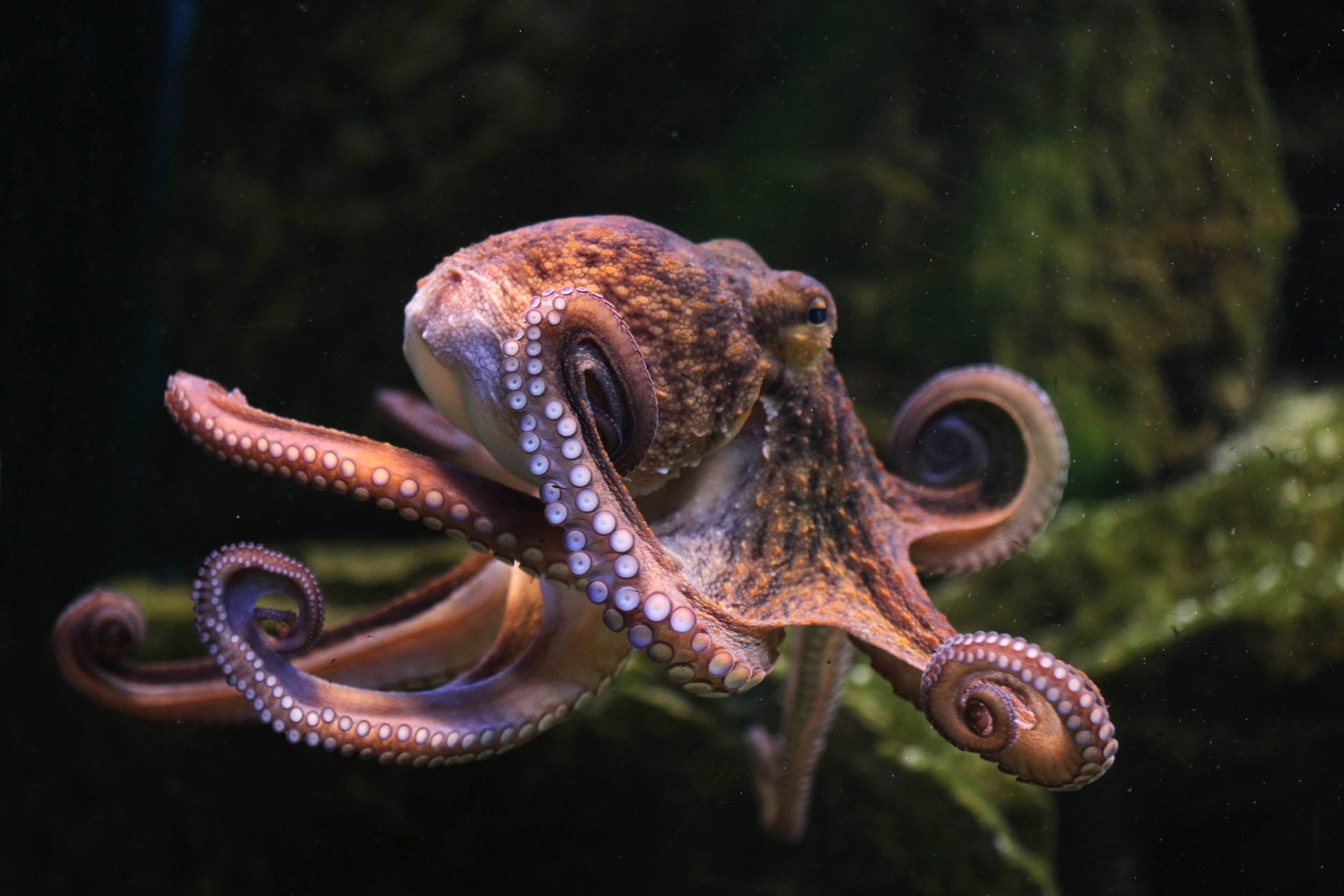
The Committee’s endorsement signals a growing consensus that industrial octopus farming is not compatible with responsible ocean stewardship or with current understandings of cephalopod cognition and welfare.
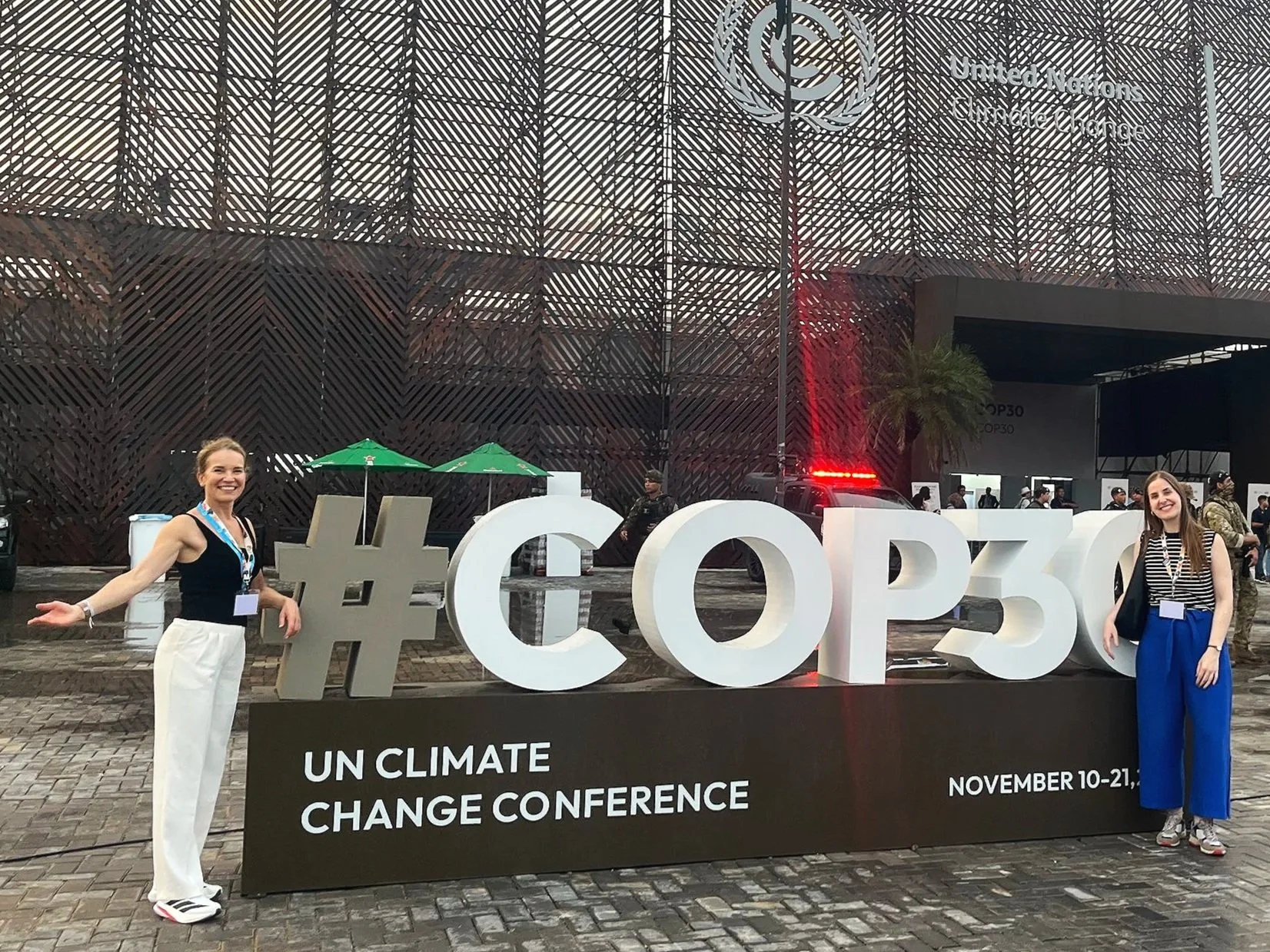
Aquatic Life Institute was on the ground in Belém to bring an urgent message: Aquatic animals must be part of global climate–food system solutions.
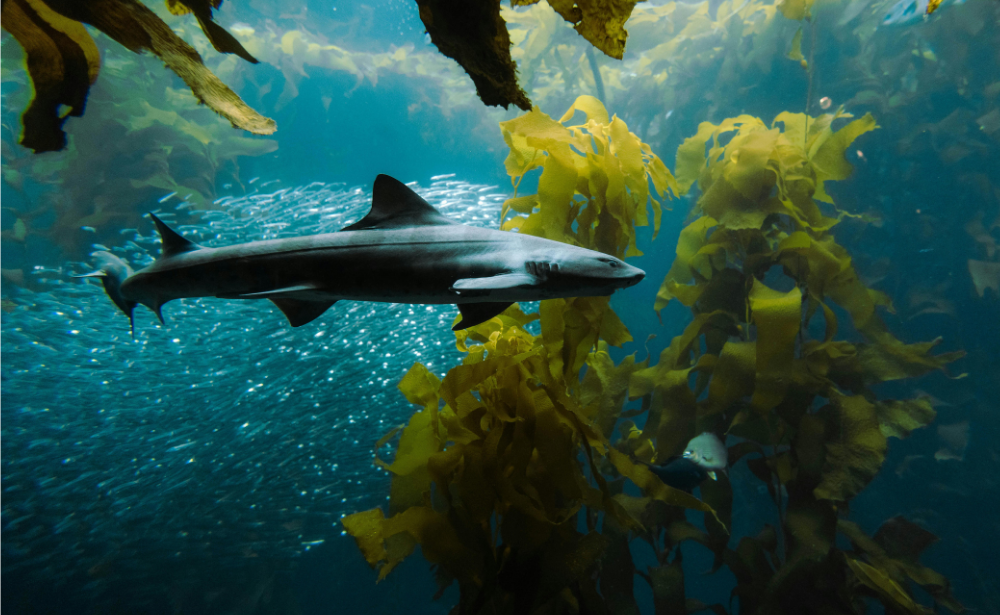
Two separate breakthroughs, one on biodiversity protection in the high seas, the other on harmful fishing subsidies, are finally moving from talk to law. Together, they can start to change life at sea for whales, sharks, tuna, squid, and the trillions of other aquatic animals we rarely see.
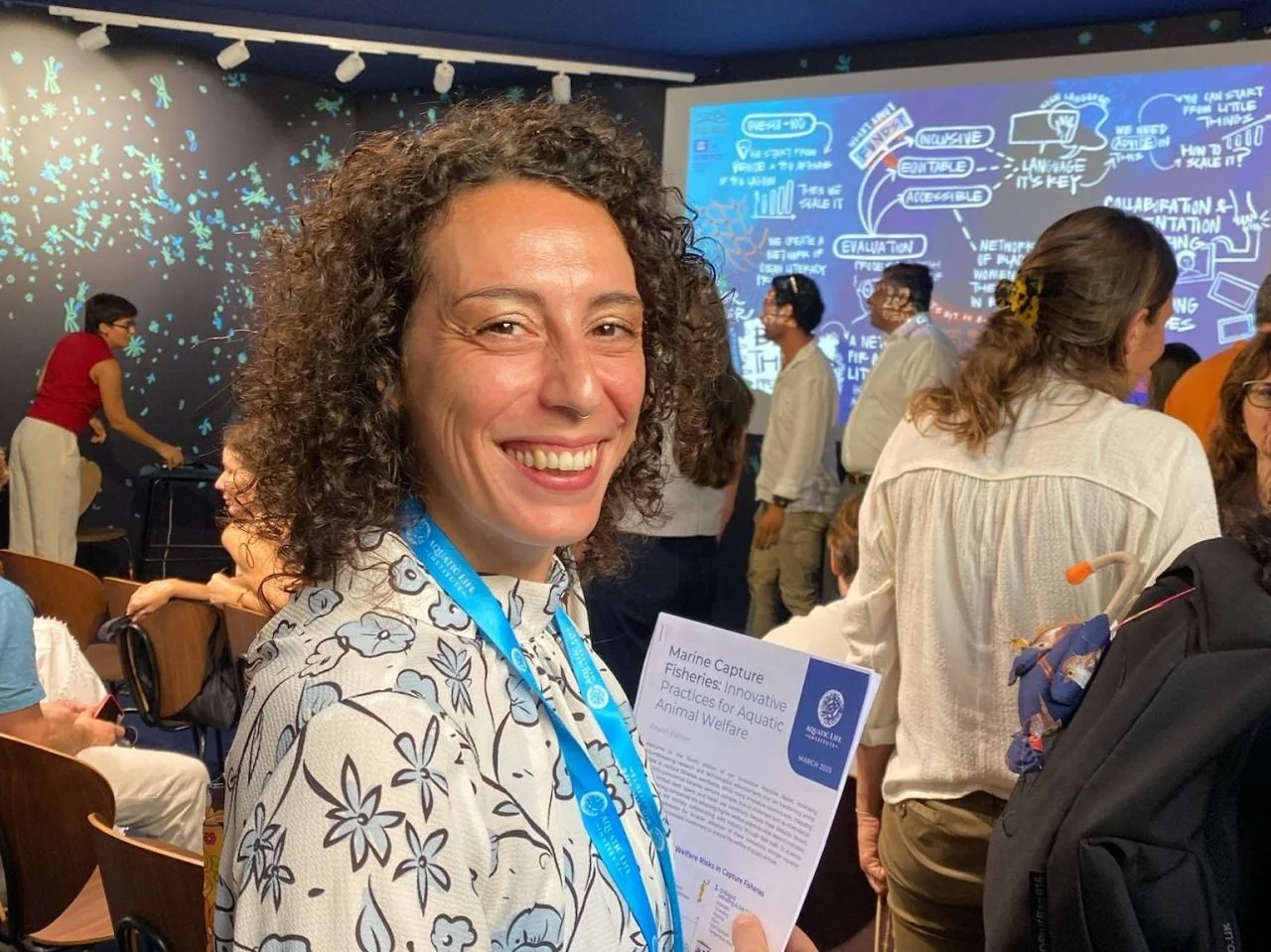
Where did aquatic animal welfare show up and where do we go from here? Aquatic Life Institute shares key takeaways from the 2025 UN Ocean Conference in Nice.
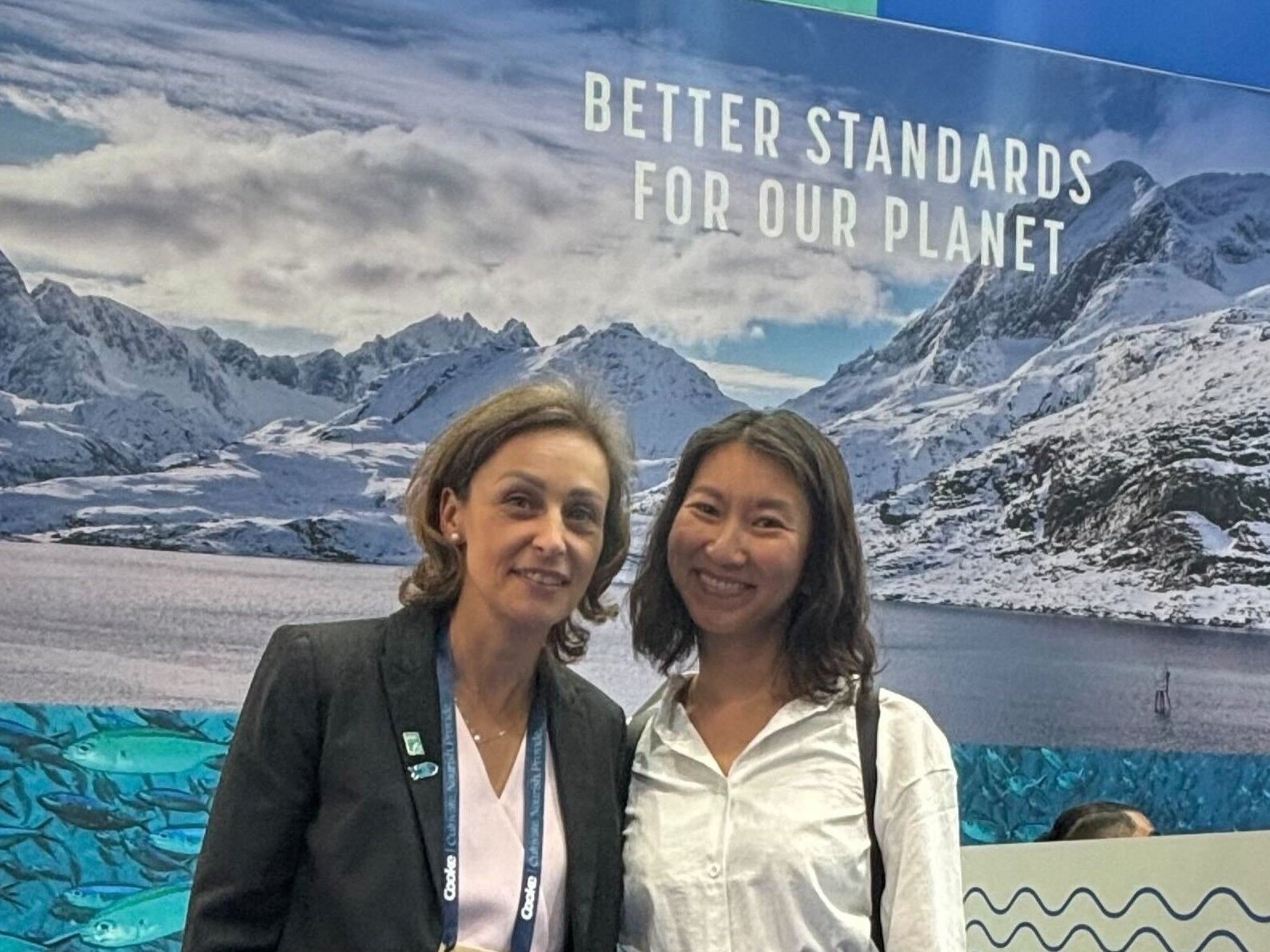
After five years of strategic engagement, coalition-building, and persistent advocacy, Aquatic Life Institute welcomes the launch of the Aquaculture Stewardship Council’s (ASC) newly unified Farm Standard.
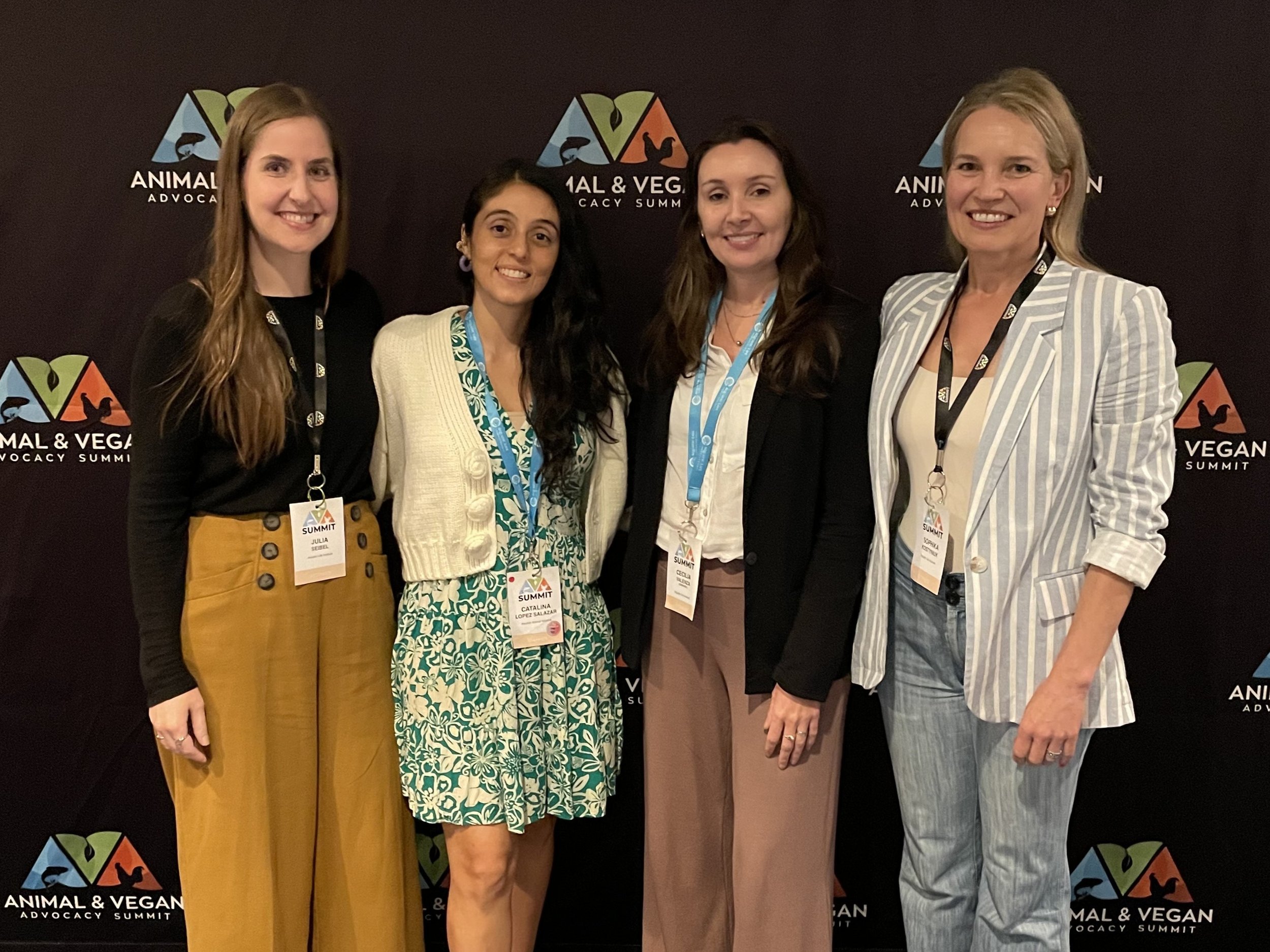
The AVA Summit in Los Angeles was more than just an annual gathering for the movement, it was a moment to reflect on how far aquatic animal advocacy has come, and where we need to go together.
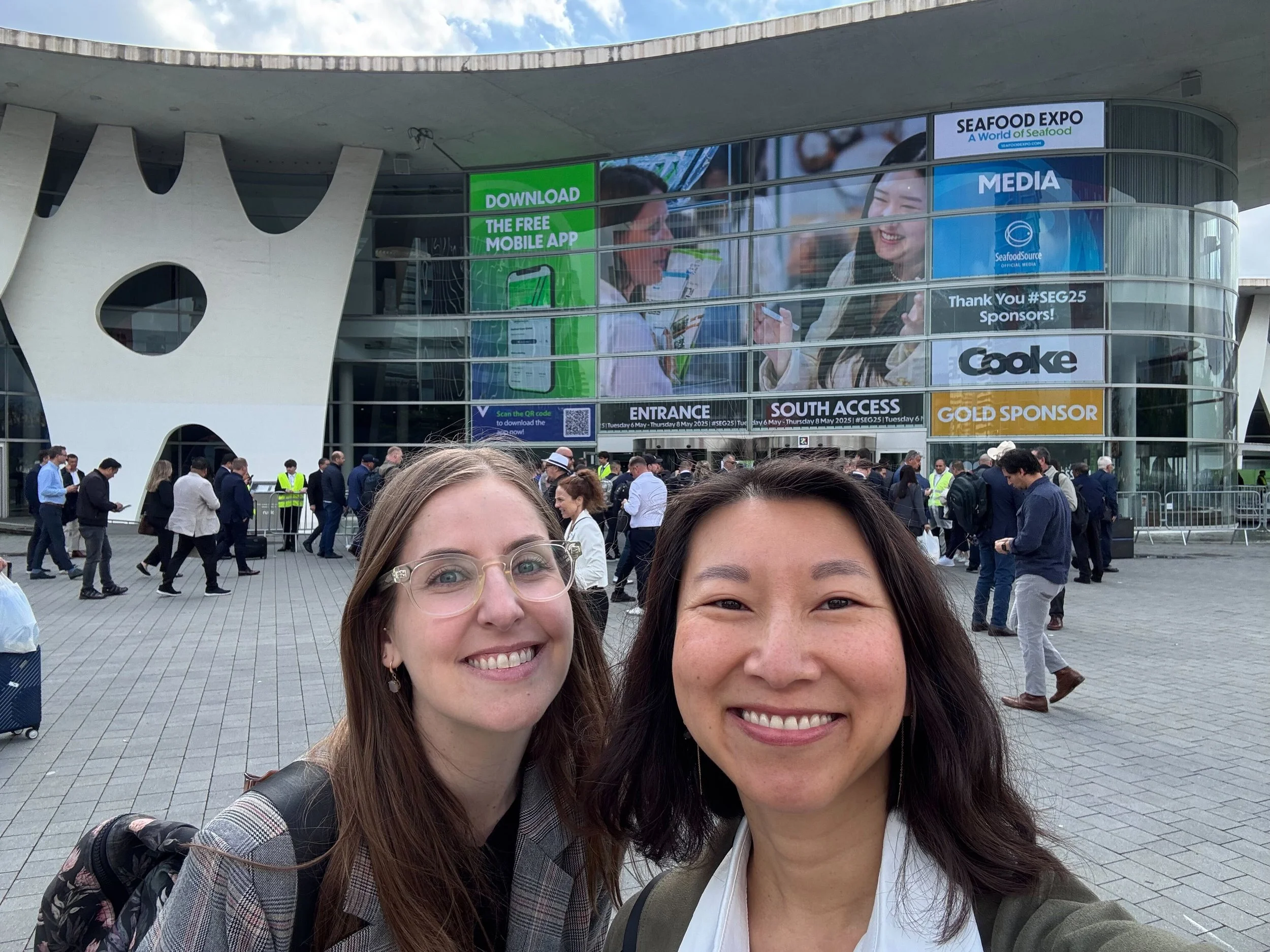
Last week, our team attended Seafood Expo Global 2025 (SEG25) in Barcelona, Spain and were inspired to see how much visibility aquatic animal welfare continues to gain across the seafood sector.

As we reach the midpoint of the 2030 Agenda for Sustainable Development, our oceans continue to face immense challenges. This year presents a crucial juncture for us to accelerate protections and drive meaningful change for the future of our oceans.
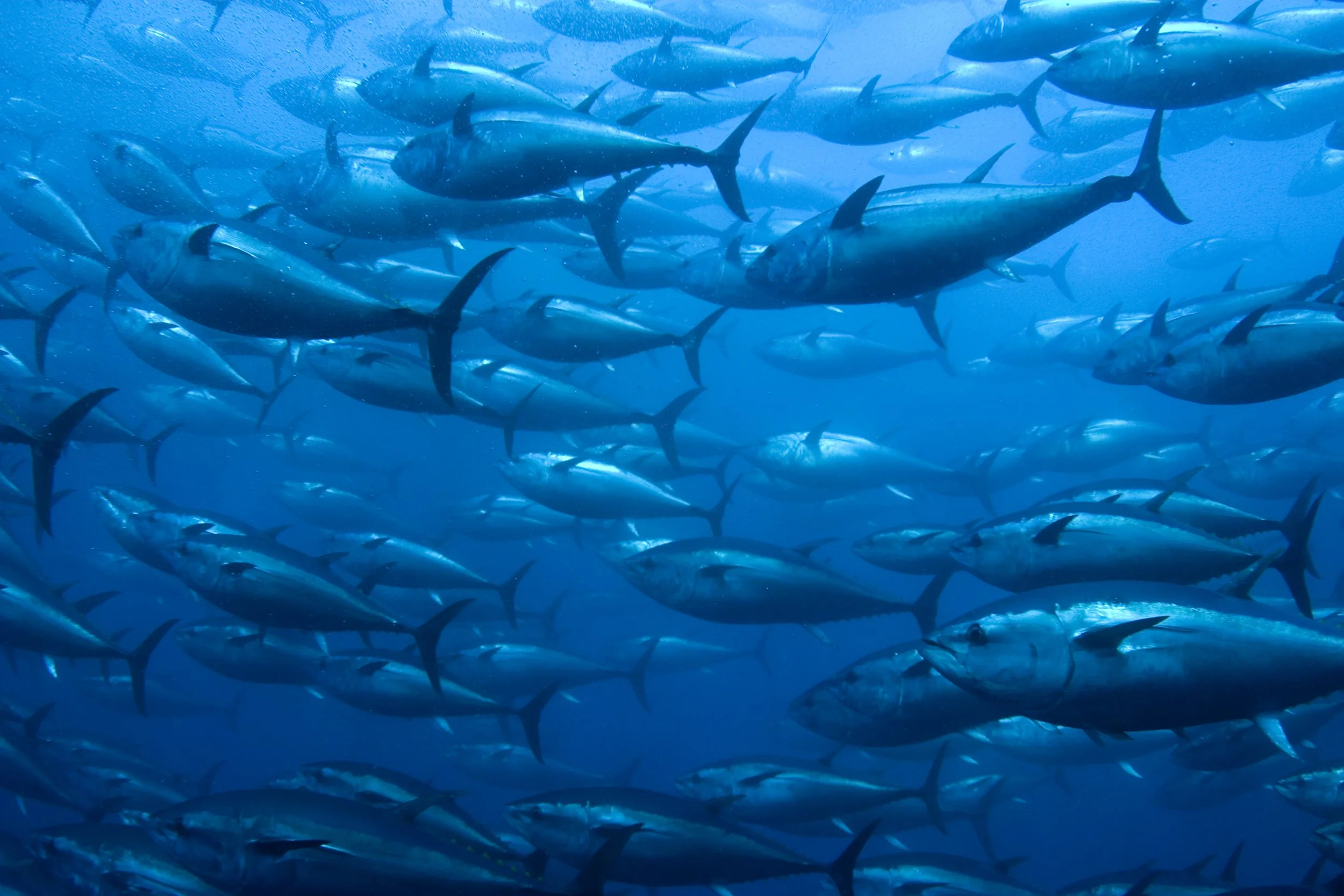
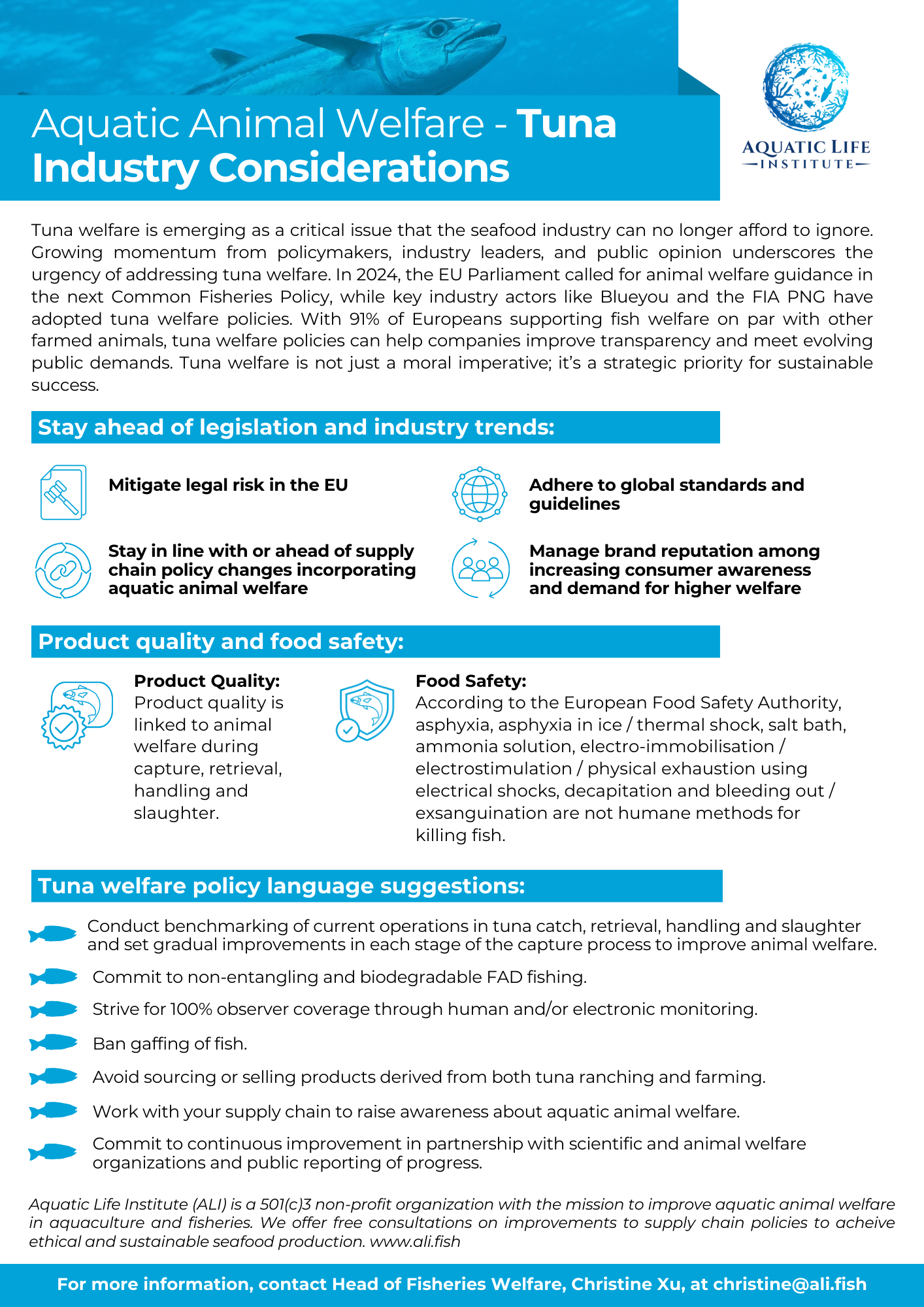
As demand for ethically sourced and sustainably harvested seafood continues to rise, so too does scrutiny of fishing practices—especially when it comes to animal welfare. Tuna, a staple in international markets, and a multibillion dollar industry, is now at the center of this growing discussion.
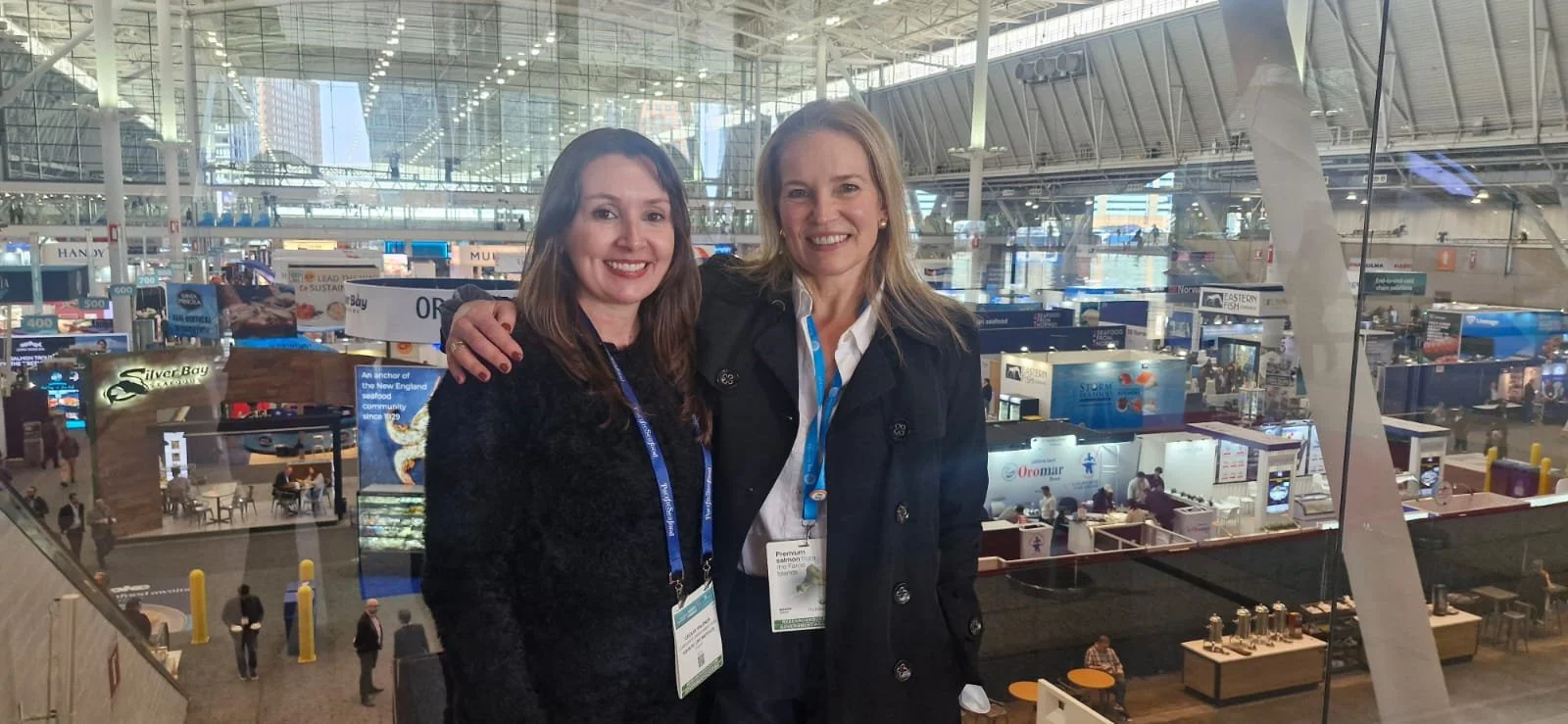
At Seafood Expo North America in March 2025, Aquatic Life Institute team members engaged in discussions and made connections with stakeholders aligned with our vision for a more humane and sustainable seafood industry.
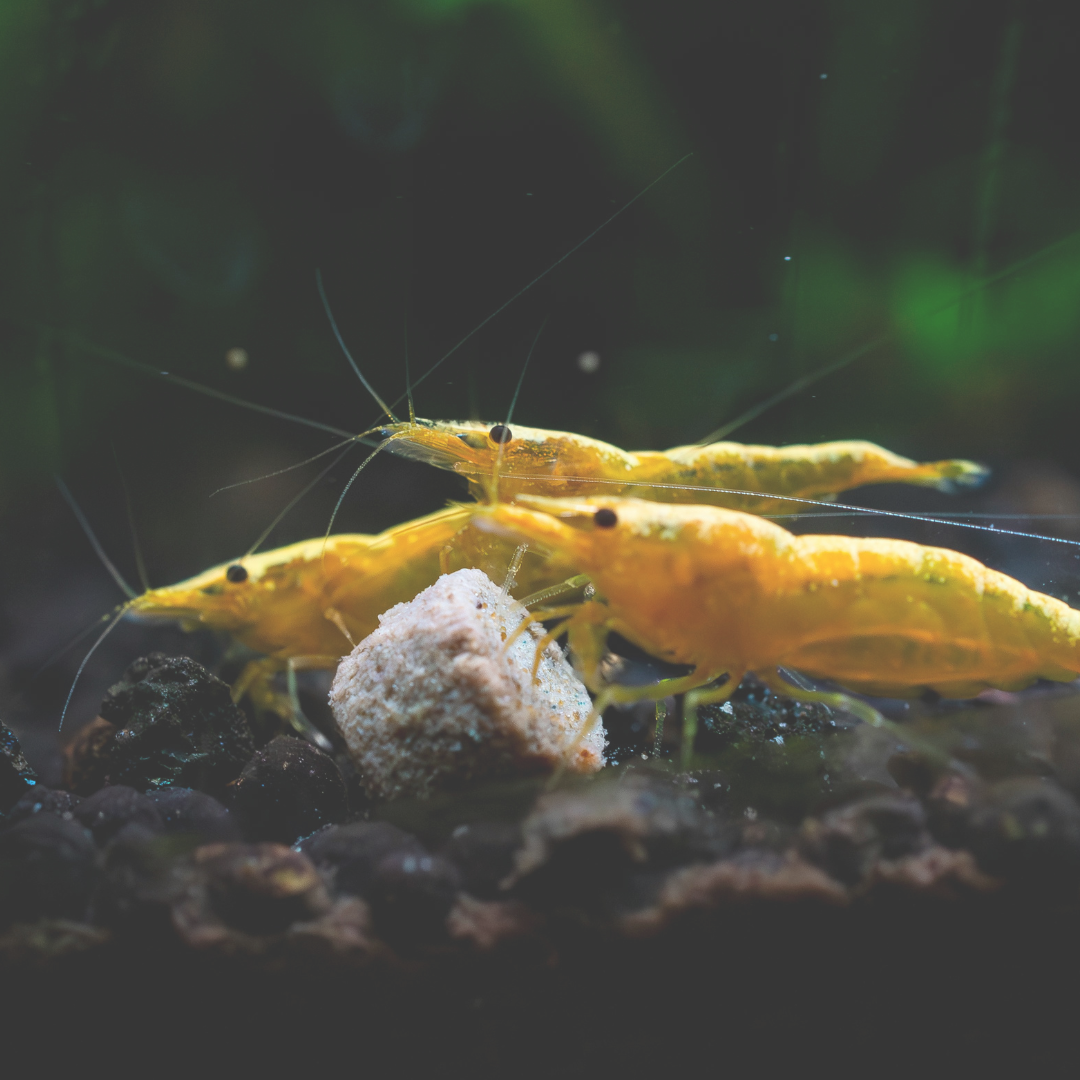
Co-op, one of the largest food retailers in the UK, has taken a progressive stance on aquatic animal welfare by achieving 100% ablation-free prawns in their supply chain and committing to implement electrical stunning for all farmed prawns by 2027.
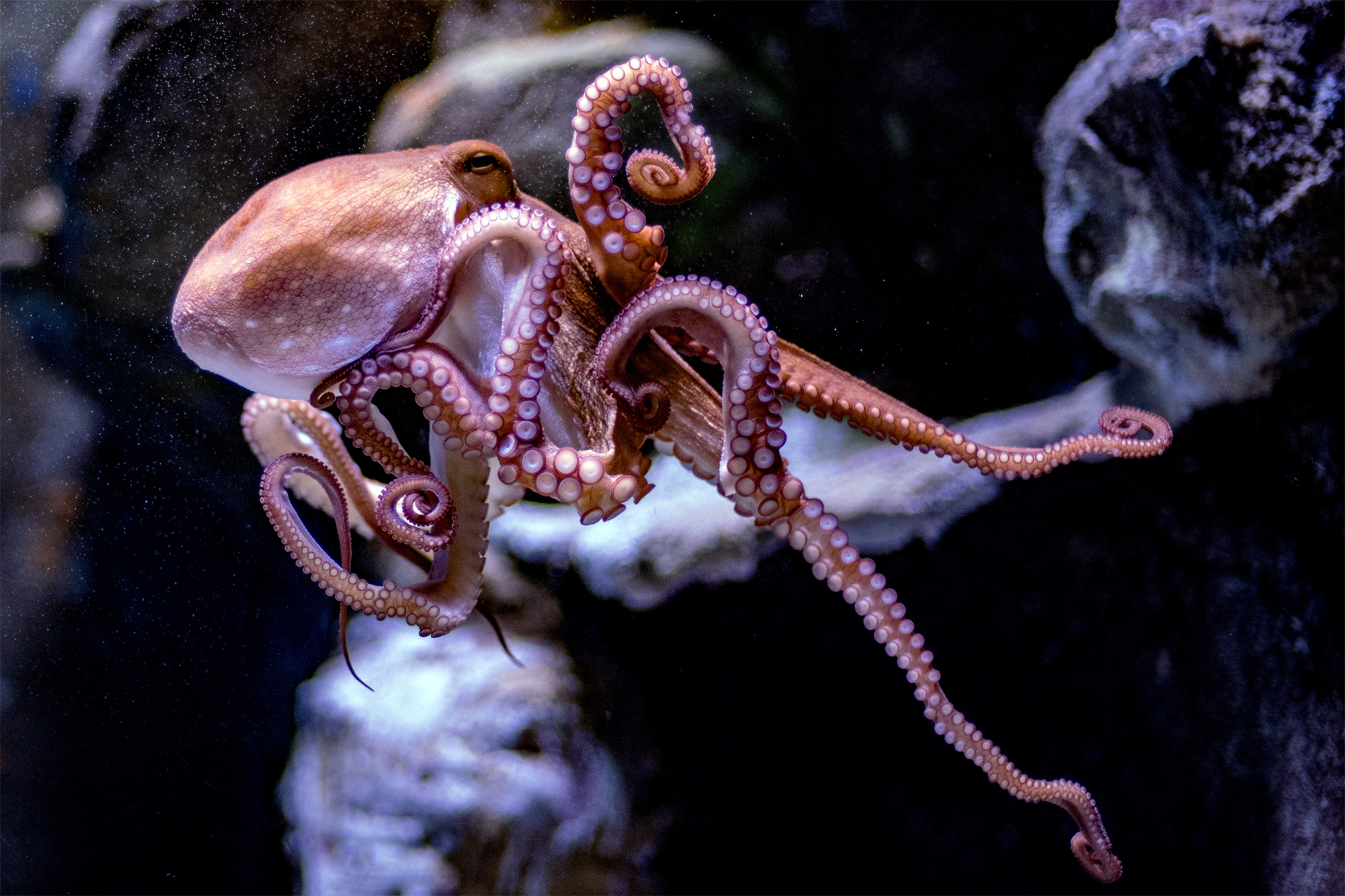
While global efforts against the practice have spurred action, one lingering question remains: What’s happening with Nueva Pescanova’s controversial octopus farm in Spain?
We are thrilled to announce that Aquatic Life Institute has been recognized as one of the most effective animal charities in the world according to Animal Charity Evaluators’ 2024 recommendations.
This year, the Royal Society for the Prevention of Cruelty to Animals (RSPCA) was ranked second in the Benchmark, with a score of 7.3 out of 10.
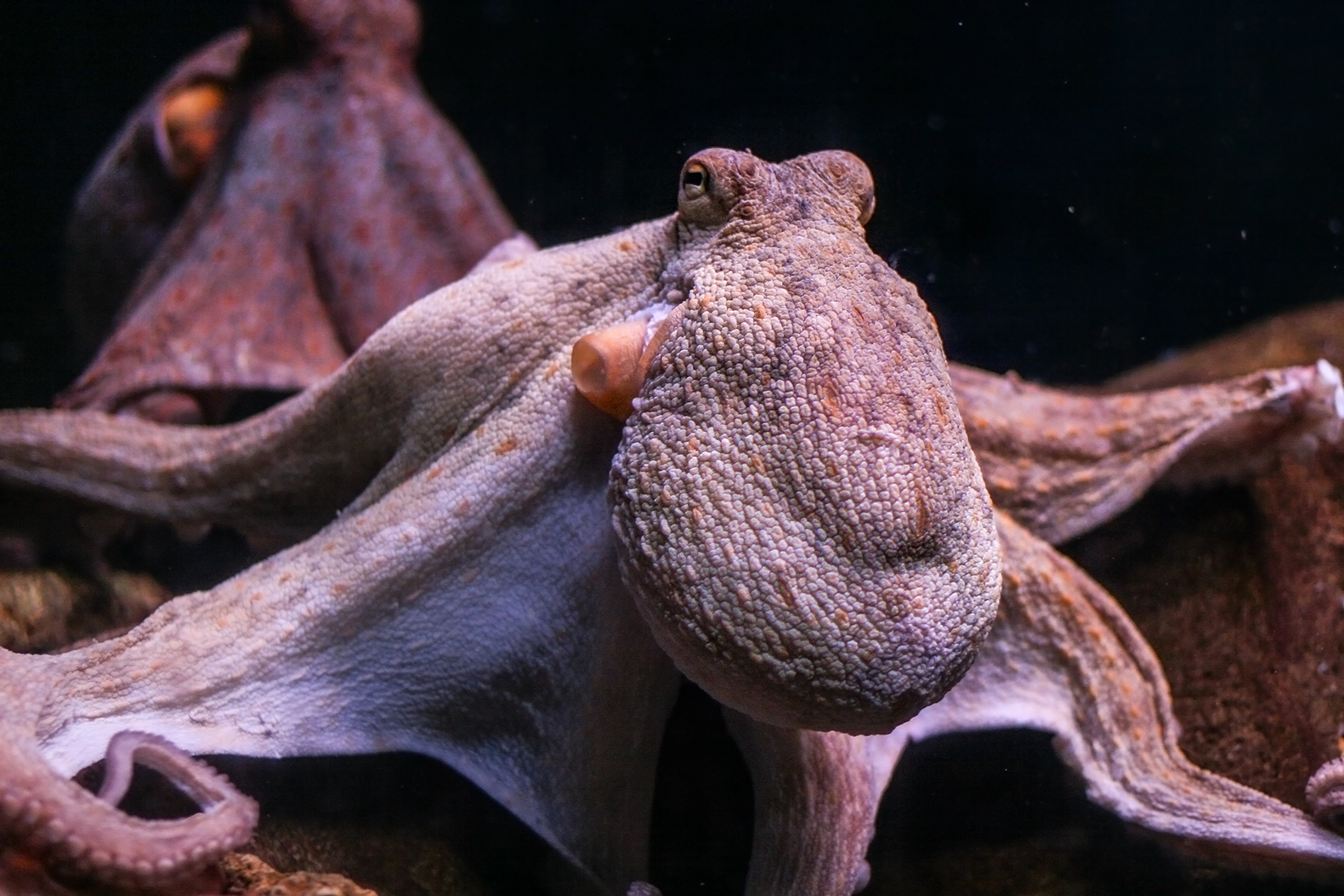
The media celebrates the new law as a testament to effective advocacy and collaboration among organizations who raised awareness about the ethical, environmental, and public health issues associated with farming octopuses.
We interviewed Maria Filipa Castanheira, Fish Health and Welfare Standards Manager at Aquaculture Stewardship Council (ASC), to learn about the process that led to ASC’s top ranking in this year’s Benchmark.
Aquatic Life Institute (ALI) is thrilled to announce the release of the 3rd edition of our Aquaculture Certification Schemes Benchmark: Aquatic Animal Welfare. This annual report evaluates the welfare standards of 8 global seafood certification schemes and, for the first time, an international ratings agency.
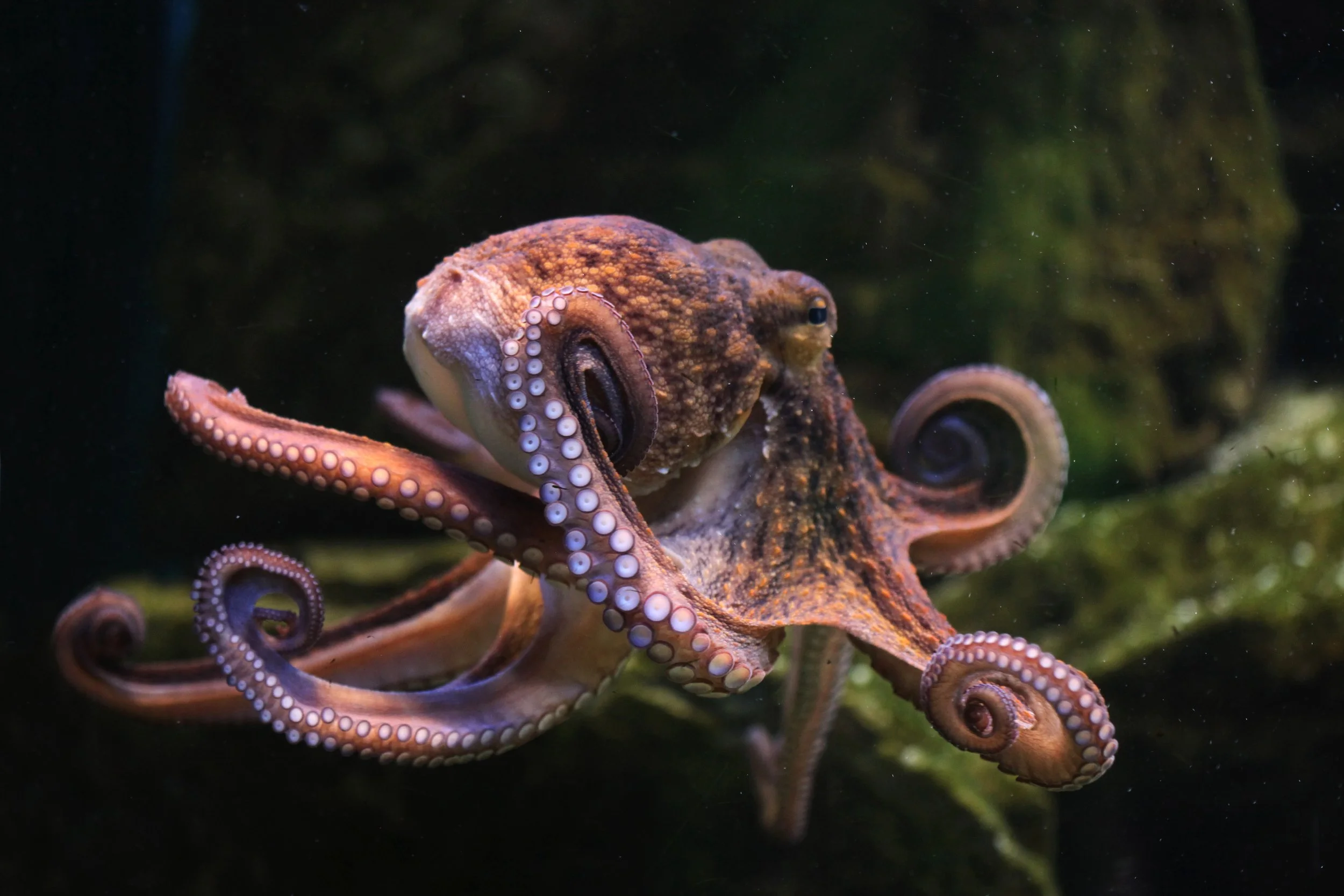
On September 27th, 2024, Governor Gavin Newsom signed AB 3162, the California Oppose Cruelty to Octopuses (OCTO) Act into law, prohibiting octopus farming and the sales of commercially farmed octopus products in California.
The 5th Annual Aquatic Life Conference was a resounding success, bringing together 860 registrants and 18 globally diverse speakers to discuss the future of the seafood industry through the lens of Aquatic Life Institute’s 4Rs framework: Reduce, Refine, Replace, and Reject.
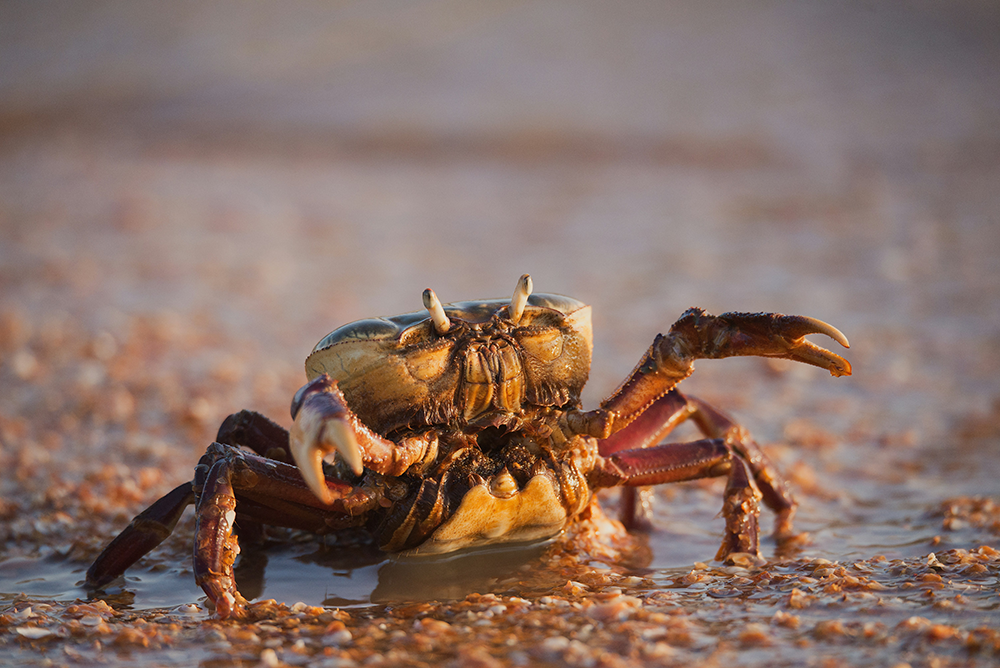
Aquatic Life Institute has supported major companies, Tesco and Hilton Foods, in producing comprehensive crustacean welfare policies, both released this month.
We are thrilled to share groundbreaking news in our Octopus Farming Ban Campaign. U.S. Senators Sheldon Whitehouse and Lisa Murkowski have introduced a federal bill to ban the commercial farming of octopuses, as well as the importation and sale of commercially farmed octopus.
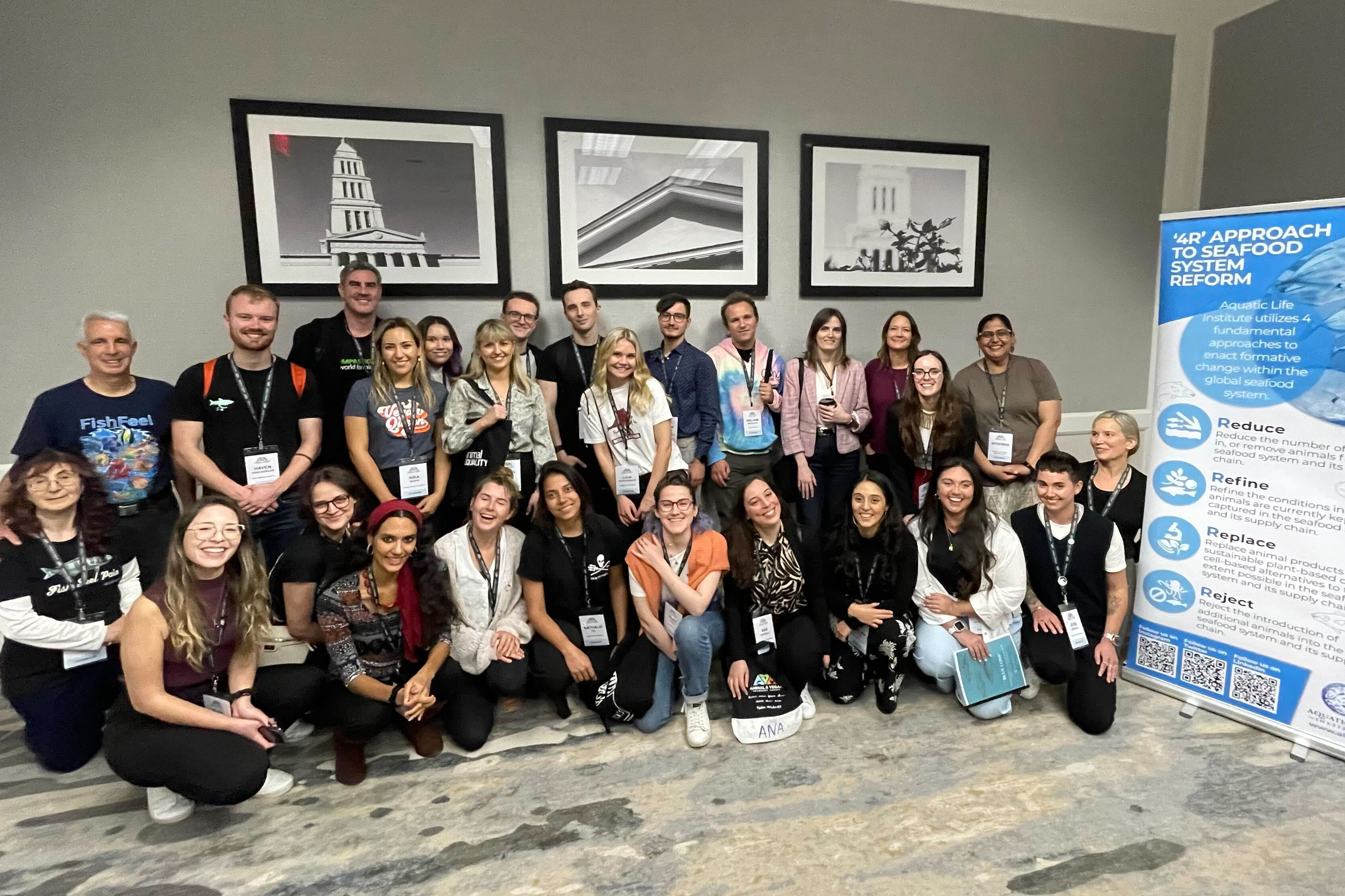
From May 16-19, Aquatic Life Institute (ALI) attended the Animal and Vegan Advocacy (AVA) Summit in Washington, DC, where more than 800 animal advocates convened, and over 70 sessions took place to strengthen our advocacy efforts for animals in the global food system.
Resource Library
Aquatic Life Institute (ALI) has launched the fifth edition of the Aquaculture Certification Schemes Benchmark. In 2026, the report evaluated 12 certification schemes and 2 rating agencies, representing the broadest scope of the Benchmark to date, expanding the geographic and regulatory diversity represented in the assessment while strengthening its global relevance.
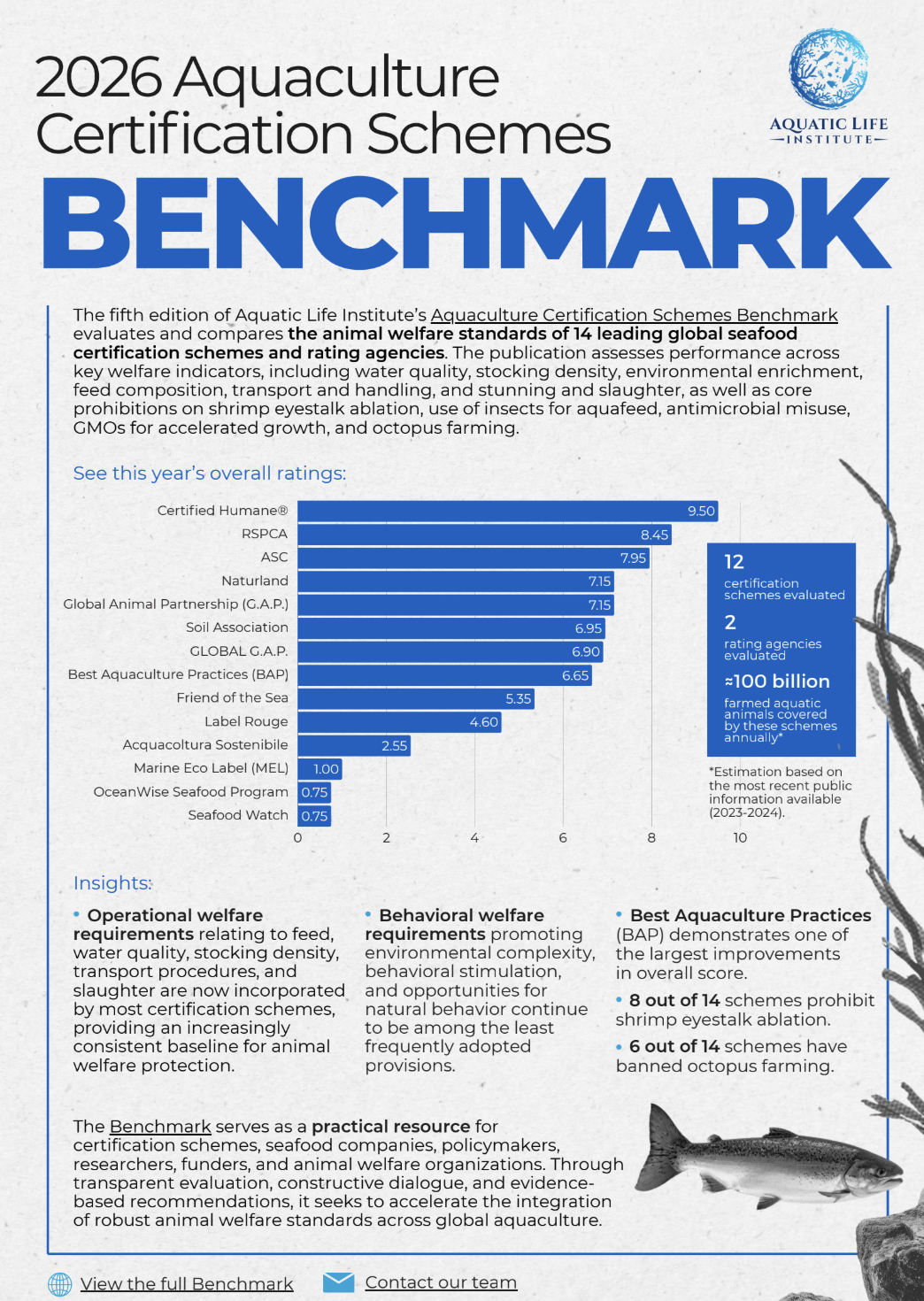
A snapshot of the 2026 Aquaculture Certification Schemes Benchmark results and key insights.
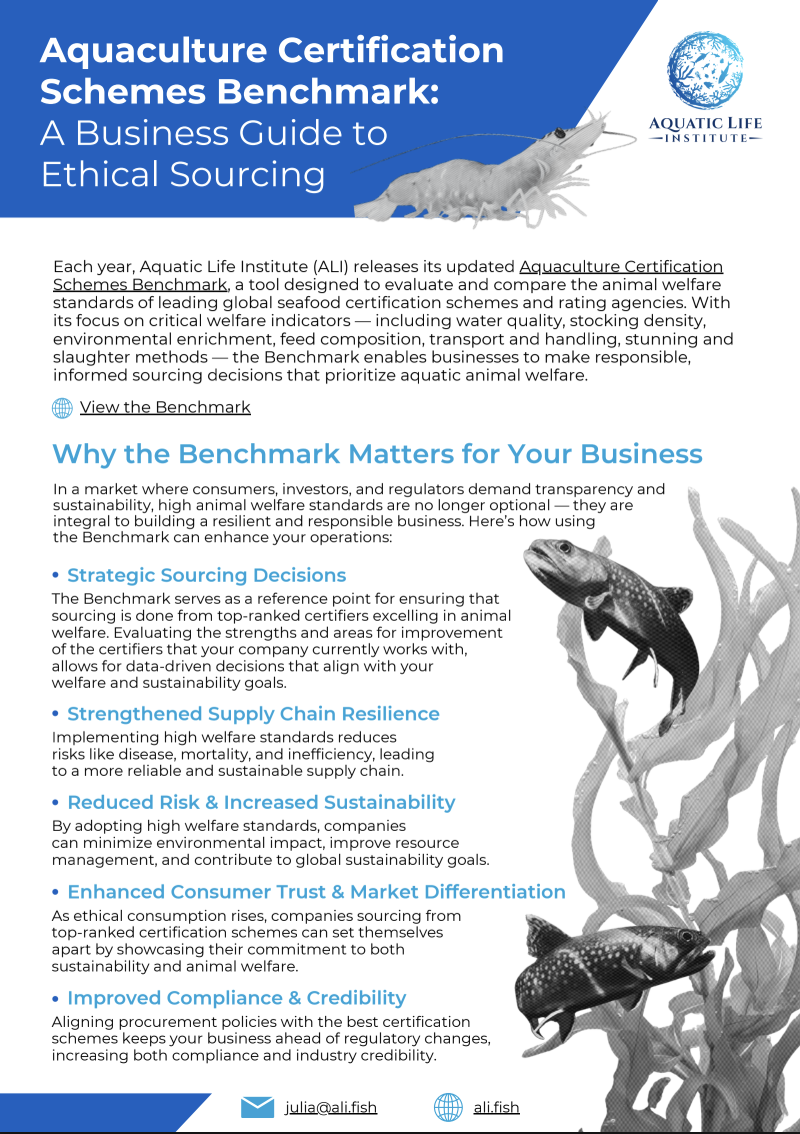
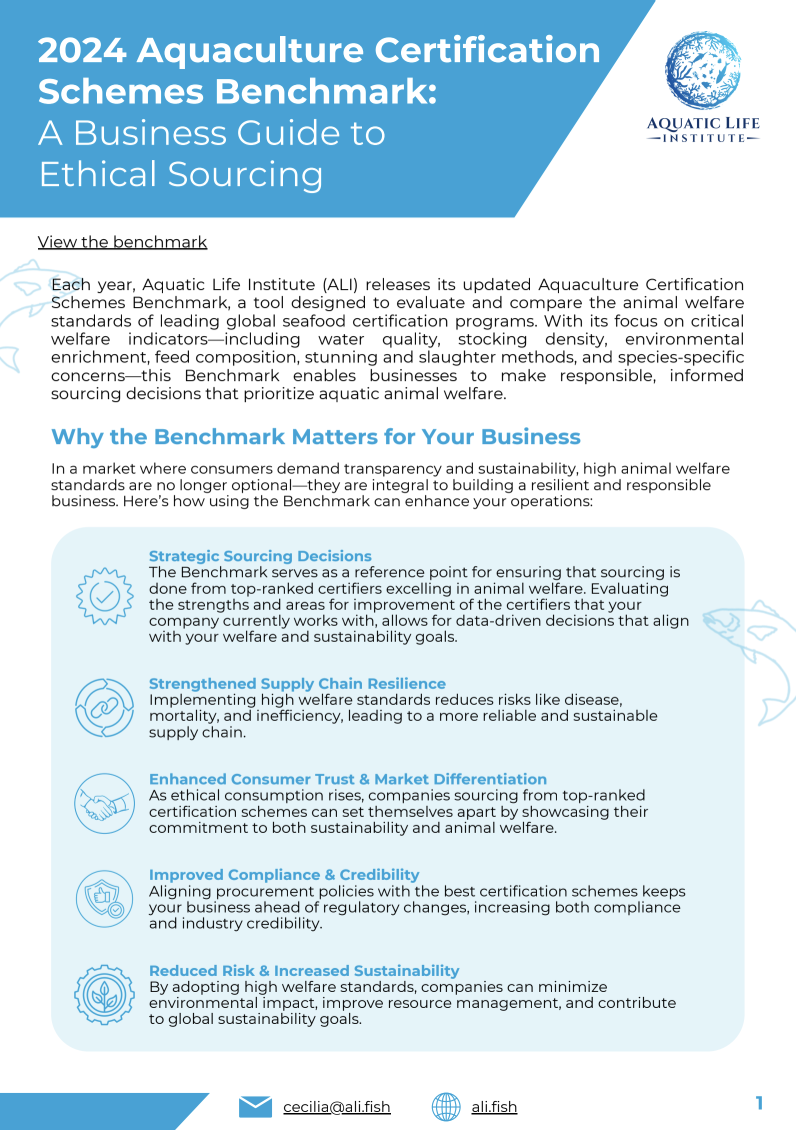
Learn how ALI’s Aquaculture Certification Schemes Benchmark can help businesses to make responsible, informed sourcing decisions that prioritize aquatic animal welfare
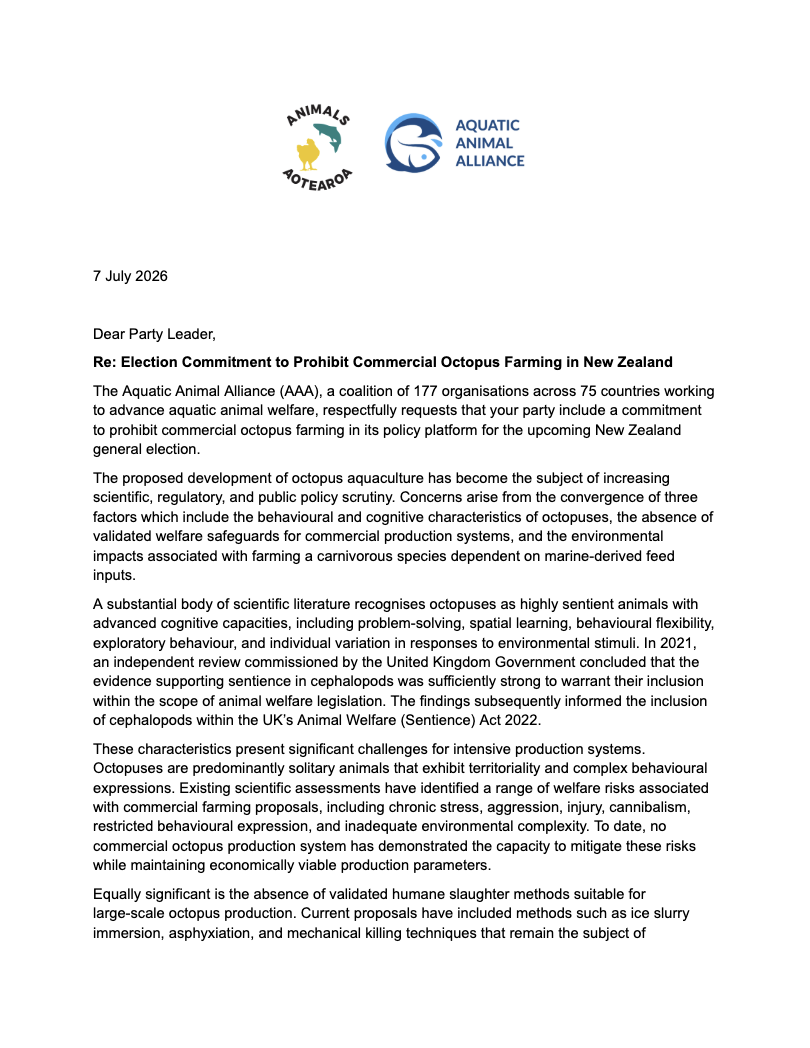
Advocacy charity Animals Aotearoa wrote to every New Zealand political party, requesting that they include a commitment to prohibit commercial octopus farming in their policy platforms for the upcoming election. The letter, cosigned by the Aquatic Animal Alliance coalition of 177 organizations across 75 countries - including NZ-based SPCA and SAFE - points to scientific evidence that octopuses are highly sentient animals with advanced cognitive abilities.
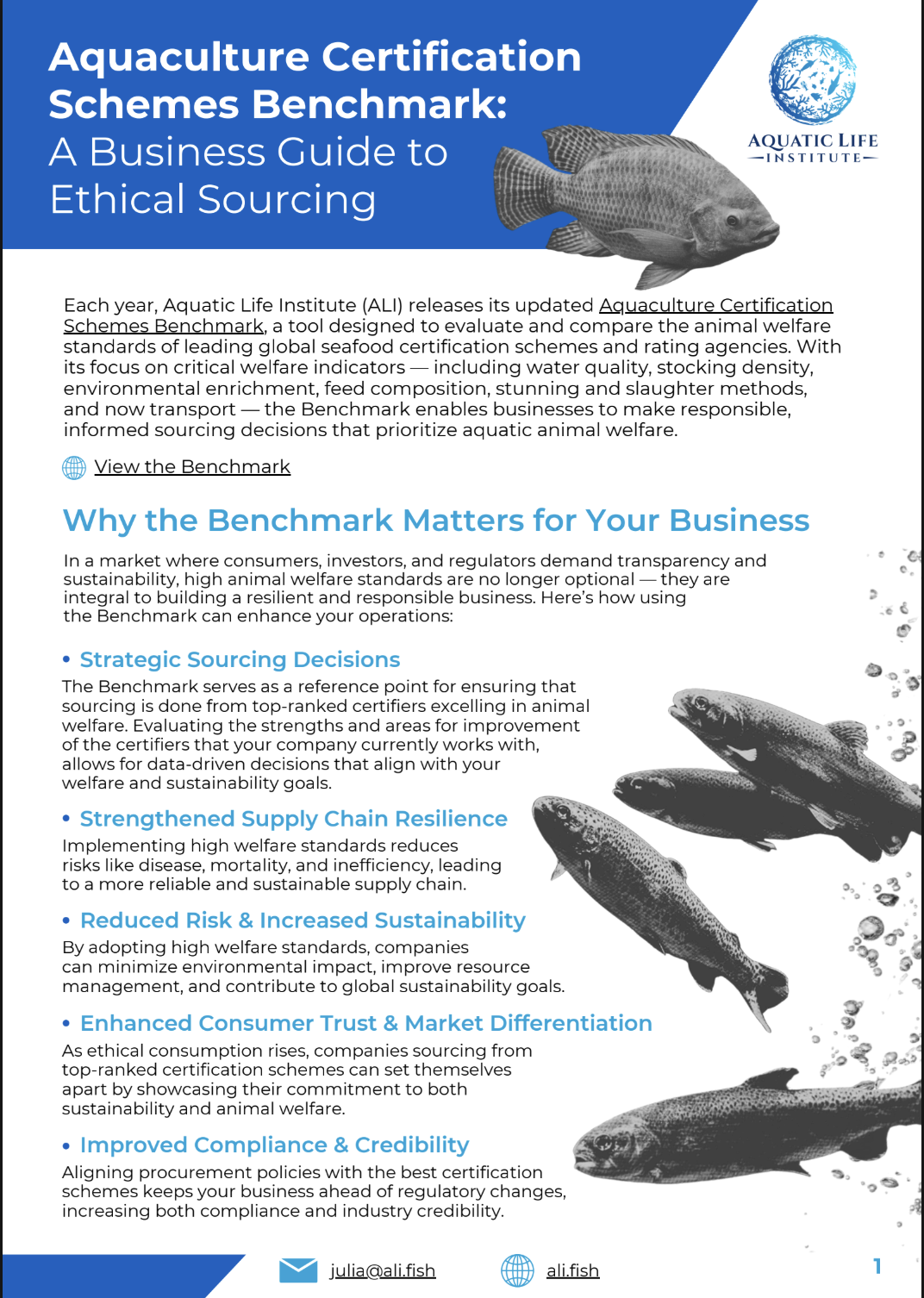
Learn how ALI’s Aquaculture Certification Schemes Benchmark can help businesses to make responsible, informed sourcing decisions that prioritize aquatic animal welfare
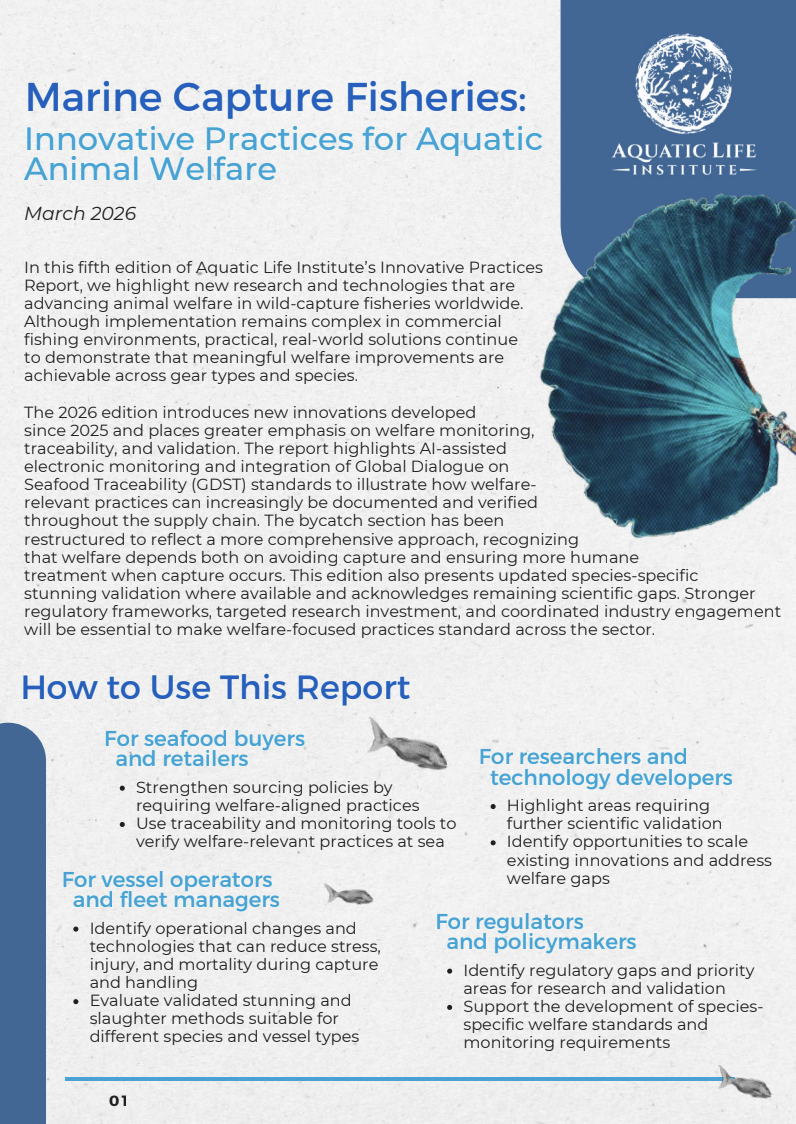
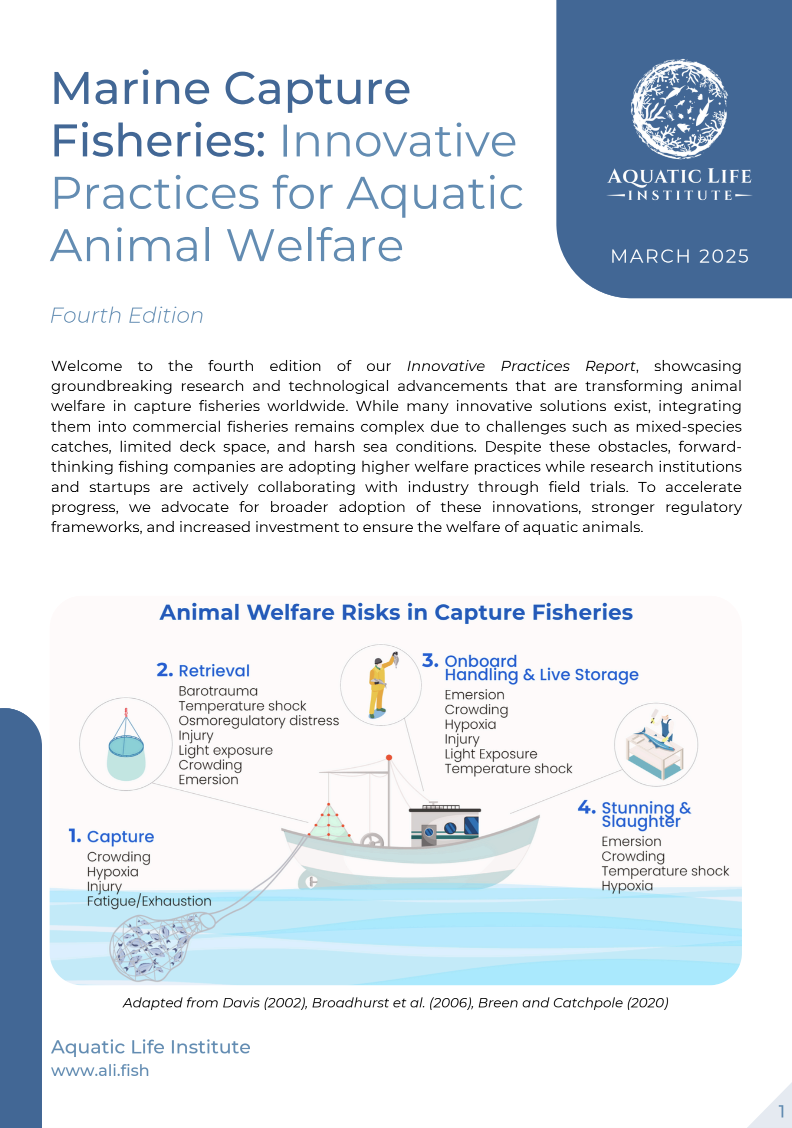
Discover new research and technologies shaping a more ethical future in the fifth edition of ALI’s “Marine Capture Fisheries: Innovative Practices for Aquatic Animal Welfare” Report
Our 2025 Annual Report examines how ALI brought the invisible majority into focus throughout our defined Spheres of Influence this year. We invite you to take a deep dive in the featured case studies, which illustrate how ALI exerts scientific expertise, global coordination power, institutional credibility, and cross-sector relevance to achieve impact.
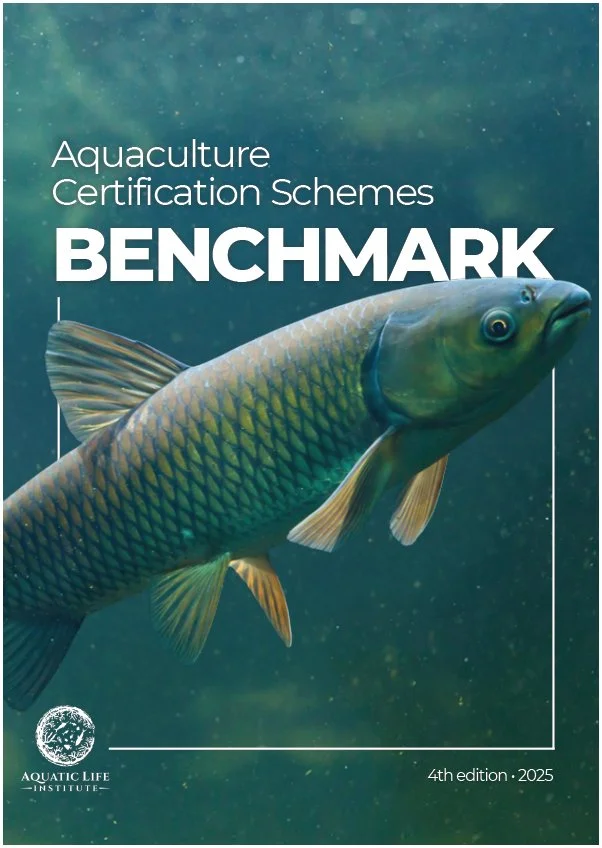
Aquatic Life Institute (ALI) has launched the fourth edition of the Aquaculture Certification Schemes Benchmark. In 2025, the report evaluated 9 certification schemes and 2 rating agencies, providing a comprehensive overview of how welfare commitments are currently embedded across leading global standards.
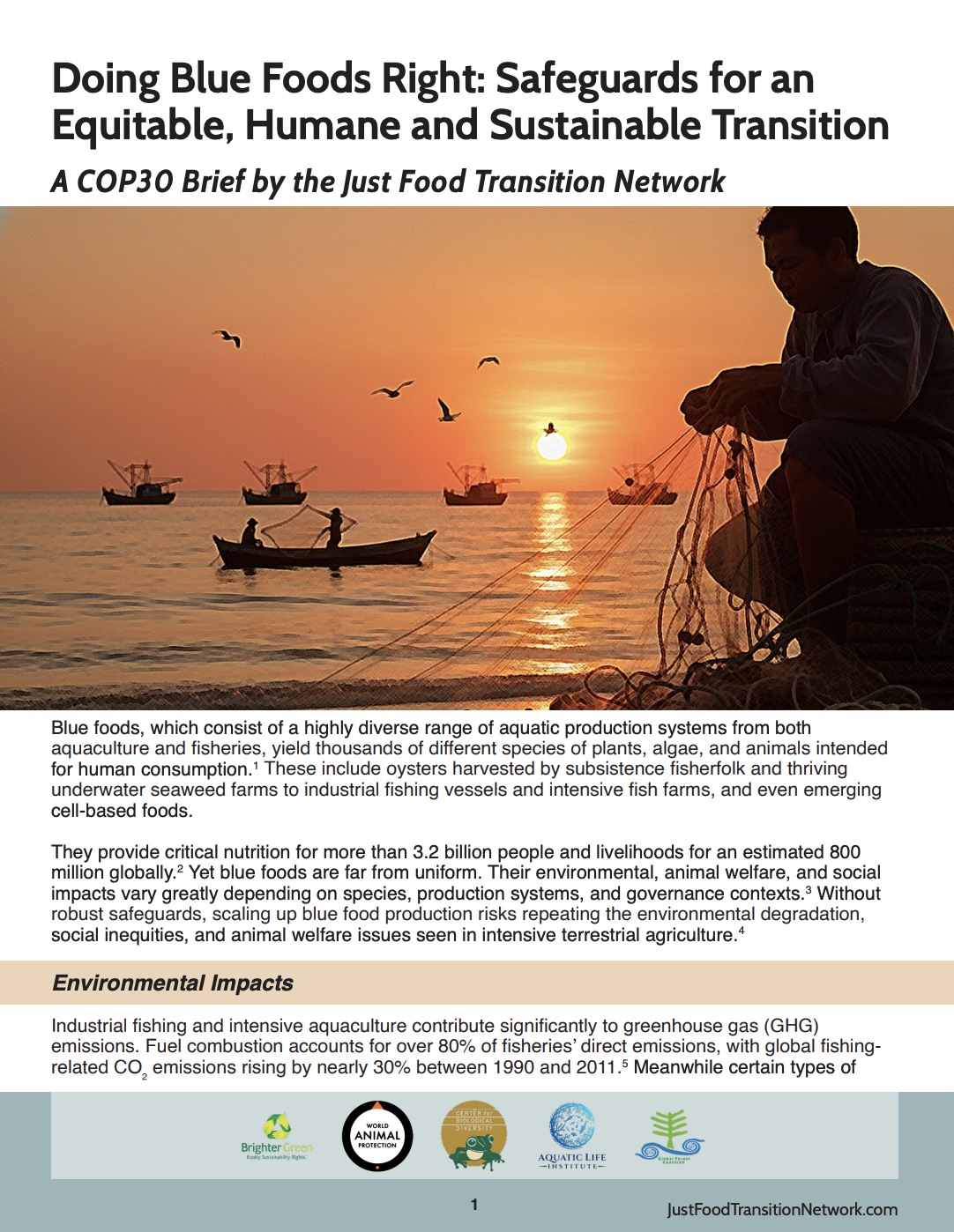
Between October 8–15, 2025, member organizations of the Aquatic Animal Alliance in Mexico carried out a coordinated campaign under the slogan #NoALasGranjasDePulpos (No to octopus farms) to raise awareness about octopus sentience and the risks associated with octopus farming
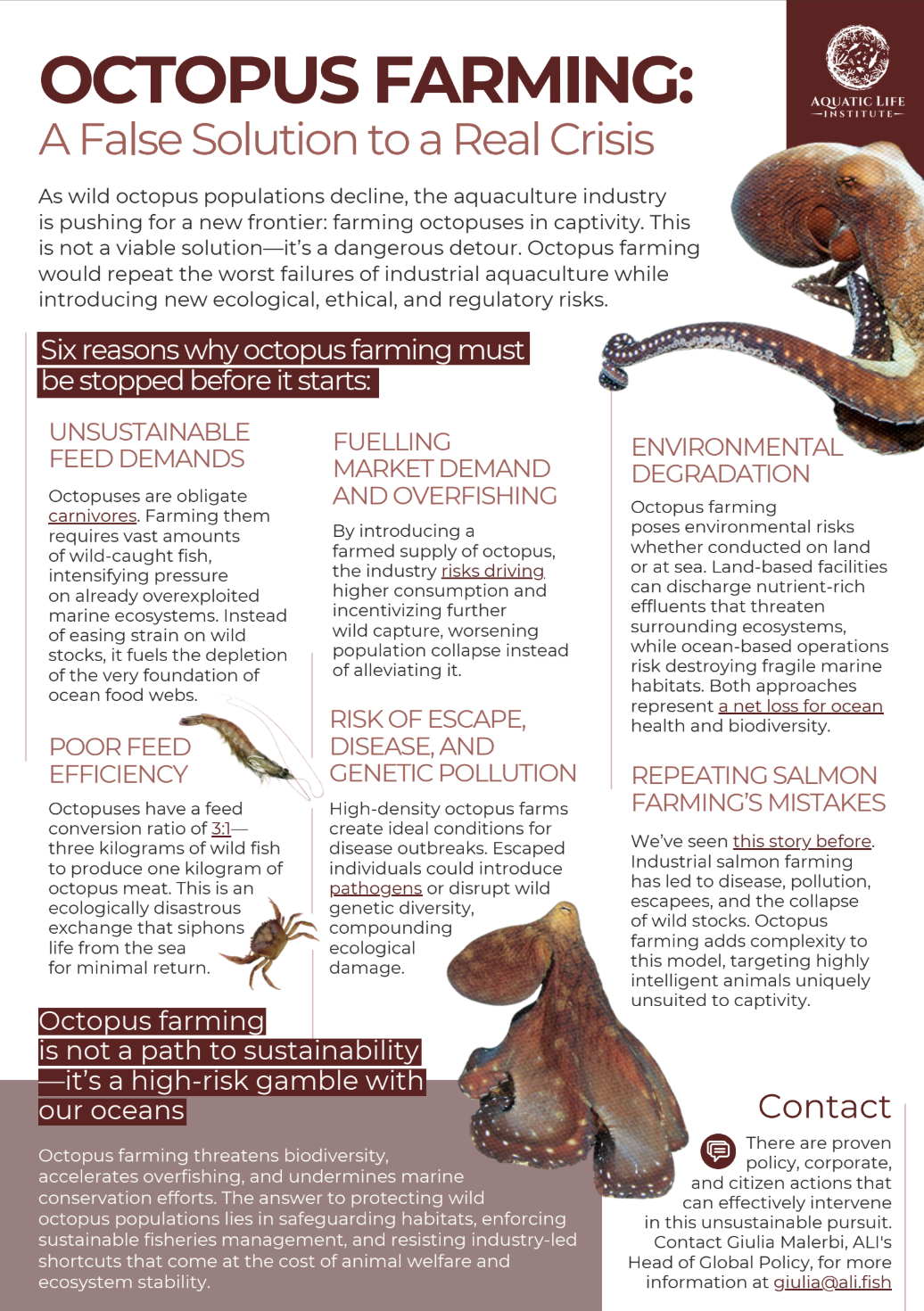
As wild octopus populations decline, the aquaculture industry is pushing for a new frontier: farming octopuses in captivity. This is not a viable solution—it’s a dangerous detour.
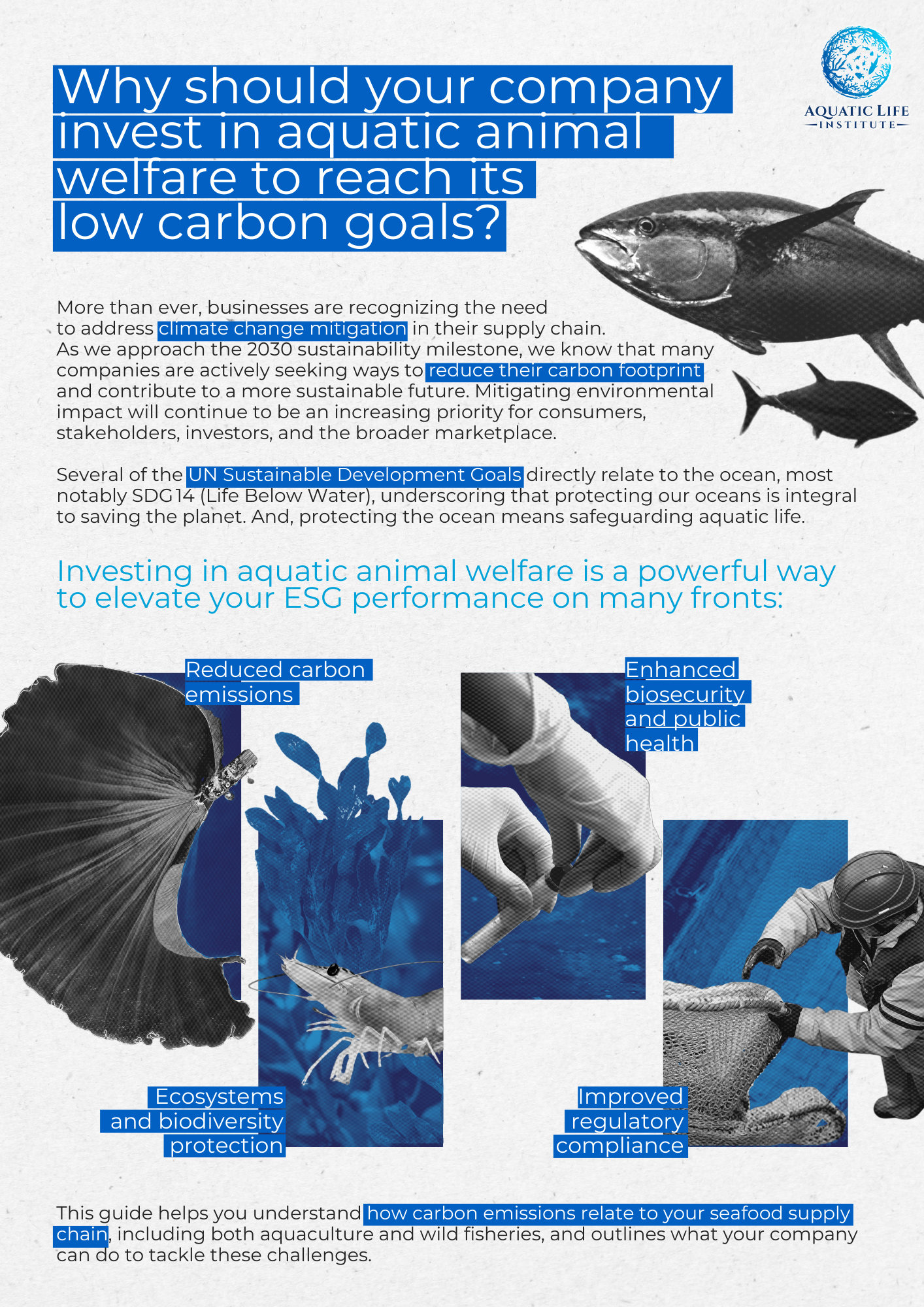
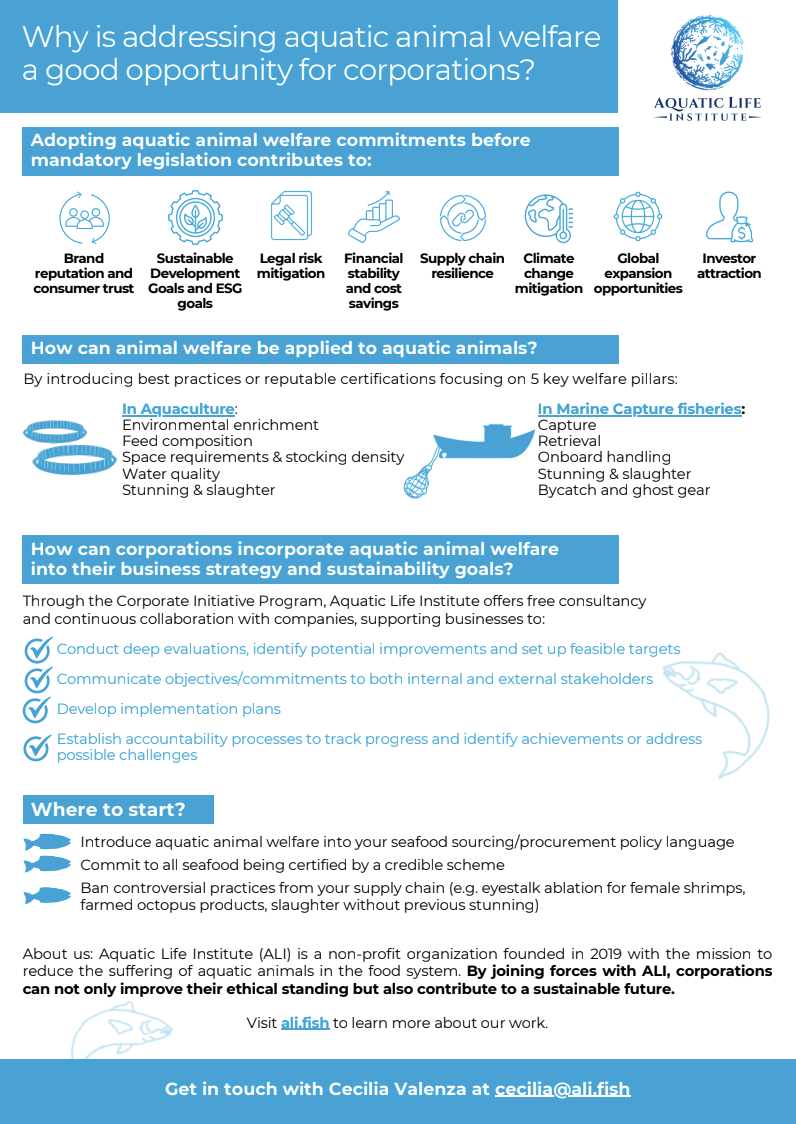
Aquatic Life Institute has put together a helpful guide to illustrate how carbon emissions relate to seafood supply chains, including both aquaculture and wild fisheries, and to outline what your company can do to tackle these challenges.
Our 2025 Half-Year Report explores ALI’s newly defined sphere of influence and our process for impact measurement through the stages of Recognition, Protection, and Prioritization - all illustrated through several detailed case studies.
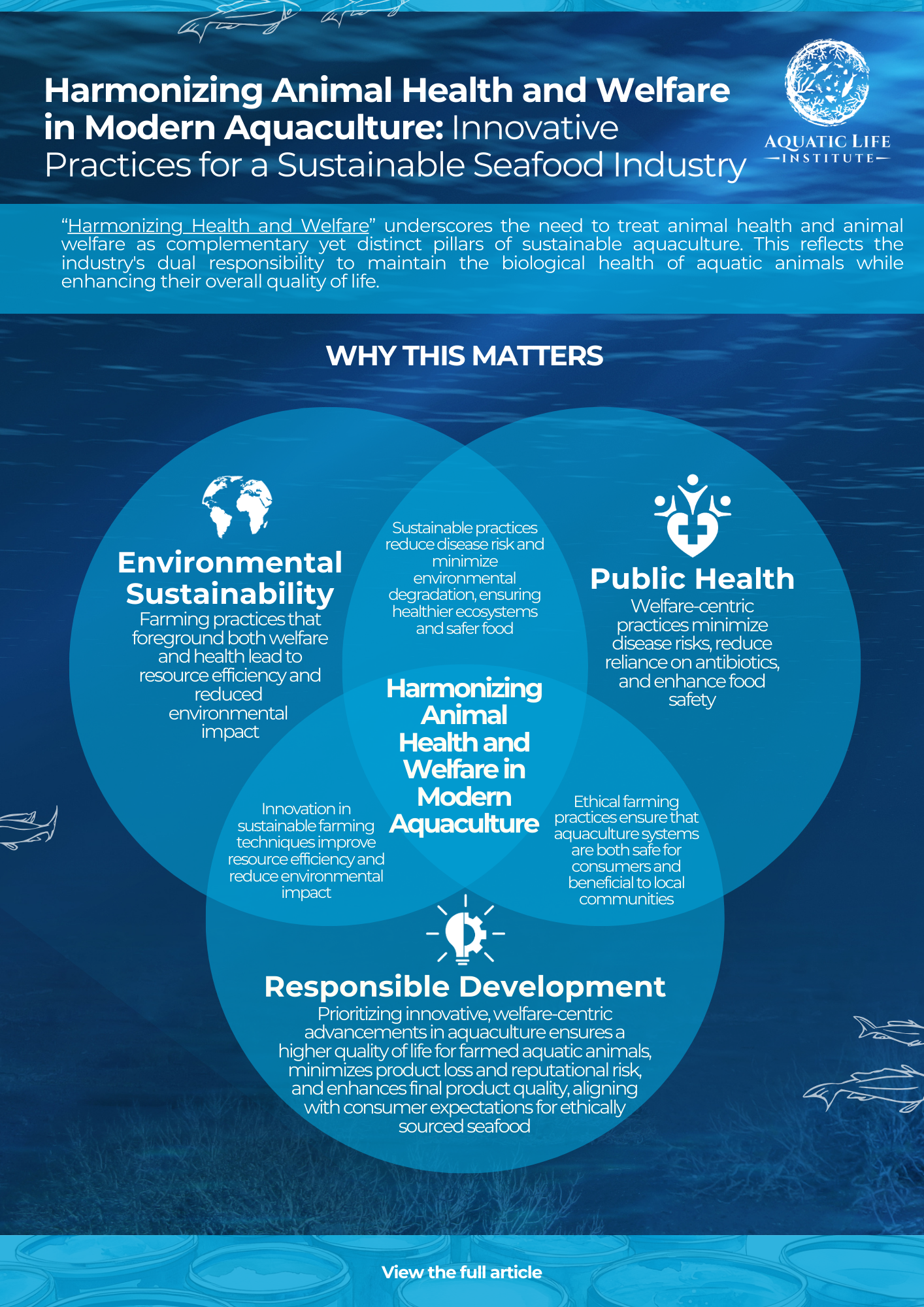
“Harmonizing Health and Welfare” underscores the need to treat animal health and animal welfare as complementary yet distinct pillars of sustainable aquaculture. This reflects the industry's dual responsibility to maintain the biological health of aquatic animals while enhancing their overall quality of life.
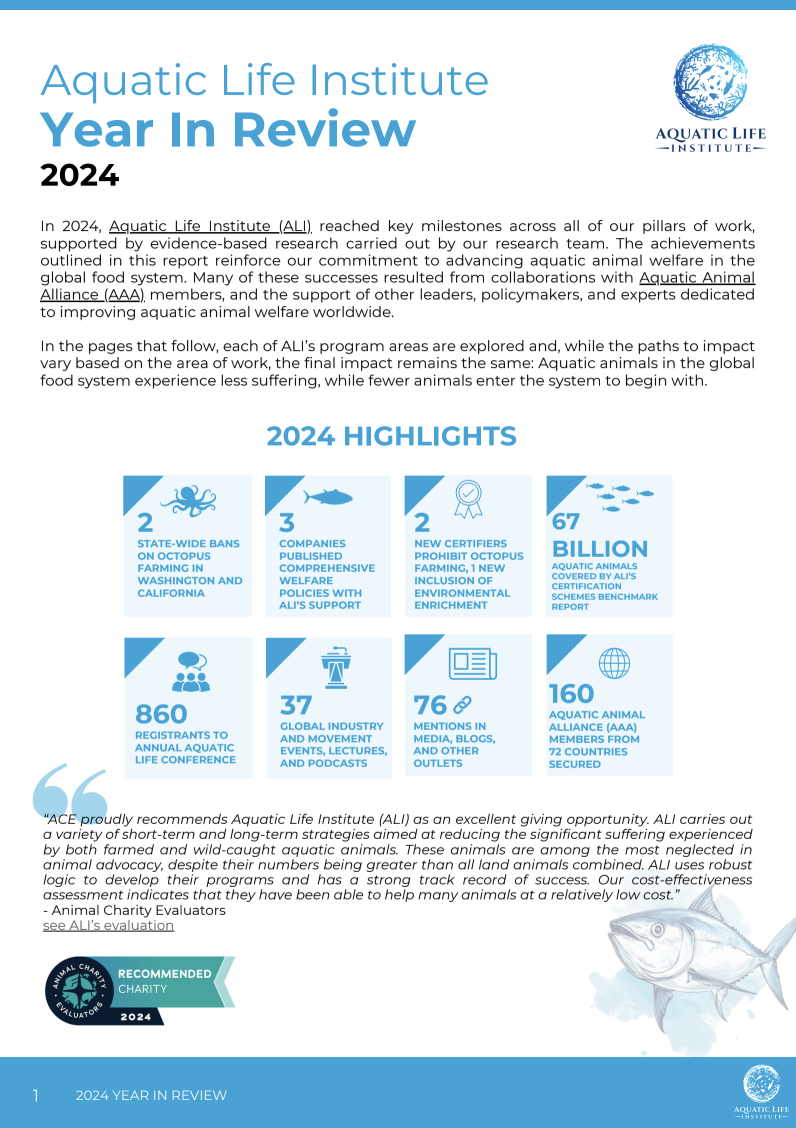
In 2024, Aquatic Life Institute (ALI) reached key milestones across all of our pillars of work, supported by evidence-based research carried out by our research team.
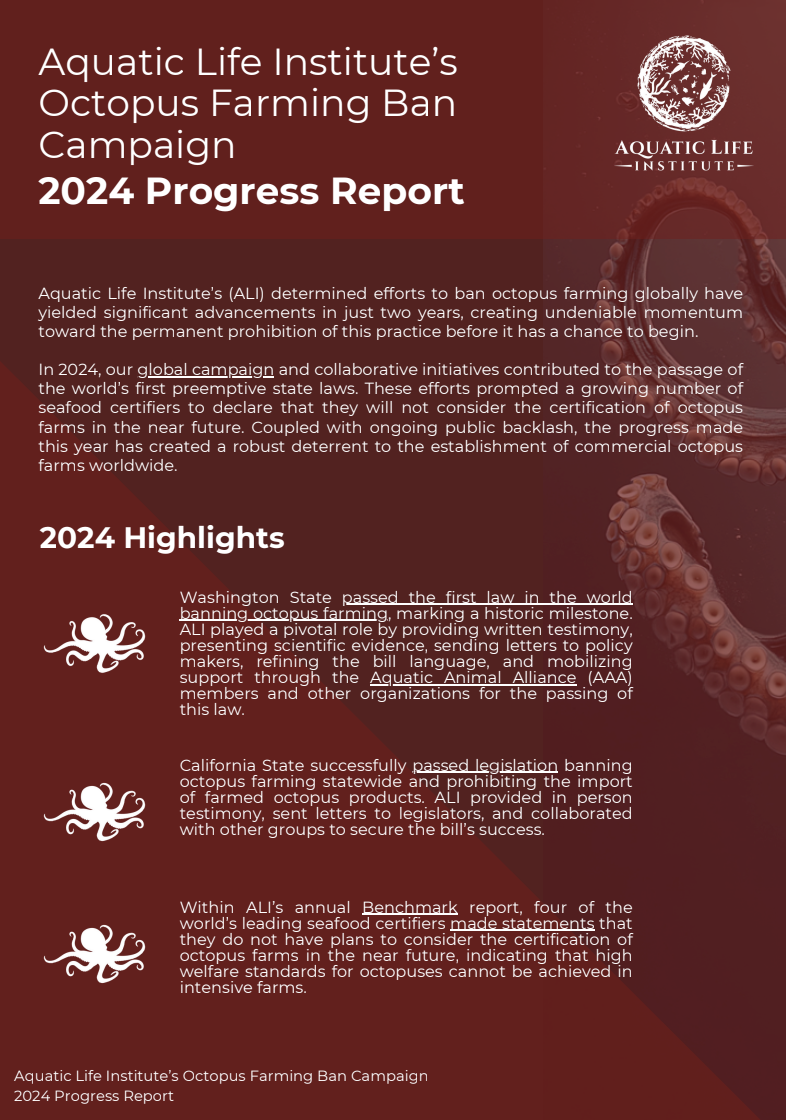
In 2024, our global campaign and collaborative initiatives contributed to the passage of the world’s first preemptive state laws.