UNOC3 Recap & Key Takeaways
Where did aquatic animal welfare show up and where do we go from here? Aquatic Life Institute shares key takeaways from the 2025 UN Ocean Conference in Nice
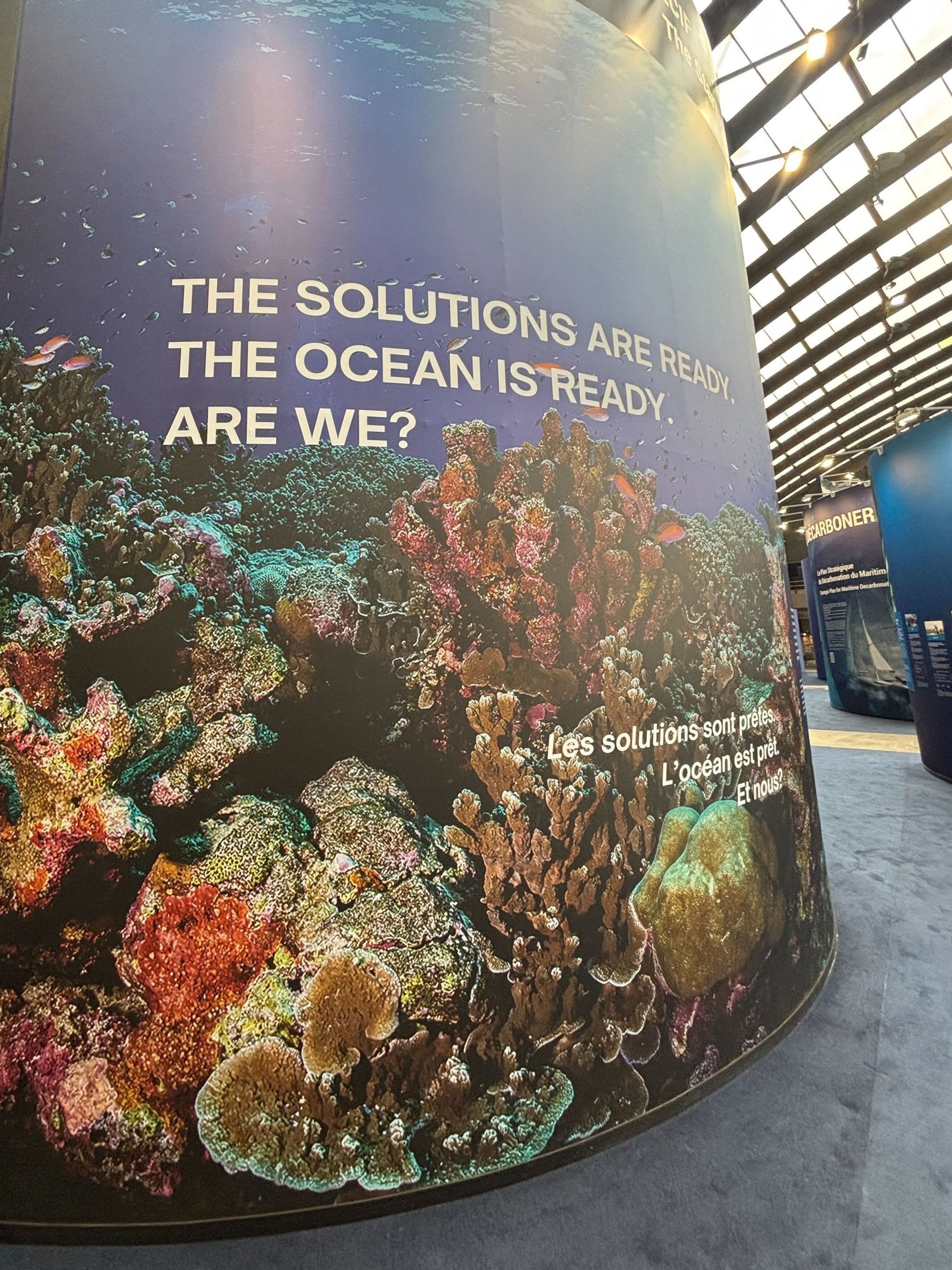
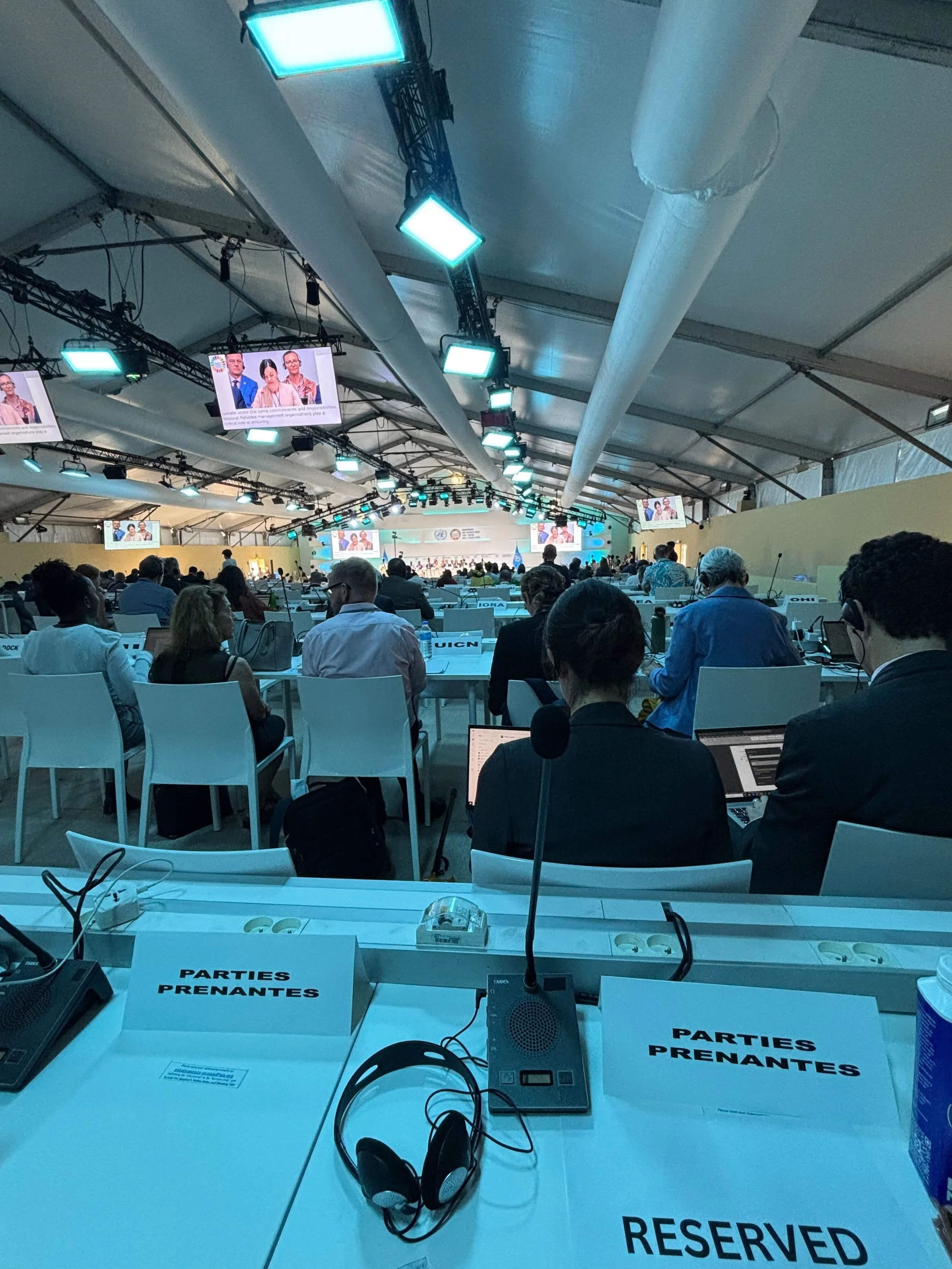
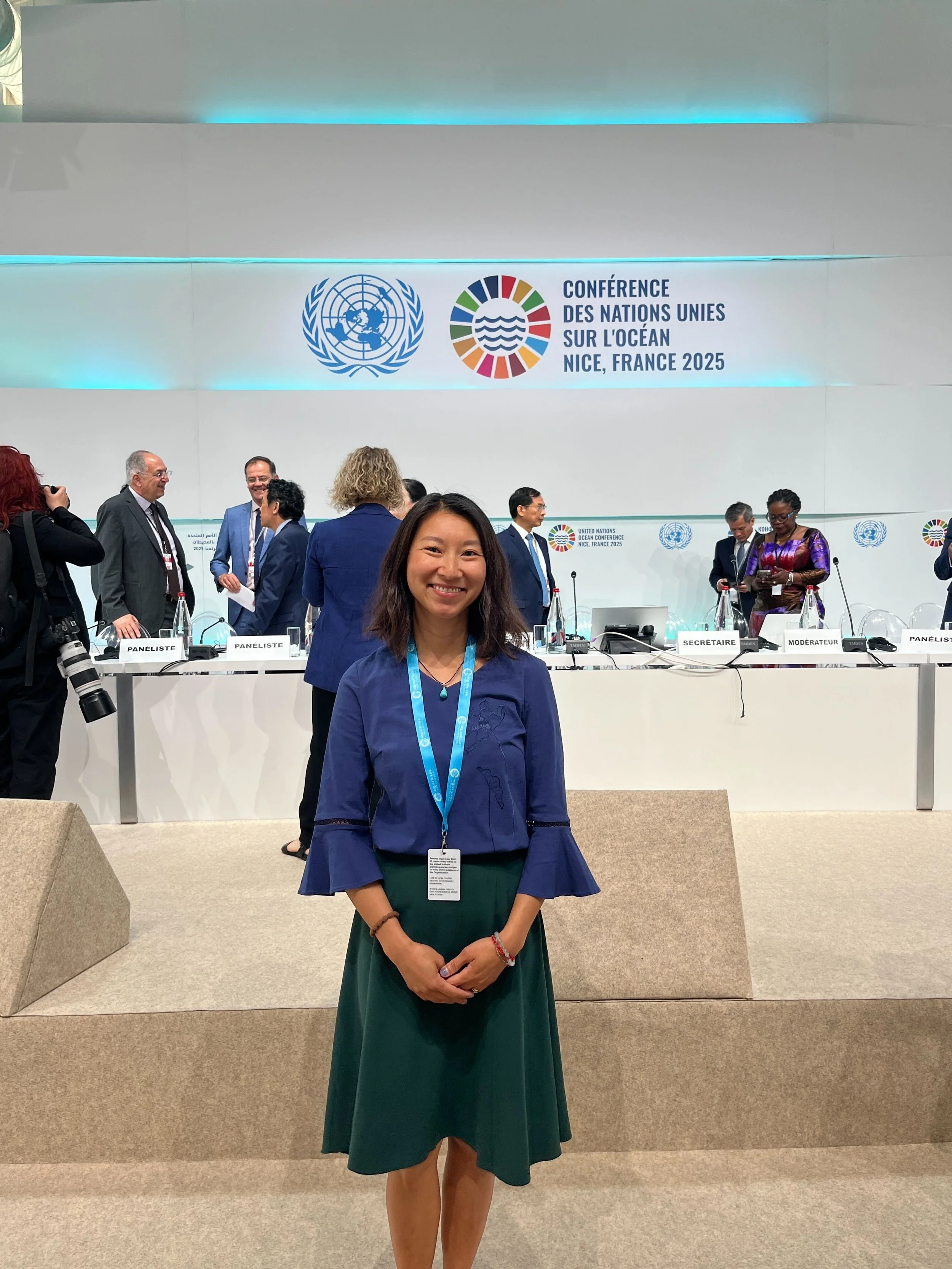
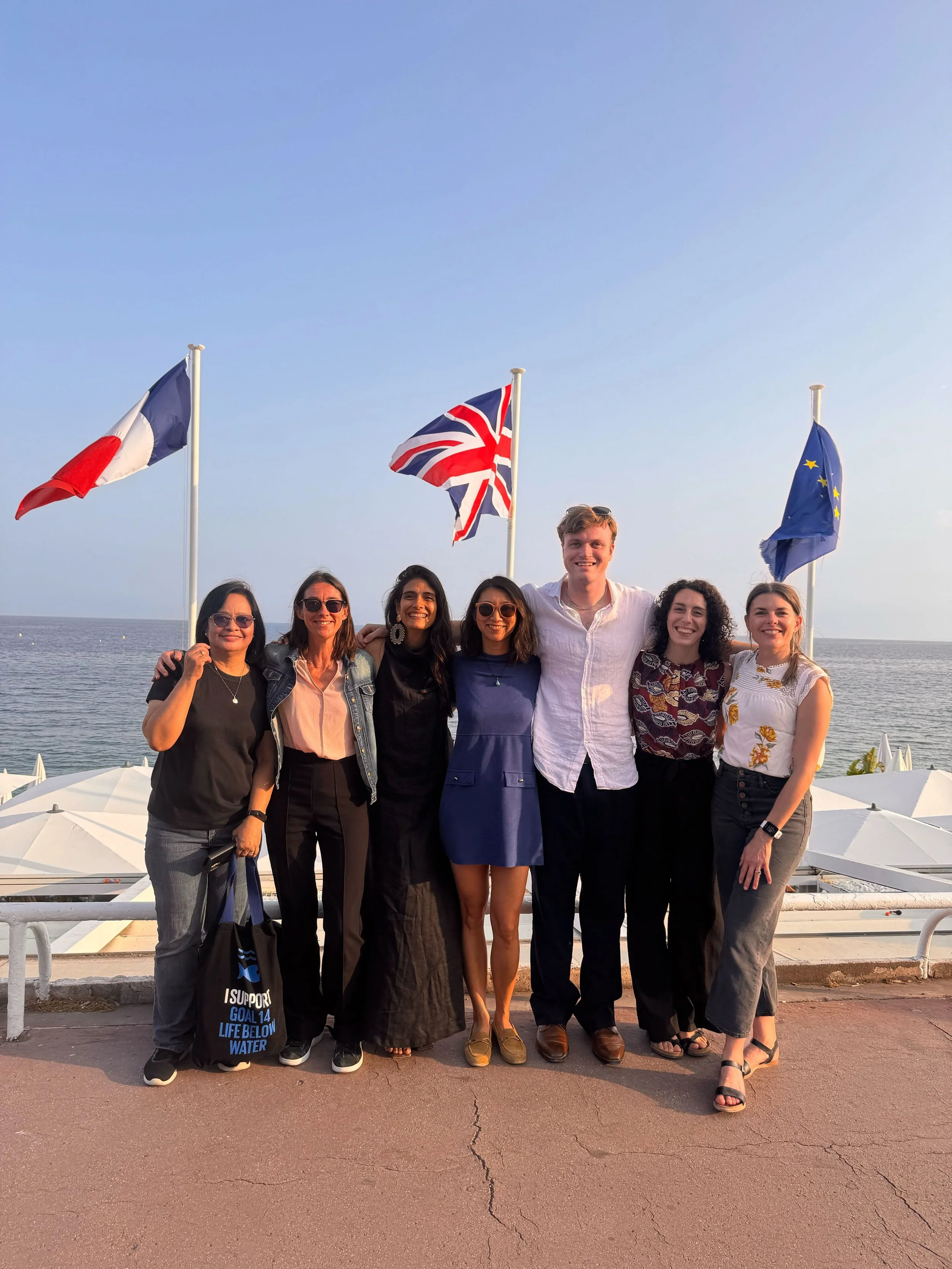
Over 15,000 global leaders, scientists, civil society advocates, and private sector representatives gathered in Nice for the third UN Ocean Conference (UNOC3). The atmosphere was one of urgency and ambition. From the climate crisis to marine biodiversity loss, this conference signaled a critical juncture for ocean governance.
But for those of us who attended on behalf of the Aquatic Life Institute, one thing remained starkly clear: the trillions of sentient aquatic animals directly affected by these decisions were largely invisible in the policies and pledges designed to shape the ocean’s future.
What happened at UNOC3
Of the broad range of topics discussed, UNOC3 delivered several meaningful advances:
The High Seas Treaty (BBNJ Agreement): reached a critical milestone with 50 ratifications, just 10 short of the number needed for it to enter into force, which would create the first-ever legally binding agreement to govern marine biodiversity in international waters, covering two-thirds of the ocean that lie beyond national jurisdictions. With another 17 countries reportedly undergoing ratification, it could come into force as early as January 2026.
MPAs: More than 20 new marine protected areas (MPAs) were announced, including the Pacific waters around French Polynesia, an area twice the size of mainland France, which are now protected under the global goal to conserve 30% of the ocean by 2030.
End plastic pollution: 96 countries endorsed a full-lifecycle approach to cutting plastic production and consumption, demonstrating renewed political commitment ahead of the next round of negotiations in Geneva.
Ocean noise: Panama and Canada led the launch of the High Ambition Coalition for a Quiet Ocean, backed by 37 countries including the EU. It’s the first global political coalition dedicated to reducing underwater noise pollution from shipping, which severely impacts whales, dolphins, fish, and invertebrates - all sentient animals who suffer from chronic stress and behavioral disruption due to noise pollution.
Despite progress in these areas, the conversation still centered around how we can use the ocean to the maximum for human benefit. While there is mounting scientific consensus that aquatic animals are sentient and rising public concern for their welfare, they are still framed exclusively as resources to be managed, caught, grown, or traded – never as individuals with the capacity to suffer or the right to humane treatment.
Key omissions included:
The Political Declaration of UNOC3: Made no mention of “animals” or “welfare”, entirely omitting the need for humane catch, handling, and slaughter methods. This foundational document, intended to guide international cooperation for ocean protection, also failed to call for bans on destructive fishing, offshore fossil fuel expansion, or deep-sea mining despite growing public pressure.
EU Ocean Pact: Initially expected to include aquatic animal welfare after multiple confirmations by EU Commissioners, the final Pact failed to do so. This was an entirely missed opportunity for regional leadership.
FAO’s Blue Transformation Agenda: Promoted as essential for feeding 10 billion people by 2050, the FAO’s narrative calls for a 20% increase in aquatic animal food production just to keep up with current per capita consumption levels. This is problematic. It glosses over the imbalance in fish consumption between the Global North and Global South and makes no ethical distinction between seafood consumed for survival versus luxury nor how they are caught or farmed. Welfare considerations – including humane slaughter – are entirely absent.
Where aquatic animals showed up
Despite the key omissions, there was marked progress for welfare considerations at UNOC3. Compared to UNOC2, this year saw several sparks of hope and momentum for aquatic animals:
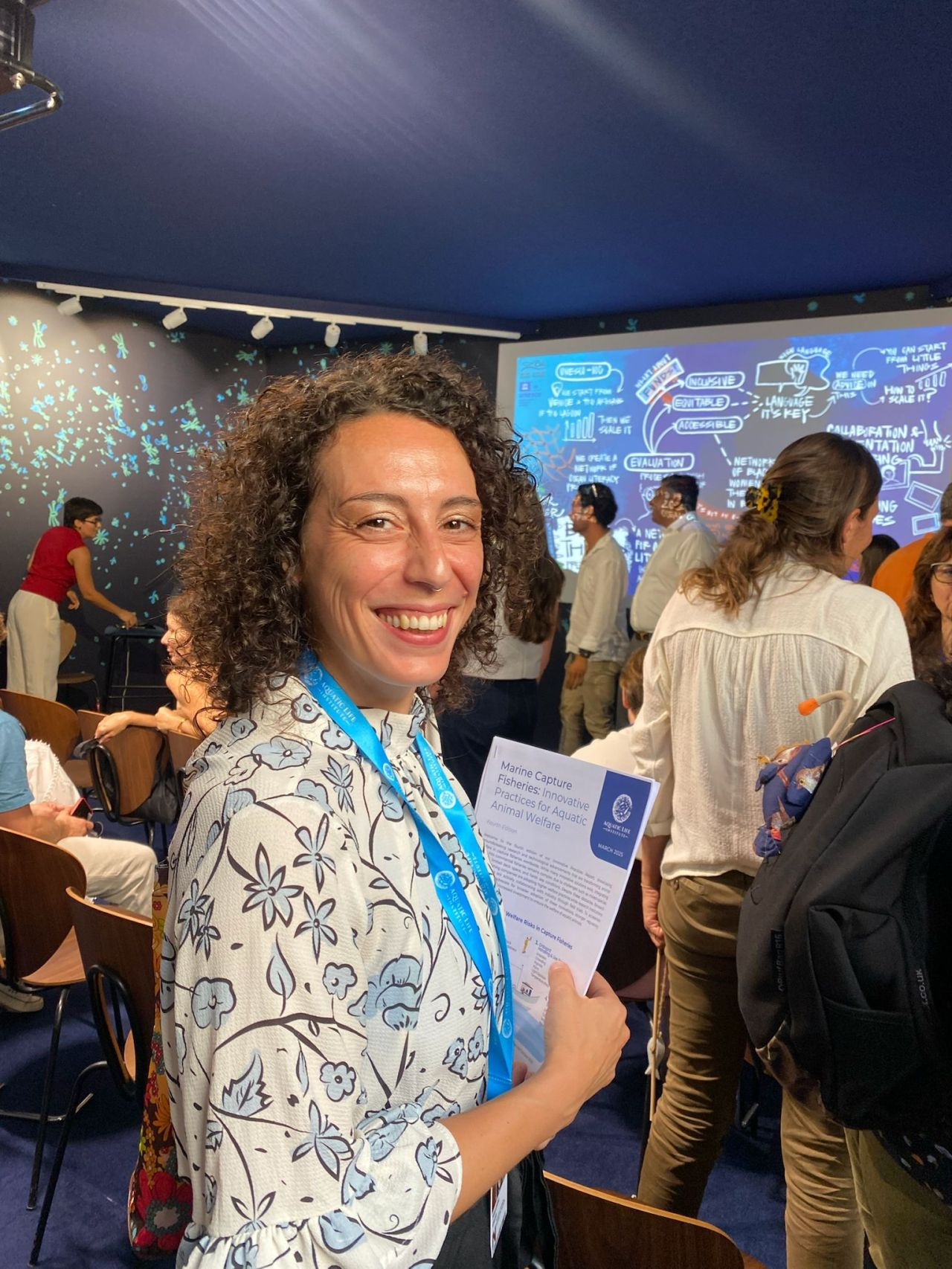
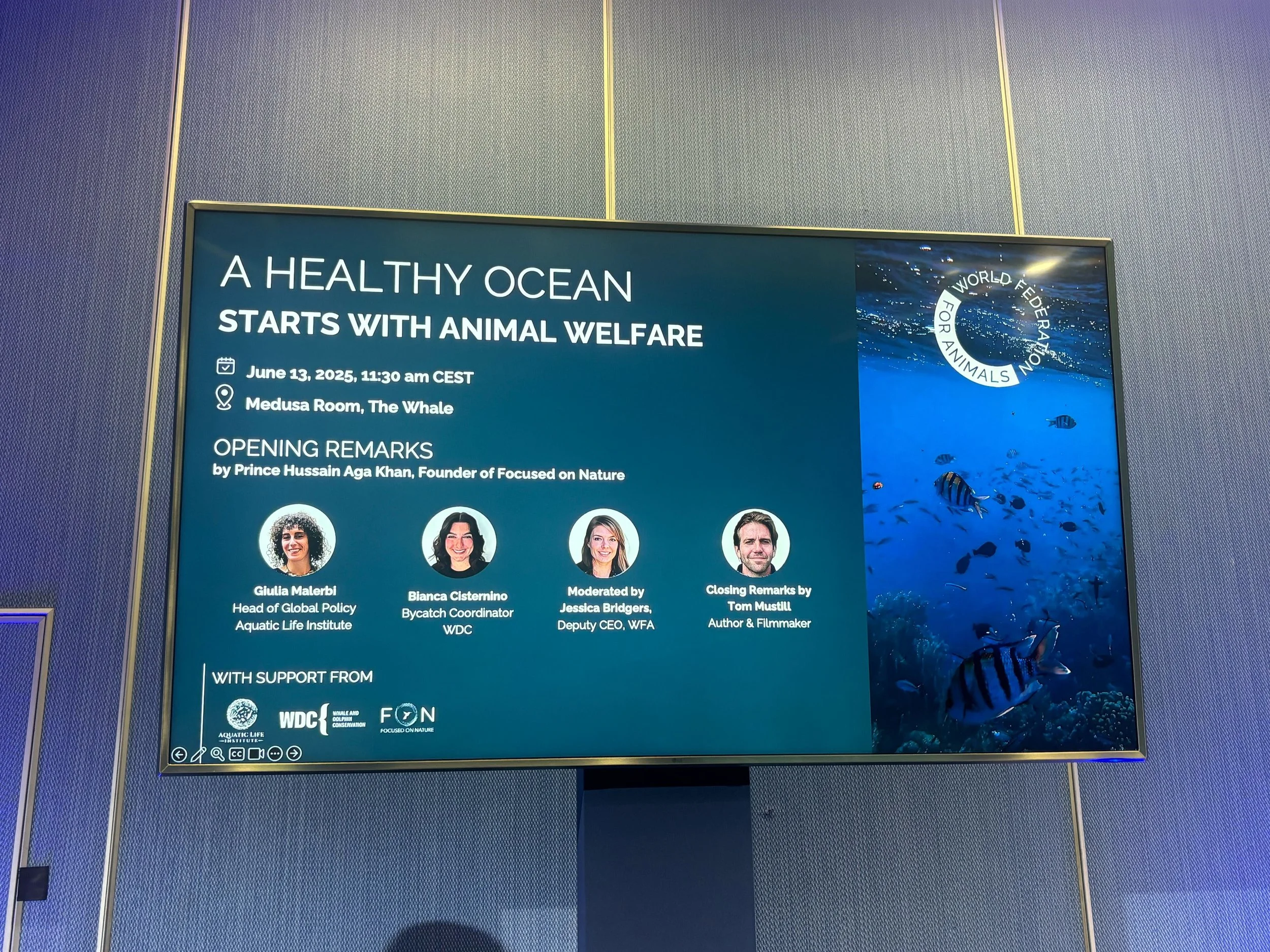
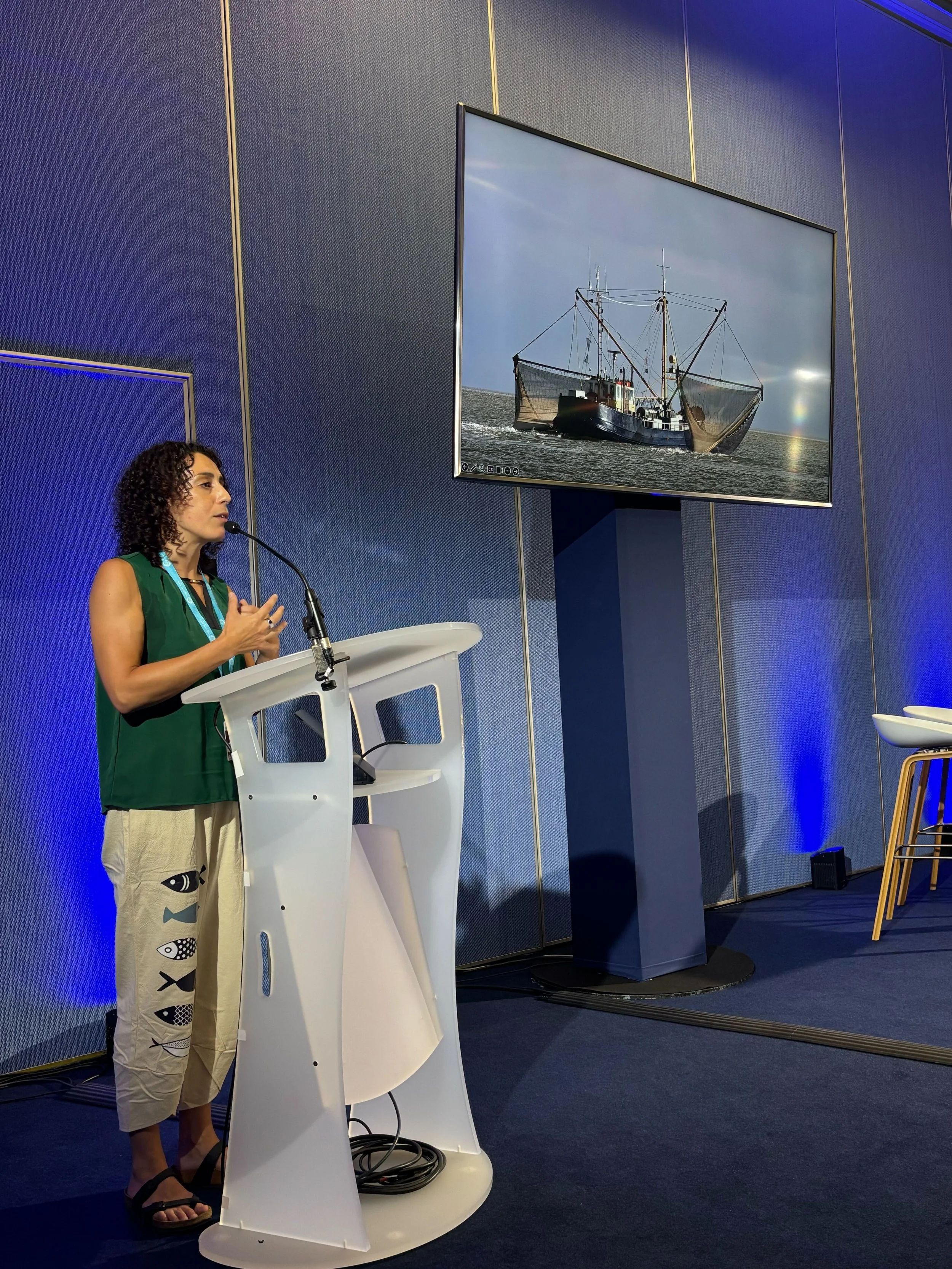
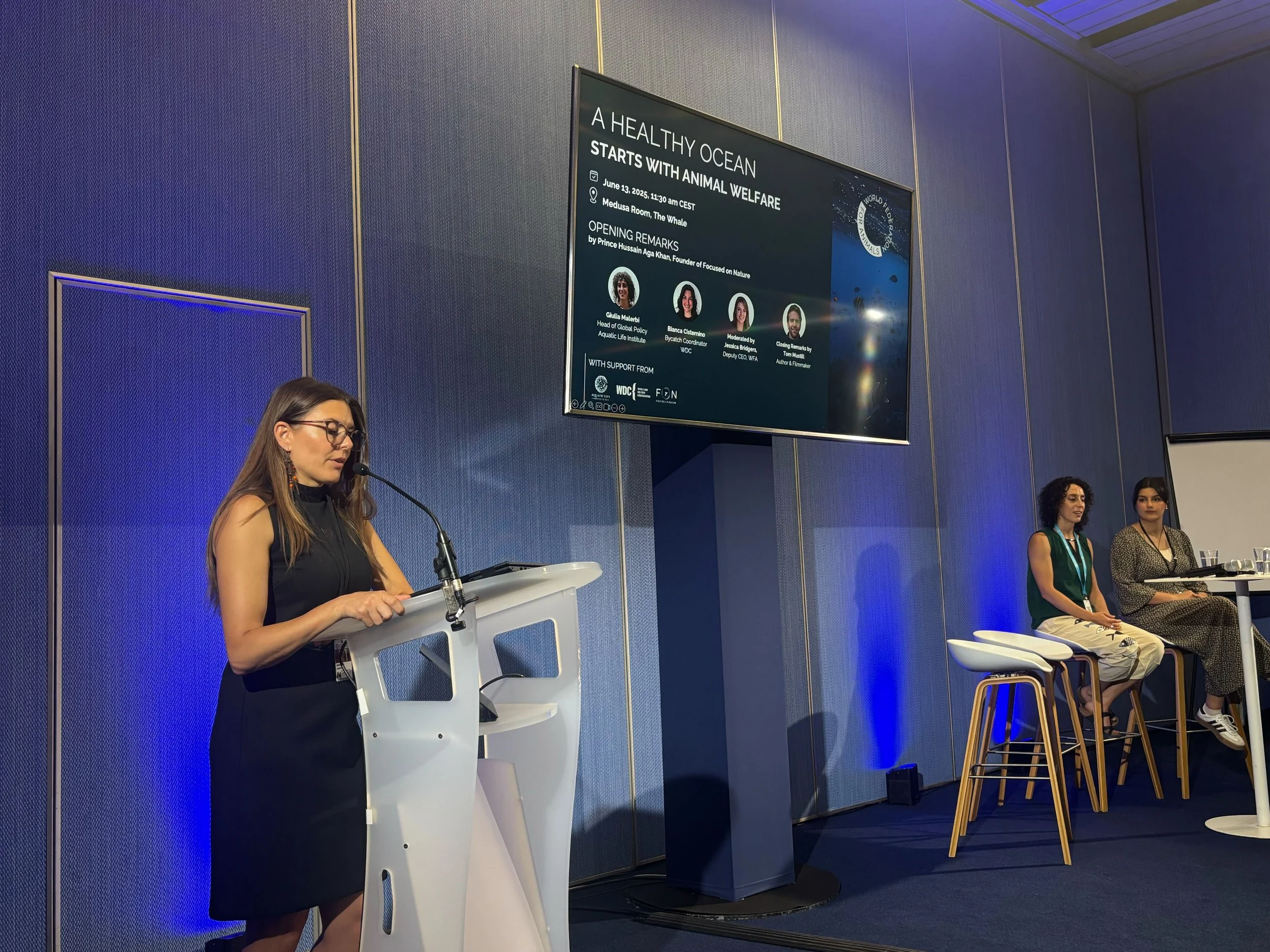
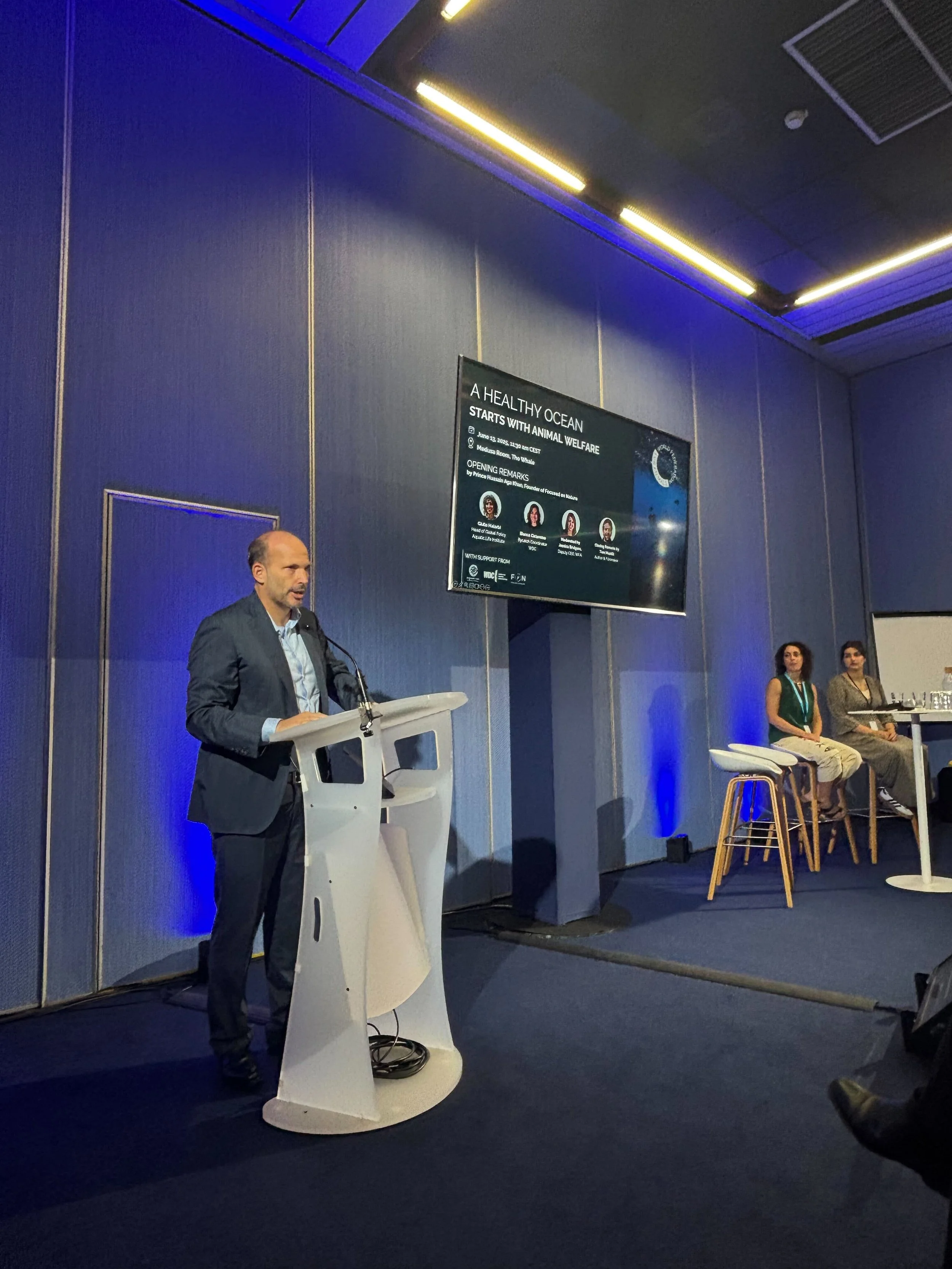
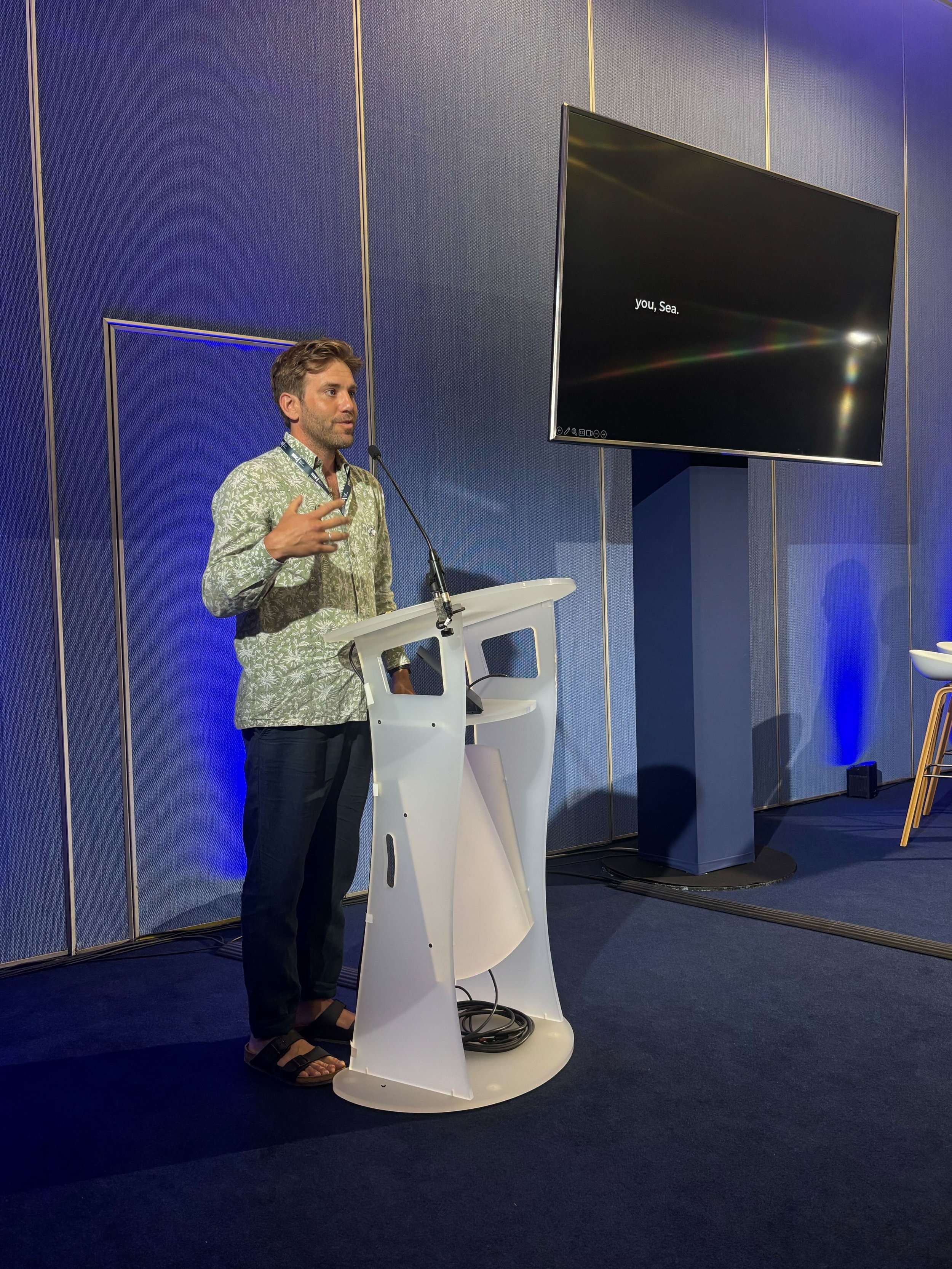
Aquatic Life Institute co-hosted an event explicitly dedicated to aquatic animal welfare, in partnership with the World Federation for Animals (WFA) and Whale and Dolphin Conservation (WDC). The event drew 40–50 attendees and spotlighted the hidden and silent suffering of aquatic animals.
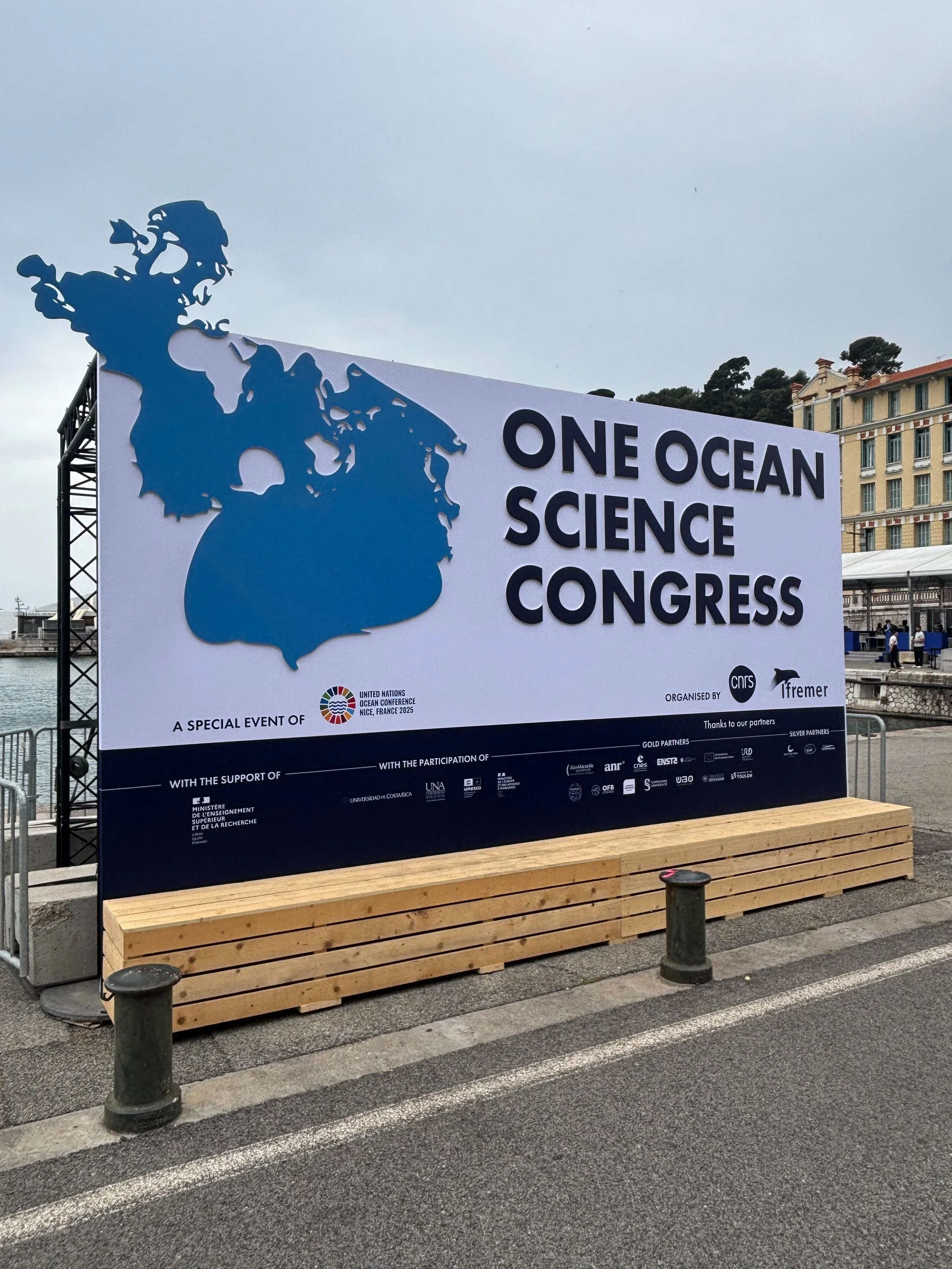
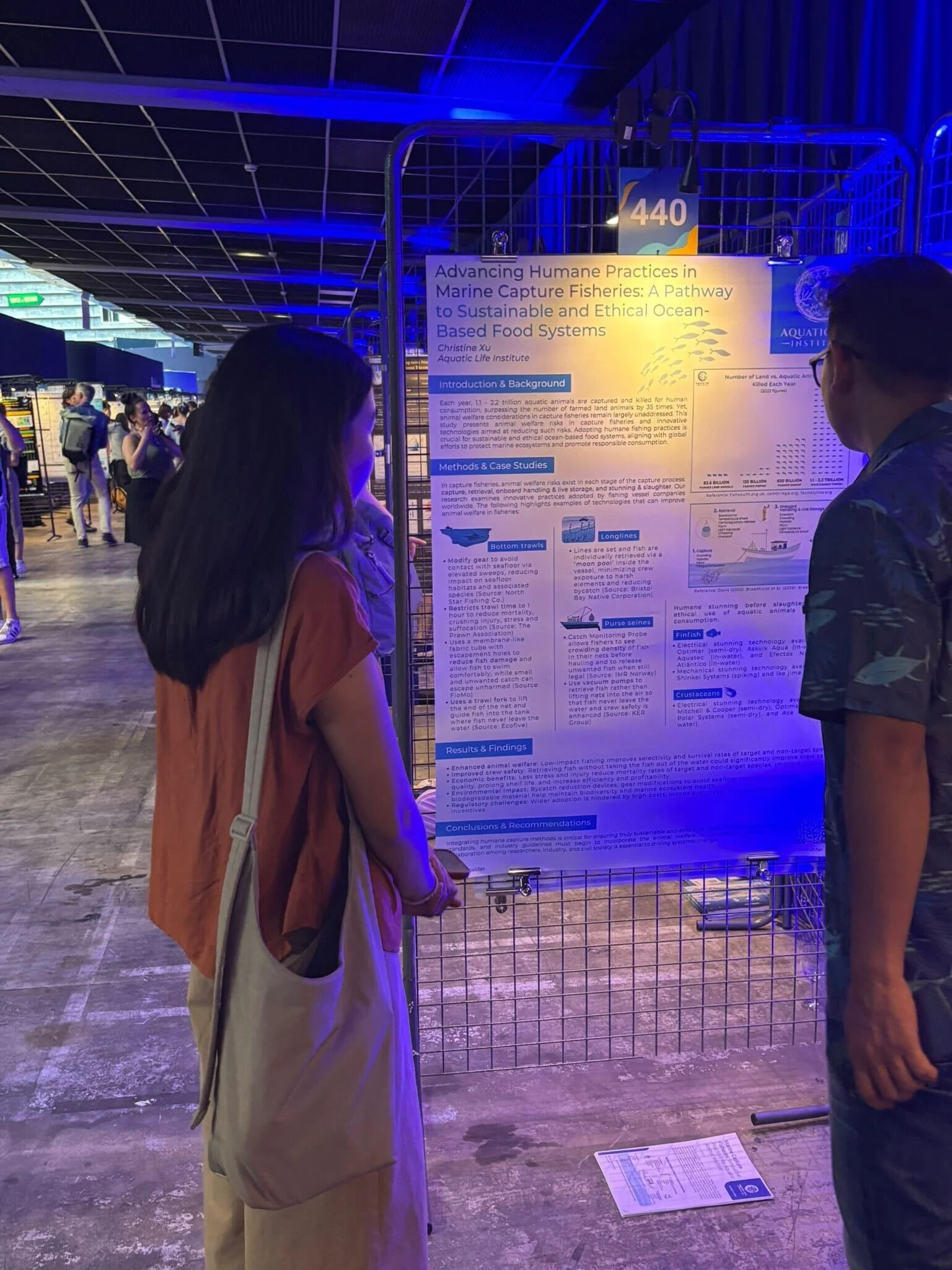
We were invited to give a poster presentation on fisheries welfare at the One Ocean Science Congress, which preceded UNOC3 and drew over 2,000 scientists. This Congress also gave a keynote speech spot to Michelle Bender, who spoke about ocean rights and challenged scientists and fisheries managers to do something we have been advocating for: reimagine our relationship with aquatic animals by changing our language from fish “stocks” to fish “populations” to reflect their intrinsic value.
We were invited to give a formal intervention at the Ocean Action Panel in the Blue Zone, another critical moment of recognition for this growing movement.
In a multilateral panel including IUCN, CBD, and CITES, IUCN’s leadership included a rare but powerful statement that we must speak of the species and animals that sustain our oceans not just as resources, but as lives.
UNESCO’s Blue Thread Initiative featured our fisheries welfare work at its launch event in their pavilion in the Green Zone, reflecting growing traction among UN platforms.
Why we need to act now more than ever
Terms like “blue economy” and “aquatic foods” are being used to greenlight harmful industrial practices under a veneer of sustainability, nutrition, and food security, with no ethical safeguard for the trillions of animals affected, despite growing recognition of their sentience by scientific bodies and intergovernmental organizations.
We have a moral obligation to better protect aquatic animals that we use for food - as well as our oceans. This requires specifying which aquatic foods are truly sustainable, which practices remain incompatible with welfare and what kind of a blue economy we want to develop. This is our opportunity to shape a sector towards humane and ethical use, no longer neglecting the welfare of trillions of animals involved.
What’s next
ALI is committed to ensuring aquatic animals are no longer ignored in global decision-making. Here’s what lies ahead:
July – High-Level Political Forum (New York): Our Managing Director, Sophika Kostyniuk, has been invited to speak as part of the official review of SDG14 (Life Below Water) and SDG2 (Zero Hunger). We’ll advocate for the inclusion of animal welfare and sentience in the framing of blue food systems.
September – UN General Assembly (New York): As the High Seas Treaty moves toward implementation, we will advocate for welfare to be considered under BBNJ so it doesn’t become just another instrument about biodiversity that excludes ethical protections for marine life..
November – COP30 (Brazil): Ocean-based climate solutions are on the rise. In fact, Ana Toni, the CEO of COP30 confirmed that an Ocean Pavilion will be featured during COP30 to highlight the linkages between climate change and ocean resilience. Aquatic Life Institute will be present in person to ensure that animal welfare is integrated into climate and seafood policy.
Ultimately, our work in this space is about reshaping how the world sees aquatic animals. They are not just protein or carbon sinks. They are sentient individuals. The shift must begin with awareness in order for our values to be reflected in law and practice.
If you want to watch a full debrief of UNOC3, here is a recording:
We are energized now more than ever to face these challenges - but we know we can’t do it alone. We invite governments, researchers, and ocean advocates to join us in embedding animal welfare into the heart of marine policy. Only then can we build ocean solutions that are not just sustainable — but just.
If you believe in this vision, help us turn it into reality. Support our efforts to reduce the suffering of trillions of aquatic animals each year by donating today.