Behind the Reform: ALI’s Role in Shaping the ASC Farm Standard Revision
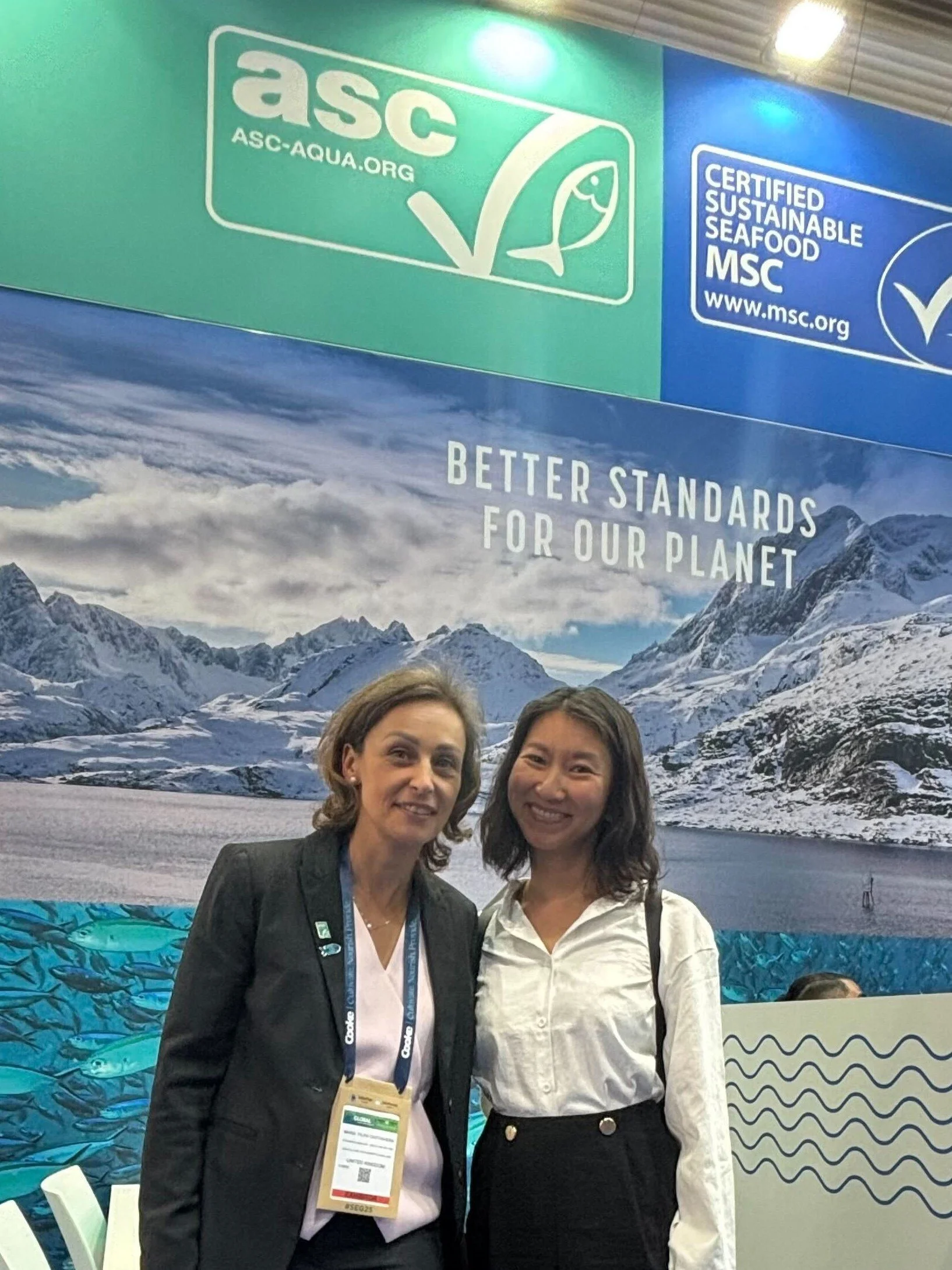
After five years of strategic engagement, coalition-building, and persistent advocacy, Aquatic Life Institute (ALI) welcomes the launch of the Aquaculture Stewardship Council’s (ASC) newly unified Farm Standard in May 2025. This milestone represents not just a turning point for certified aquaculture—but a tangible shift toward making aquatic animal welfare a central pillar of global seafood standards.
"The standard is changing—for fish, farms, people, and planet—and it’s a shift Aquatic Life Institute wholeheartedly welcomes. Animal welfare is not just one piece of the sustainability puzzle—it underpins the health of ecosystems, the resilience of farms, and the quality and safety of our global food systems. Furthermore, in a world where consumers are increasingly conscious of the ethical implications of their food choices, ensuring animal welfare is not merely an option—it is a moral imperative. ASC’s new Farm Standard acknowledges this interconnectedness and sets a strong precedent for the future of aquaculture.
We recognize the years of effort and collaboration that went into developing this new standard and appreciate ASC’s willingness to engage with stakeholders throughout the process. We’re proud to have contributed to this progress through public consultations, our annual benchmark, and direct participation in the Shrimp Standard Technical Working Group. Advancing aquatic animal welfare is a shared responsibility, and steps like this help move the industry in the right direction. We hope that other certification bodies will follow this example, embracing mutual collaboration with the aim of improving standards and, ultimately, enhancing the welfare of aquatic animals." - Tessa Gonzalez, Head of Research, Aquatic Life Institute
A Five-Year Journey of Influence
ALI began working with ASC in 2020. What started as simple exchanges quickly turned into a strong partnership based on open dialogue and a shared goal: improving aquatic animal welfare.
Over five years, we actively contributed to the development of ASC’s standards. This included providing over 135 pages of expert recommendations, joining six public consultations, and sharing insights from more than 125 member organizations in our Aquatic Animal Alliance.
Our ongoing feedback and collaboration helped turn animal welfare from a minor topic into a core part of the ASC standard. This wasn’t just about making suggestions—it was about working together, refining ideas, and making real improvements. When analyzing the impacts of our engagement, we’re particularly pleased to note:
ALI’s coordinated feedback helped eliminate the controversial stress test from ASC's requirements in 2024—a clear win for both welfare science and advocacy; and
ALI’s Stunning and Slaughter: Best Practices for Animal Welfare in Aquaculture report is now included as a useful resource for the implementation of indicator 4.1.3 – Fish (including Cleaner Fish) – Slaughter and Killing in the new ASC Farm Standard Interpretation Manual.
Year-by-Year Highlights of ALI’s Contributions
2020: Initiated formal engagement with ASC; focused on species-specific concerns in recirculating aquaculture systems.
2021: Submitted comprehensive proposals on predator control, health management, and mutilation bans; laid groundwork for the ASC Fish Welfare Project.
2022: Advocated for welfare integration across all standard modules, including training, feed, and biosecurity; participated in critical stakeholder surveys.
2023: Joined the ASC Shrimp Technical Working Group; published benchmark evaluations and targeted feedback on shrimp welfare, stunning, and prohibited practices.
2024: Championed the inclusion of a detailed Interpretation Manual and greater species-specific precision; released an in-depth benchmark evaluation outlining gaps and priorities.
A Model for Civil Society Engagement
By leading the Aquatic Animal Alliance, ALI organized support from a steadily growing coalition—rising from just 7 signatories in 2021 to over 125 civil society supporters by 2024. This collective pressure ensured that animal welfare could not be ignored in the final standard.
Our participation in the ASC Shrimp Health & Welfare Technical Working Group also allowed for direct influence over technical provisions, fostering change from within.
Looking Ahead: 2025 Aquaculture Certification Schemes Benchmark
As aquatic animal welfare continues to gain global recognition, the ASC’s revised Farm Standard—shaped in no small part by ALI’s persistent efforts—sets a new benchmark for the industry. But this achievement is just the beginning. At ALI, we believe that progress is not about reaching a single milestone but about constantly pushing the boundaries of what’s possible for animal welfare.
This is why our work doesn’t stop here. Later this year, we will release the 2025 Aquaculture Certification Schemes Benchmark, a comprehensive evaluation of certification bodies and rating agencies in the aquaculture sector. This year’s benchmark will not only include an in-depth assessment of the new ASC Farm Standard but will also feature an expanded scope with the addition of a new certification scheme and a new rating agency, ensuring an even broader and more accurate picture of how aquatic animal welfare is being addressed worldwide.
We are also raising the bar for animal welfare by introducing two new criteria in this year’s benchmark: an additional welfare criterion that will further protect the welfare of aquatic animals, and a new prohibition aimed at eliminating harmful practices. These updates reflect our commitment to continuous improvement and our determination to set higher standards for the industry.
For us, benchmarking is not just an exercise in evaluation—it’s a tool for transformation. By ranking certification bodies and highlighting best practices, we create a ripple effect that leads to better conditions for countless animals. Our benchmark serves as a guide for companies, consumers, and certifiers alike, shining a light on what’s working, what needs improvement, and where the industry can go next.
Stay tuned. Change is in the water, and together, we’re making waves.