Aquatic Animal Welfare Gains Momentum at SEG25
Check out our team's highlights from the world's largest seafood trade event
The month of May is an event-packed month for us at the Aquatic Life Institute, and it couldn’t have started better. Last week, our team attended Seafood Expo Global 2025 (SEG25) in Barcelona, Spain and were inspired to see how much visibility aquatic animal welfare continues to gain across the seafood sector.
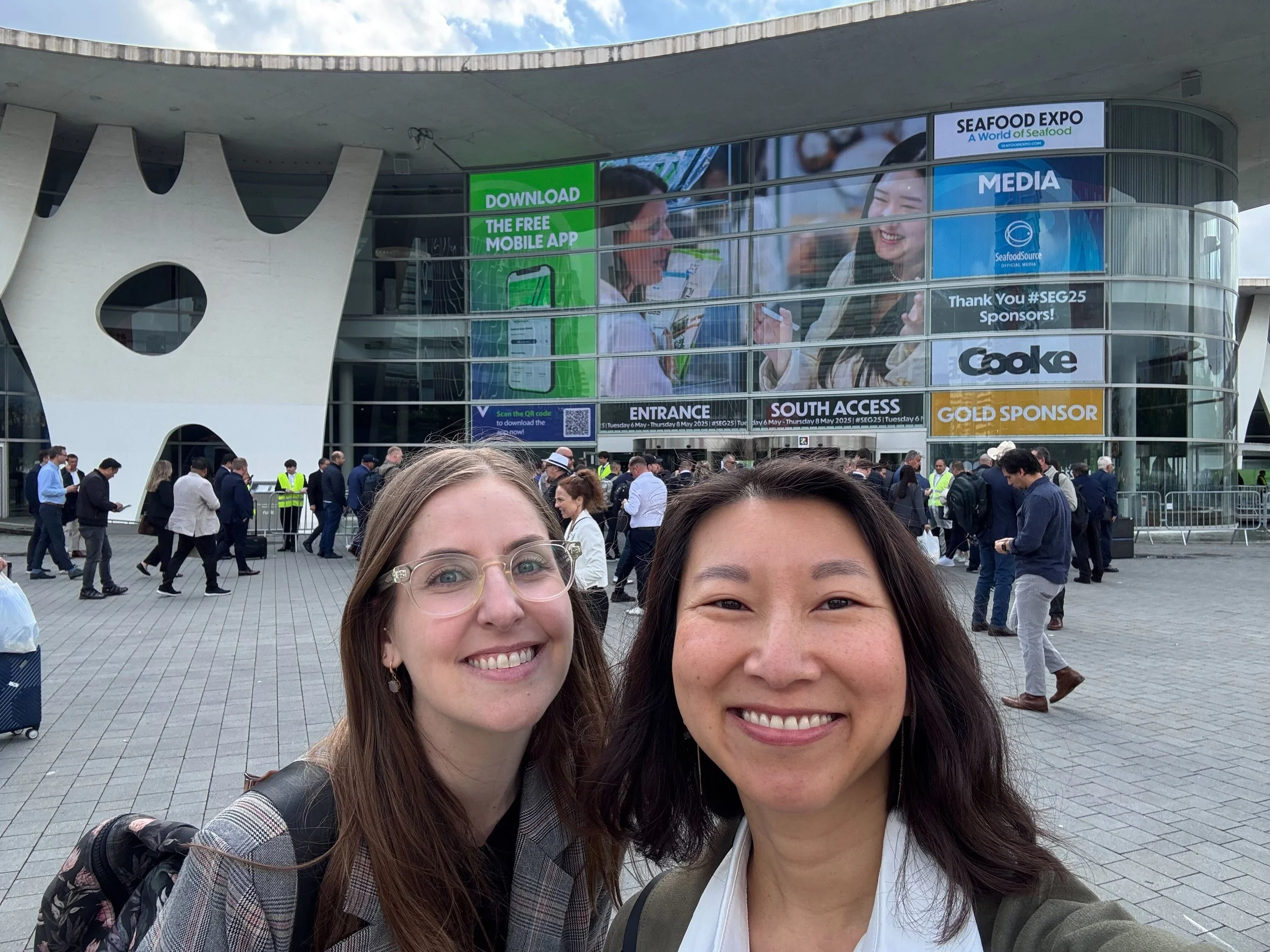
Welfare was brought up in several sessions, particularly in discussions about consumer behaviour. “Young people are more concerned about animal welfare as part of sustainability and social issues,” observed Christine Xu, ALI’s head of fisheries welfare. This shift is influencing companies to advance in their practices and policies. Several producers, retailers, and distributors expressed interest in learning more about how addressing welfare improvements in their supply chain can strengthen sustainability initiatives, mitigate risks, and build consumer trust.
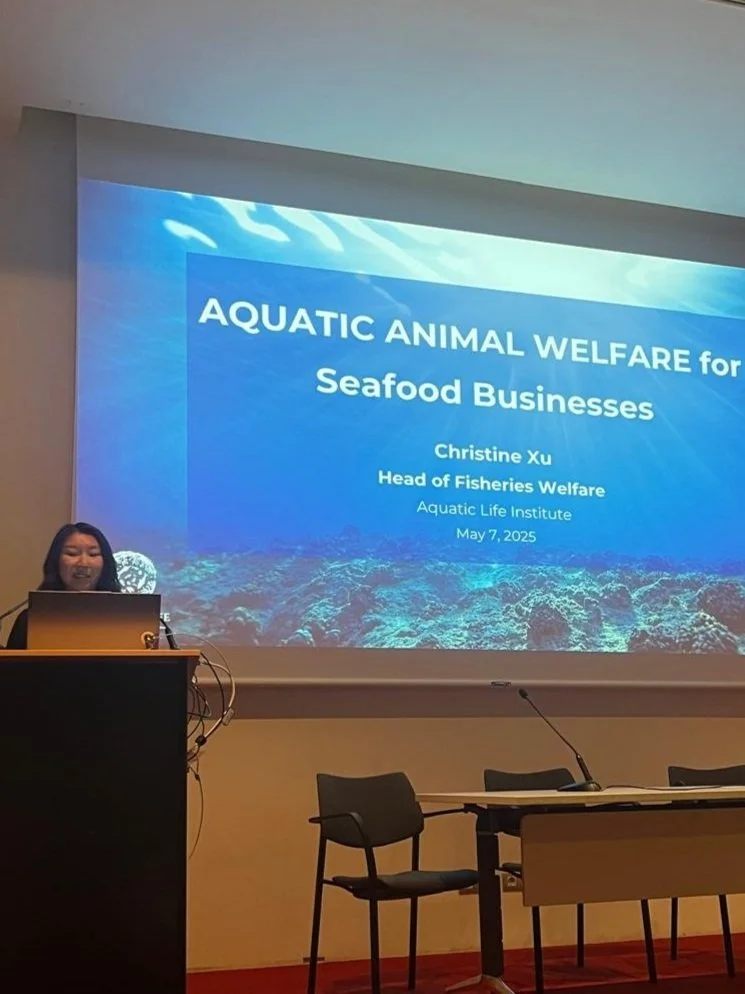
A key highlight of SEG was co-hosting a session with Optimar on fish welfare and humane stunning technology. Christine presented the growing business case for prioritizing animal welfare in seafood operations, alongside Mårten Jørgensen from Optimar, Krzysztof Wojtas from Shrimp Welfare Project and Linda Wood from Marks and Spencer. The session reflected the potential for the seafood industry to move forward, positively impact trillions of animals, and adopt more sustainable practices that align with consumer demand.

Additionally, during the Global Dialogue on Seafood Traceability (GDST) open forum, we shared progress on the animal welfare extension framework dialogues we’re leading this year. Feedback was positive and discussions are set to continue through 2025, with a formal vote by GDST members expected next year.
During SEG, Aquaculture Stewardship Council (ASC) launched their new farm standard. The updated standards include reference to ALI’s Stunning and Slaughter: Best Practices for Animal Welfare in Aquaculture report, further aligning certification schemes with key welfare-forward practices.
“Evolving consumer expectations aren’t future goals, they’re already shaping industry decisions”, concluded Julia Seibel, ALI’s head of corporate engagement, wrapping up our participation in SEG25. “It was encouraging to see that animal welfare is already part of the agenda. There's still a lot of work ahead, and at Aquatic Life Institute, we're committed to being part of the change”.
The momentum is building. Learn more about our work in the global seafood supply chain, certifications, and policy initiatives to help us build an ethical, sustainable future.