From Metrics to Welfare: Rethinking Blue Food Innovation
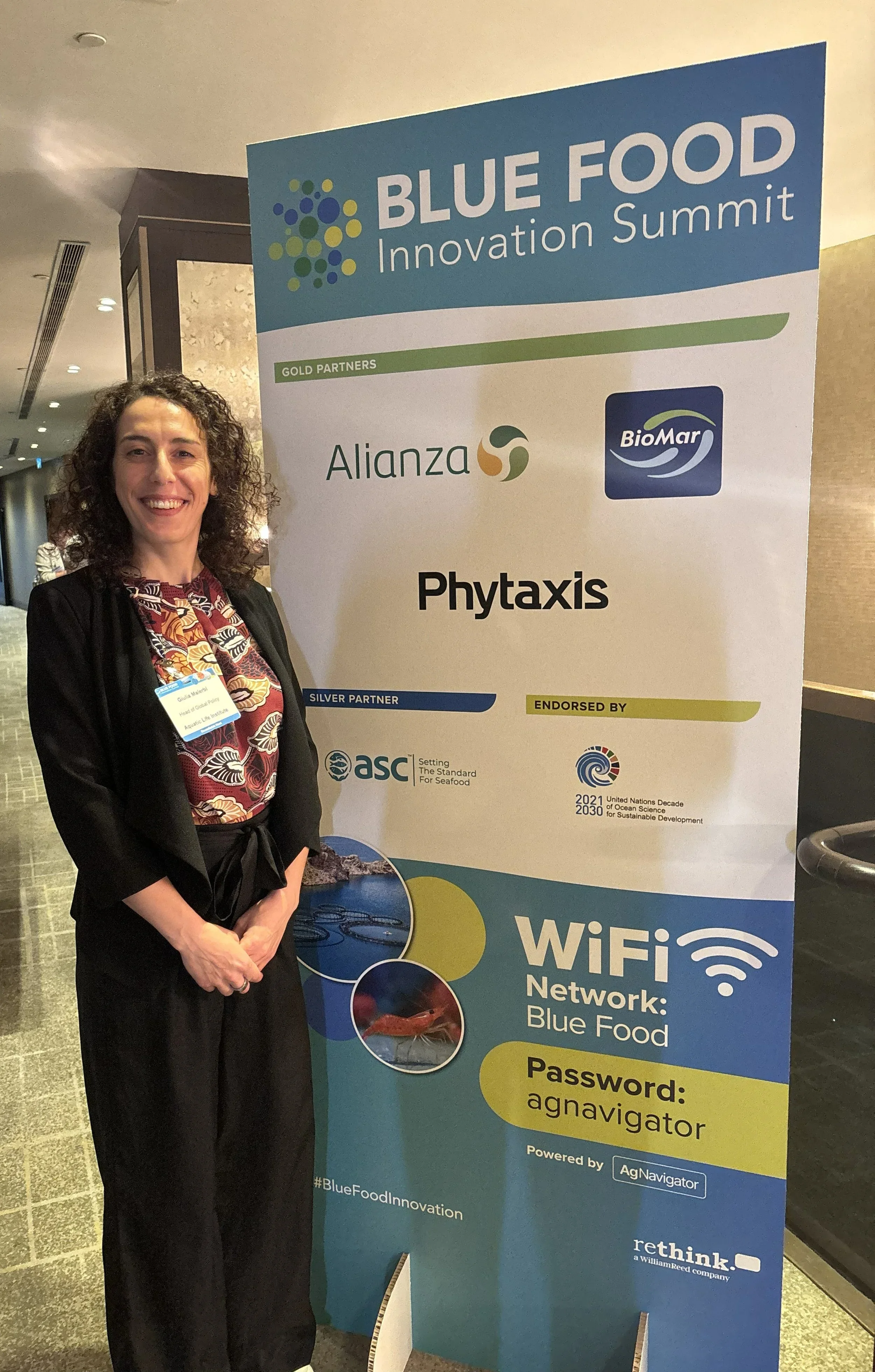
At the Blue Food Innovation Summit in London this year, aquatic animals were present throughout the conversation, though often in indirect ways. They appeared through questions about production, efficiency, disease, and risk: all issues that matter deeply to the future of aquaculture. But those questions do not always lead to a more direct one: What are these systems like for the animals living inside them? That distinction stayed with me throughout the Summit.
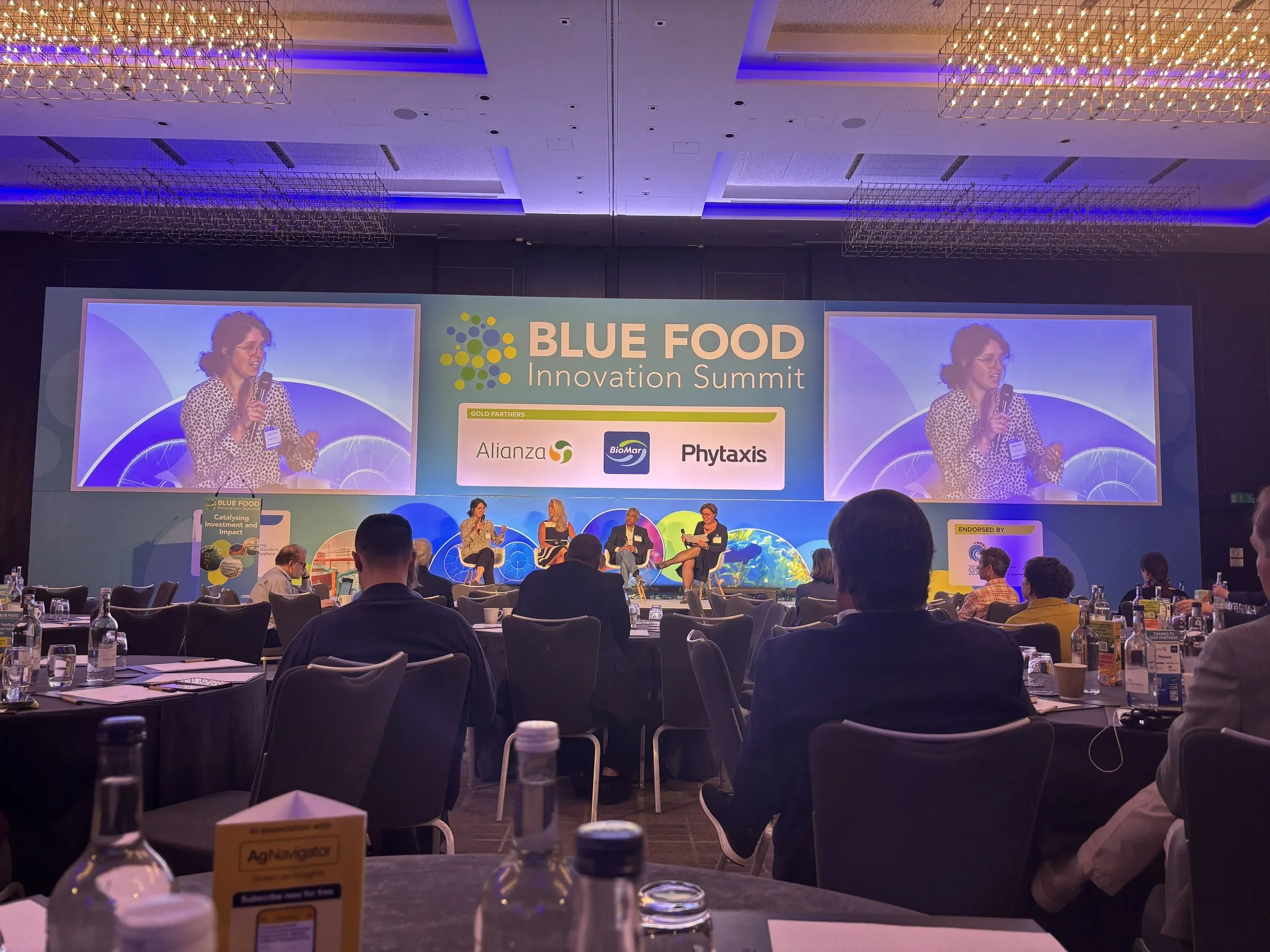
The event brought together companies, investors, researchers, certifiers, innovators, and sustainability organizations working across aquaculture and blue food systems. It was a valuable space to understand where the sector is heading, which ideas are attracting attention, and how the next phase of blue food innovation is being framed.
The Summit was not an animal welfare conference and that was precisely what made it important for Aquatic Life Institute to be present. Many of the actors shaping the future of aquaculture are not working from an animal welfare starting point. They are working on finance, technology, feed, certification, production models, supply chains, and market development. But each of those areas can either improve welfare or entrench systems that continue to overlook it.
One of the clearest examples of this stems from technology developments. Artificial intelligence, sensors, diagnostics, and automation were discussed as tools that could help make aquaculture more efficient and responsive. Used well, these tools could also support welfare by helping farmers detect disease earlier, better understand environmental conditions, and respond before problems become severe. But technology does not improve welfare simply because it is new, its impact depends on what it is designed to notice and what decisions it supports.
Feed is another area where the link between sustainability and welfare is hard to ignore. The sector is under pressure to reduce reliance on fishmeal and fish oil, and there is growing interest in alternative ingredients that can scale. That transition is essential, as aquaculture’s dependence on wild-caught fish for feed remains one of the major contradictions in the claim that farmed seafood can relieve pressure on wild aquatic life. At the same time, feed innovation has to work for the animals being fed: a new ingredient cannot be judged only by whether it reduces cost or environmental impact; it also has to support health, nutrition, and species-specific needs. Otherwise, the sector risks solving one problem while creating another.
The Summit also highlighted the growing interest in diversification. There were encouraging conversations about low-trophic foods such as seaweed, algae, and bivalves, which may offer important opportunities to build food systems with fewer welfare concerns. But diversification can also move in a different direction, toward farming new sentient species before their needs are understood or before appropriate welfare standards are in place. This is incredibly important to consider as species choice is one of the earliest welfare decisions the sector can make. When aquaculture looks for the next major growth opportunity, the question should not only be whether a species can be farmed, marketed, and scaled, it should also be whether that species can be farmed responsibly - or at all.
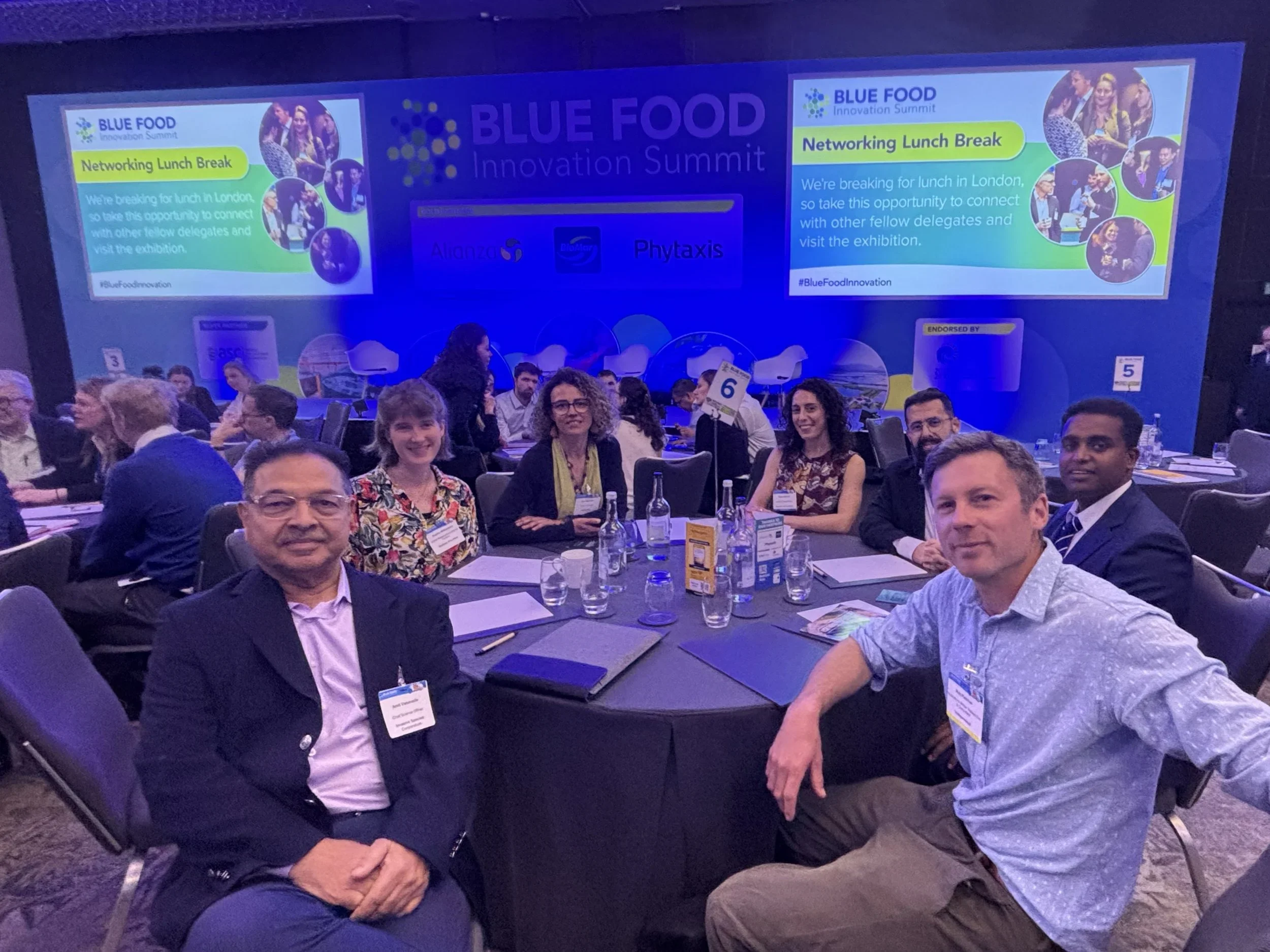
These themes were at the core of the roundtable I hosted, “Welfare by Design: Integrating science, tech, and investment into healthier aquaculture systems.”
The discussion focused on how welfare can be integrated earlier into aquaculture decisions, rather than added later through compliance, certification, or crisis response. For me, “welfare by design” means treating welfare as part of how systems are built. It means asking welfare questions when farms are planned, feeds are tested, technologies are developed, standards are written and investments are assessed.
It also means recognizing that the most practical issues are often the most important ones: the quality of the water animals live in, how disease and mortality are managed, how animals are handled, and whether systems reflect the needs of the species being farmed. The roundtable also reinforced that this work needs to be practical and context-specific. Aquaculture is not one system. Welfare risks vary across species, production models, regions, and supply chains. What is feasible in one context may not be feasible in another and the economic case for welfare will not look the same everywhere.
But complexity should lead to better design, not delay. It should push the sector to ask more precise questions and develop tools that are credible, measurable, and usable by the people making decisions. For ALI, this is where much of the work sits: helping translate aquatic animal welfare into the spaces where it can shape real outcomes. That includes supporting companies in identifying welfare risks, encouraging certifiers to strengthen standards, helping investors understand welfare as part of responsible due diligence, and working with policymakers to close regulatory gaps.
For me, the clearest takeaway from the Summit is that aquatic animal welfare is not separate from the blue food conversation: it is already connected to the issues the sector is trying to solve, from health and risk to resilience and responsible growth. The work now is to make those connections visible enough to shape the choices being made.
Stay updated on Aquatic Life Institute’s global work for aquatic animals, subscribe to our monthly newsletter.