COP30 Recap: Bringing Aquatic Animal Welfare to the Climate Agenda
Aquatic Life Institute (ALI) was on the ground in Belém to bring an urgent message: Aquatic animals must be part of global climate–food system solutions
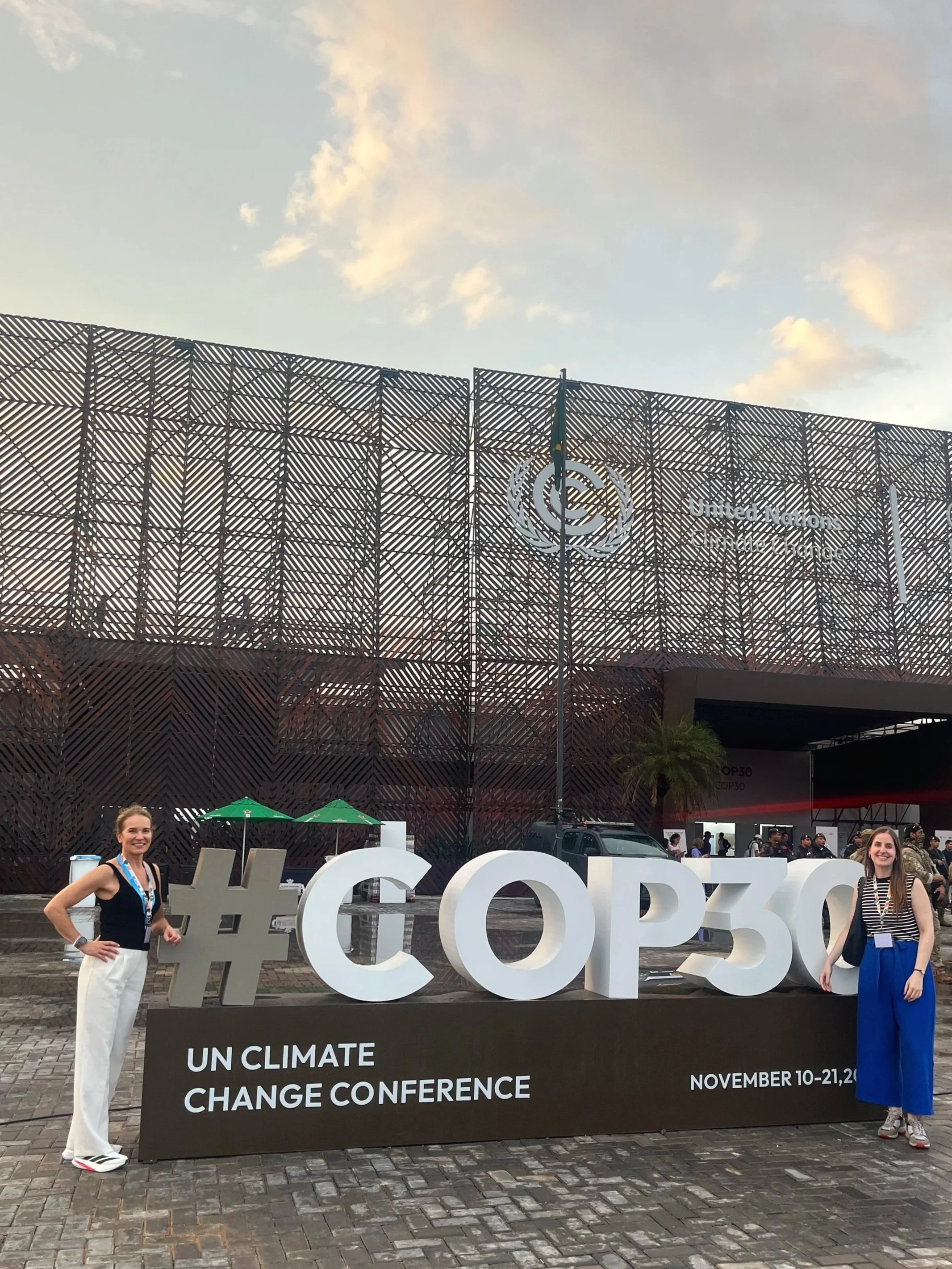
For the first time, the UN Conference of the Parties, COP30, was held in the heart of the Amazon. In November, Belém, Brazil, became the stage for global climate debate, and Aquatic Life Institute (ALI) was on the ground to bring an urgent message: Aquatic animals must be part of global climate–food system solutions. Sophika Kostyniuk, ALI’s managing director, and Julia Seibel, our head of corporate engagement, were there to represent the invisible majority, the trillions of animals that rarely have a voice in these high-stakes policy conversations.
The conference did bring important advances: reinforcing protection of forests, highlighting the role of Indigenous peoples, and increasing adaptation finance. Ocean–climate action also featured more prominently this year. Several countries signalled intentions to expand marine-based measures in their future climate commitments, and Brazil and France announced a new Ocean Task Force to help translate political momentum into coordinated action. The COP30 Presidency additionally introduced a “Blue Package” Roadmap as guidance for countries looking to deepen ocean considerations within their national climate strategies.
These developments reflect a growing recognition that ocean health is central to climate solutions. Yet even within this momentum, the welfare of aquatic animals remains almost entirely absent. As blue foods and marine-based strategies gain visibility, ALI’s presence in Belém was essential to ensure that the trillions of sentient aquatic animals affected by climate and food-system decisions are not overlooked.
Despite these important advances, the welfare of aquatic animals, both farmed and wild, remained largely missing from the formal agenda.
ALI was there to help change that.
Sophika represented ALI at three high-profile panels in the Blue Zone, two at the UN FAO / CGIAR Pavilion and one at the Food Roots & Routes Pavilion, where she made a powerful case for integrating aquatic animal welfare into climate-food system solutions. In the “Transforming Blue Food Systems” session, ALI stressed that scaling blue foods must be rooted in justice, equity, and welfare, with community leadership at its core. During the “Just Transition from Industrial Animal Agriculture” panel, we argued that moving toward aquatic production isn’t just a climate mitigation strategy, it’s also about building a more welfare-focused and equitable food future.
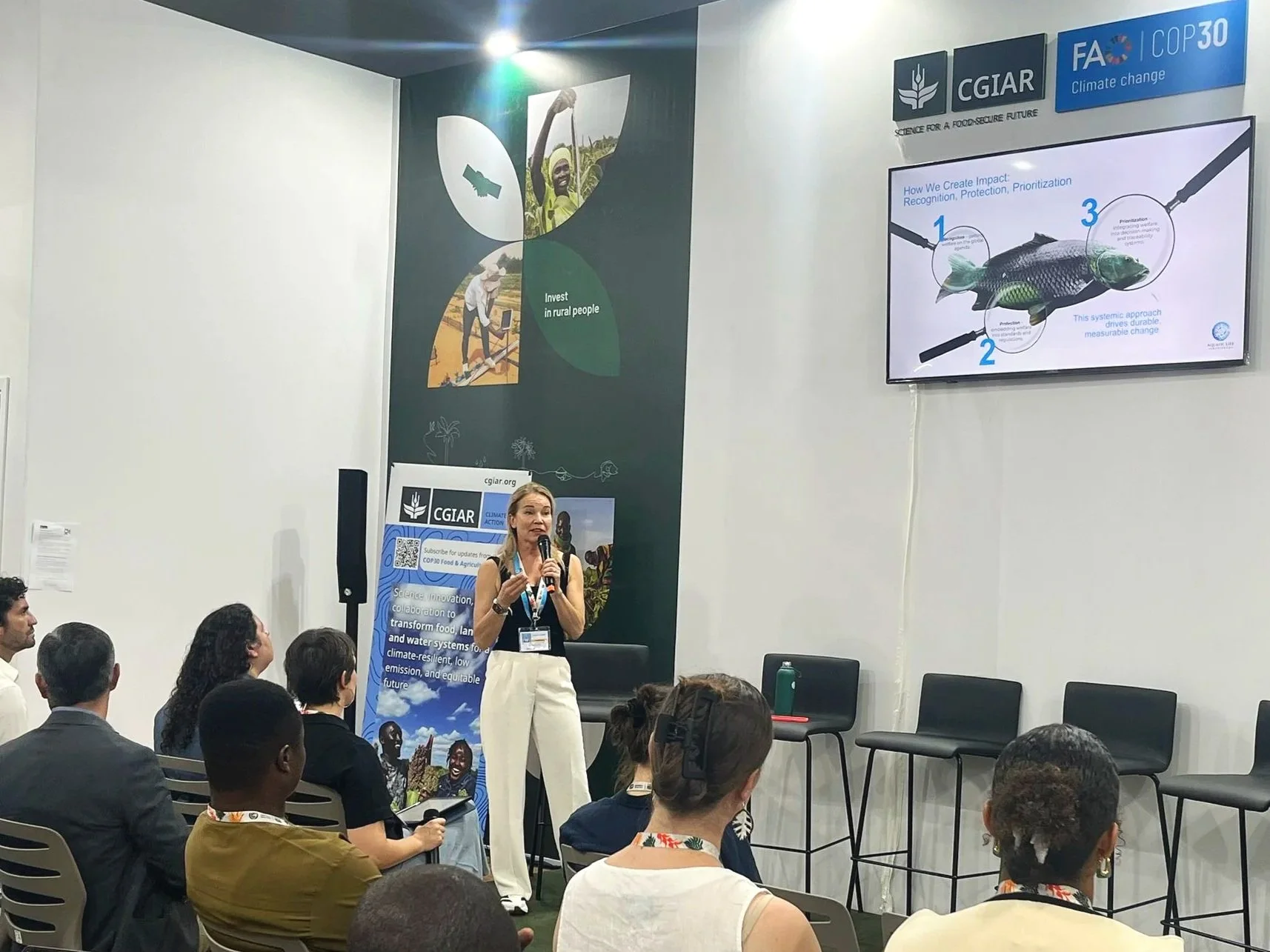
Finally, in a session on “Enabling Holistic NDCs,” Sophika presented a practical tool, developed by the World Federation for Animals (WFA) together with its members, including ALI, to help governments weave aquatic food systems, biodiversity, and welfare into their Nationally Determined Contributions, turning ambition into actionable policy. We were grateful to share the stage with other speakers from governments, civil society, and international organizations who are also working toward a more ethical and sustainable food system, and it was inspiring to see these sessions well attended and fully engaged.
“It was very important for ALI to be at COP30 and speak up for aquatic animals. As Blue Foods grow and are promoted as a climate solution, we must be very careful. We need to prioritize aquatic animal welfare and favor lower-trophic or vegetarian species to avoid negative ripple effects. ALI was there to share that message.”
— Sophika Kostyniuk, ALI Managing Director
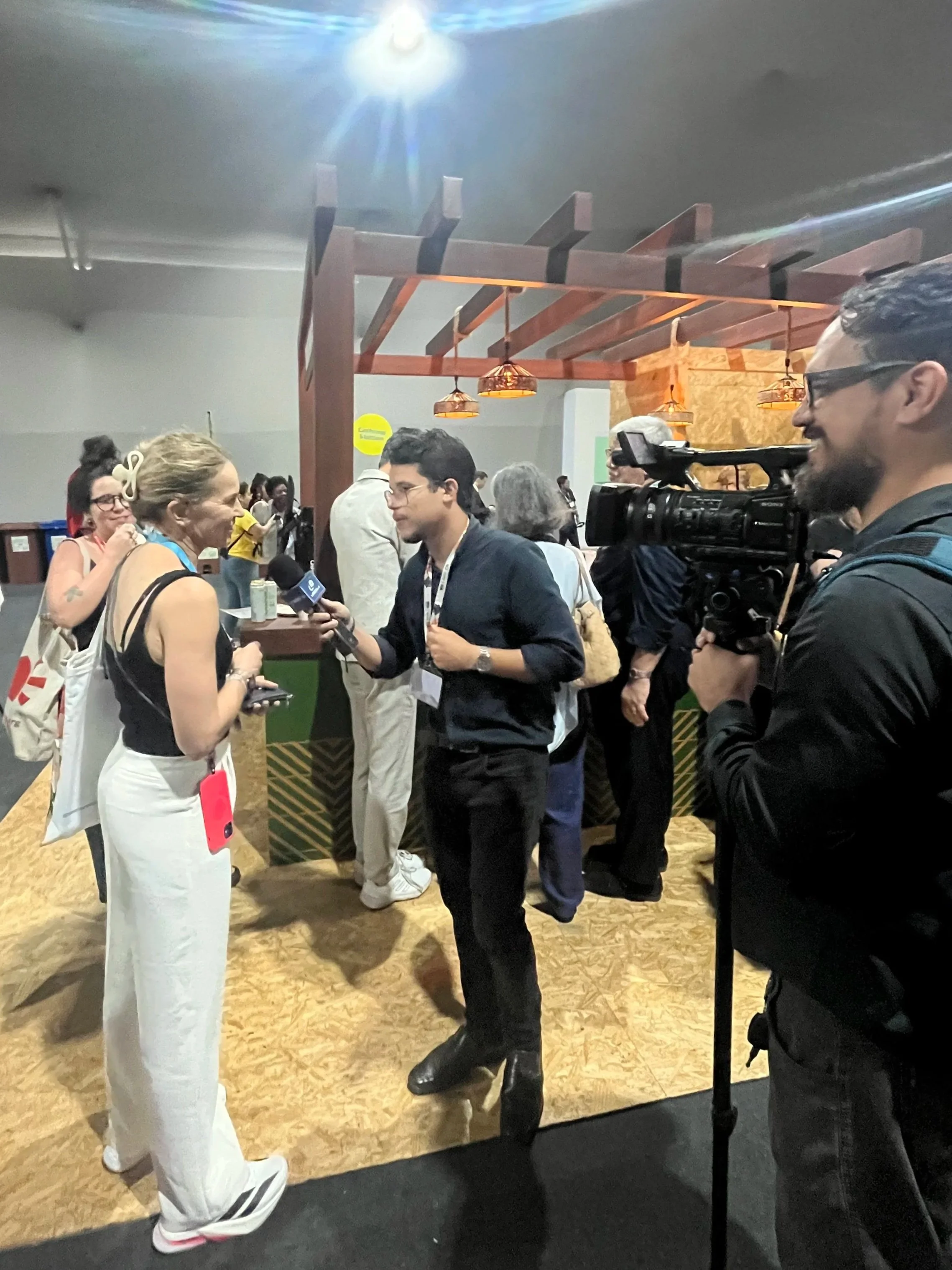
Beyond the panels, COP30 was a key opportunity to connect with partners. At the WFA booth and across side events, we met with NGOs, food‑system actors, companies, and policymakers, strengthening alliances and positioning ALI as a bridge between aquatic welfare and climate‑food systems.
What’s Next?
COP30 sharpened our focus: Building on the visibility and new alliances forged in Belém, we’ll scale our advocacy for stronger welfare provisions across blue-food policies, advance aquatic animal considerations within global climate frameworks and strengthen collaboration with key policy, corporate, civil society, and research partners. We emphasize that what’s needed isn’t just isolated action, but systemic change across food, climate, and ocean governance frameworks. Through our cross-sector work, we will ensure aquatic animals are recognized, protected, and prioritized.
Being in Belém, at the heart of the Amazon, showed us again why we do this work. Surrounded by the power of nature, we were constantly reminded that climate justice and animal welfare are deeply connected. That sense of place renewed our commitment to drive real change, not just talk about it.
Find out more about ALI’s approach to embedding aquatic animal welfare into global frameworks in our latest case study for The Invisible Majority project. To support our plans for 2026, please consider donating today.