Legal Voices Back Preventive Approach to Octopus Farming: NYC Bar Association Endorses Federal OCTOPUS Act
Several materials produced by Aquatic Life Institute (ALI) were cited, among the significant research referenced throughout the endorsement, to contribute to the case for preemptive legislation
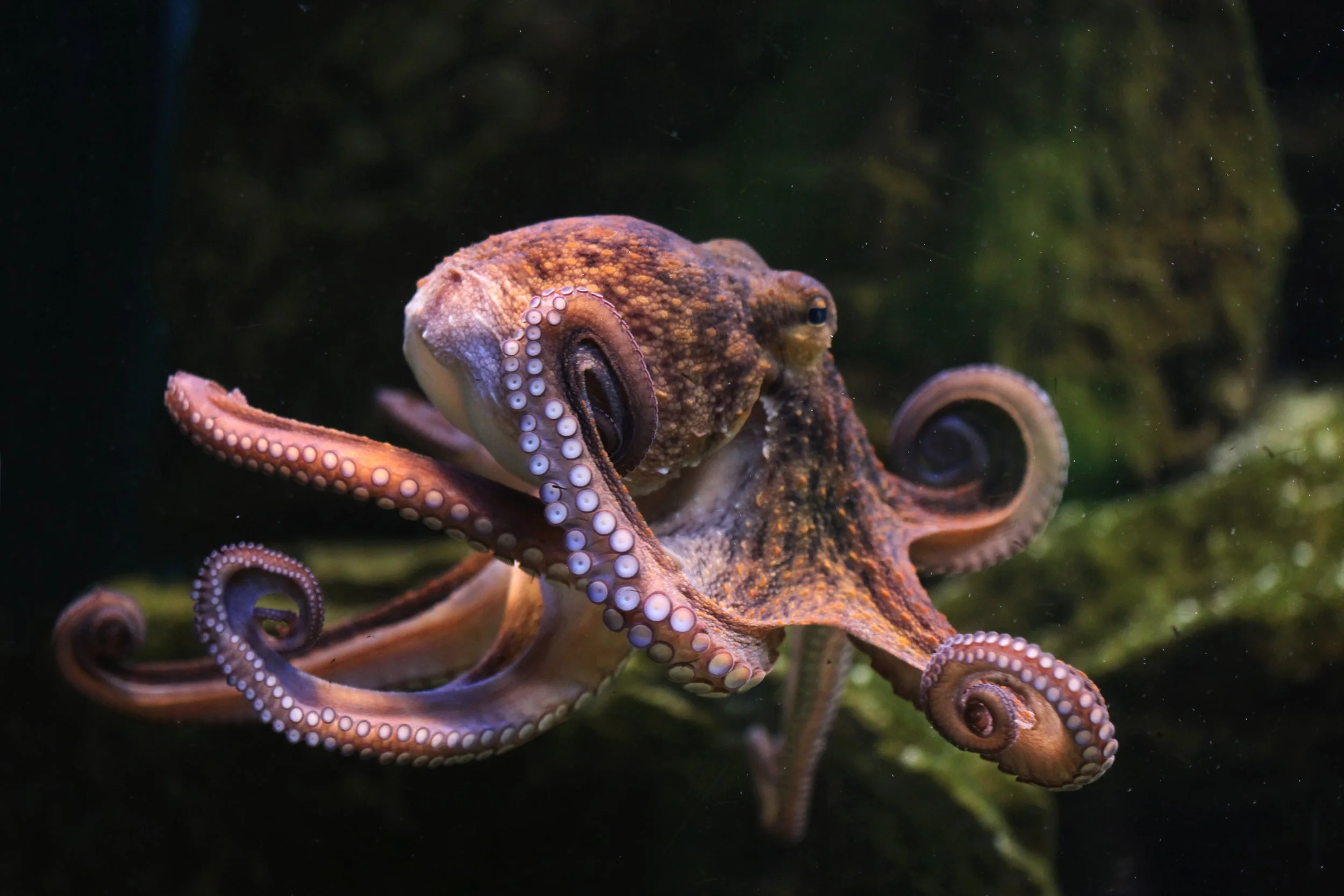
The New York City Bar Association’s Animal Law Committee has just released a legislative report endorsing the federal OCTOPUS Act of 2025, a bill that would prohibit commercial octopus aquaculture and restrict the trade of farmed octopus products in the United States. The endorsement itself is notable, but what makes it especially encouraging is how closely the Committee’s reasoning aligns with the concerns that researchers, advocates, and marine policy experts have been raising for several years.
The report recognizes that octopus farming would introduce a range of unnecessary risks: from welfare issues tied to sentience and confinement, to ecological pressures linked to fishmeal and fish oil (FMFO), to broader questions around public health, sustainability and the lack of demonstrable benefit. These concerns are not abstract. They have been examined in scientific literature, reflected in multiple policy discussions across jurisdictions, and increasingly voiced within conservation and animal welfare circles. The Committee’s endorsement signals a growing consensus that industrial octopus farming is not compatible with responsible ocean stewardship or with current understandings of cephalopod cognition and welfare.
Among the references, several materials produced by Aquatic Life Institute (ALI) were cited to contribute to the case for pre-emptive legislation. In our campaign report “Nueva Pescanova: prioritizing profits and polluting Las Palmas – the world’s first large scale octopus farm” (2023), we outlined the ecological trade-offs of intensive octopus aquaculture, including heavy reliance on FMFO, feed conversion inefficiencies, and the incompatibility between cephalopod cognition, solitary behavior and high-density confinement. A coalition letter from the Aquatic Animal Alliance, submitted under ALI coordination in 2025, was also referenced, as it reflects emerging global support for precautionary, pre-emptive legislation before the industry scales. Finally, the report cited the Mongabay op-ed, written by Giulia Malerbi, ALI’s Head of Global Policy, "Octopus farming is a dangerous detour for marine conservation,” which emphasizes the ecological detours and opportunity costs of introducing another carnivorous aquaculture sector at a moment when marine systems are already under stress . Taken together, these reflections help illuminate why preventive legislation like the OCTOPUS Act matters and why mainstream legal bodies are now approaching the issue through a precautionary lens.
This endorsement also arrives at a moment of significant momentum in the United States and abroad, with preventive bills under consideration in multiple states and legislative discussions advancing in other jurisdictions concerned about aquaculture expansion. The City Bar’s report strengthens the argument that decision-makers do not need to wait for industrial octopus farming to materialize before acting. Instead, they can proactively avoid predictable welfare, ecological, and public health harms: a rare opportunity in the context of intensive animal production systems.
If you’d like to learn more about ongoing efforts to prevent industrial octopus farming and advance aquatic animal welfare, explore ALI’s campaign materials and sign up for our newsletter for updates.