
Fish Welfare in Wild Capture Fisheries
A new report, Catching Up, published by Eurogroup for Animals highlights the various hazards faced by wild-caught fish and proposes strategies to reduce unnecessary suffering. Importantly, it explains that although approximately one trillion fish are captured each year and scientific evidence shows that they are sentient beings, there is little public awareness about fish welfare globally compared with that for land animals.
While wild fish enjoy a near-natural life, the capture and handling process produce extremely stressful experiences, including being chased to exhaustion, crushed, injured by the fishing gear, eaten by predators while trapped, or decompression injuries as they are brought to surface. If they survive the capture process, they are often asphyxiated or killed without stunning.
The report notes that these are “practices that would not be allowed in any kind of terrestrial animal production.”
A survey conducted by Eurogroup for Animals indicates that although public awareness of wild fish suffering is low, their concern is high:
89% believe humane slaughter is important or essential for good fish welfare.
79% of people think that the welfare of fish should be better protected than it is now.
79% of people would like to see information about the fish's welfare on the product label.
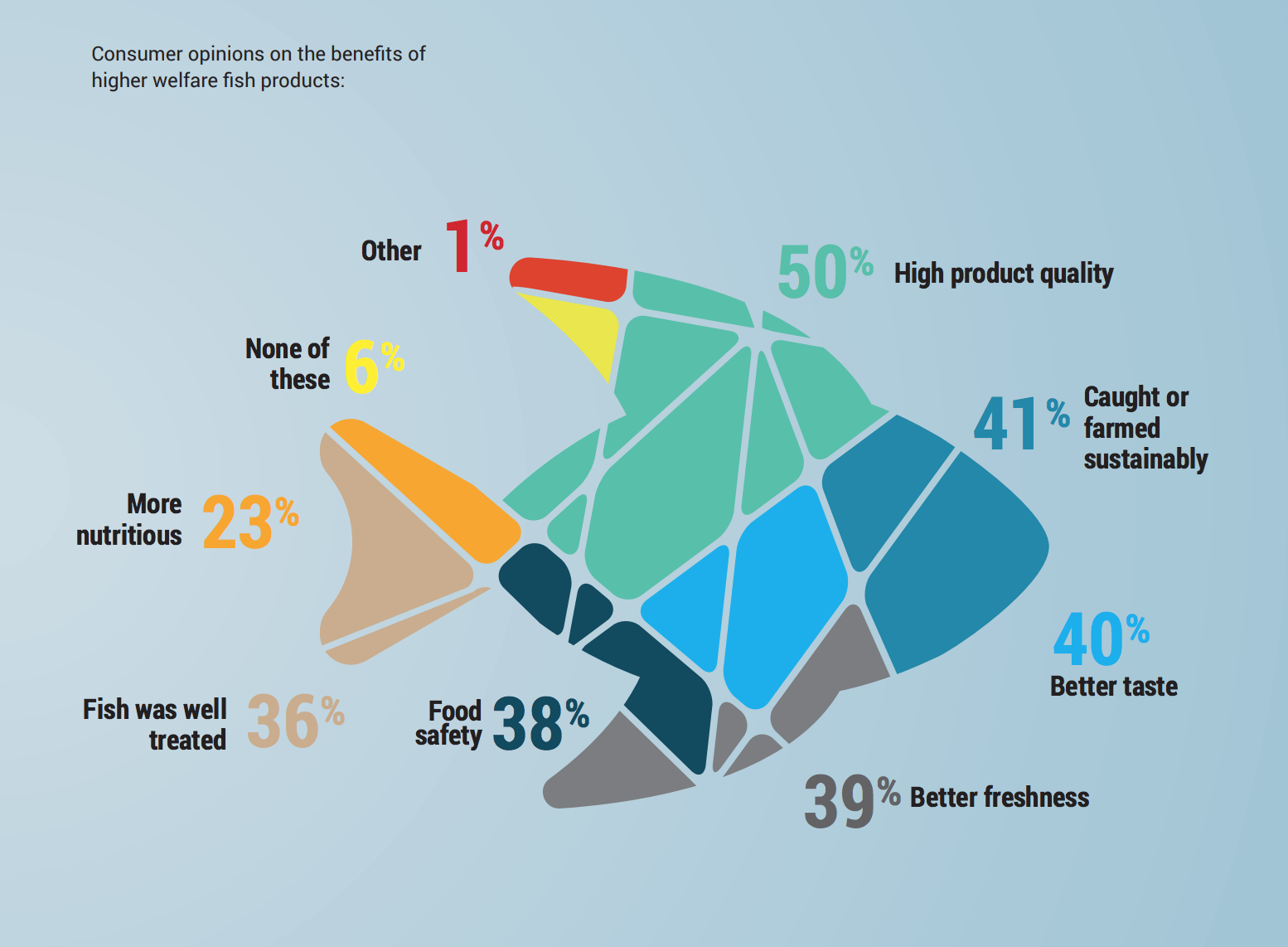
Consumer opinions on the benefits of higher welfare fish products from Eurogroup for Animals.
The report concludes with recommendations for improved fishing practices that reduce suffering, bycatch and ghostgear, calls for industry regulators to take welfare into account, and clear welfare information on product labels so that consumers can make informed purchasing decisions.
“With more attention on welfare aspects of commercial fishing, it will be possible to introduce and enforce better practices, attempting to close the gap between the scientific consensus about the importance of fish welfare, consumer expectations about making welfare-based choices - made possible with more comprehensive labelling - and the reality for fish.”