Wild Atlantic Salmon are Threatened
Leaping salmon
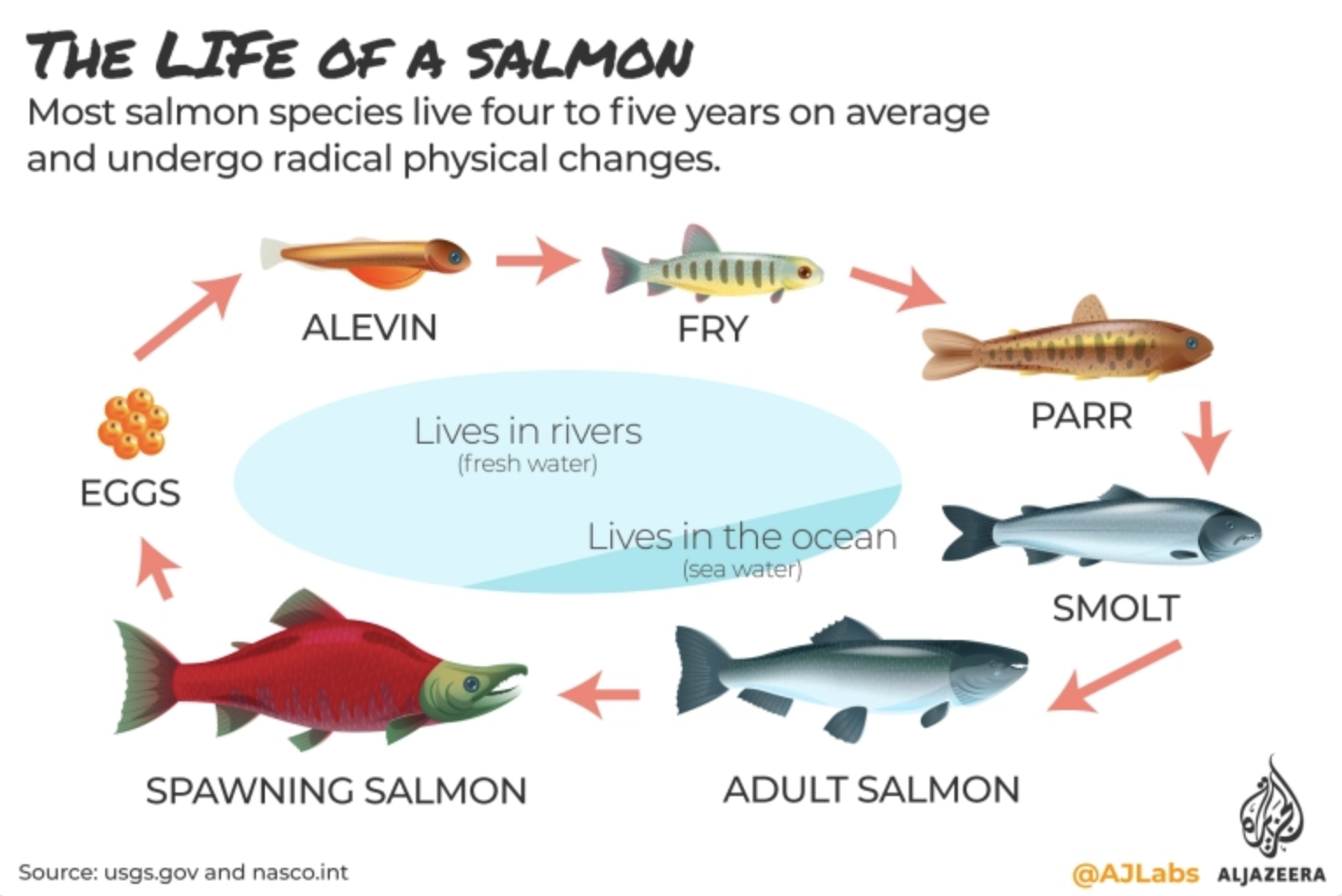
Many years ago, I stood mesmerised by the flowing waters of the River Ettrick in the Scottish town of Selkirk. The place was alive with leaping fish, an astonishing sight as salmon migrating from seas off Greenland and Iceland leapt upstream over the town weir in their dozens. The wild fish were coming back to their home waters to spawn, as they have done for millennia.
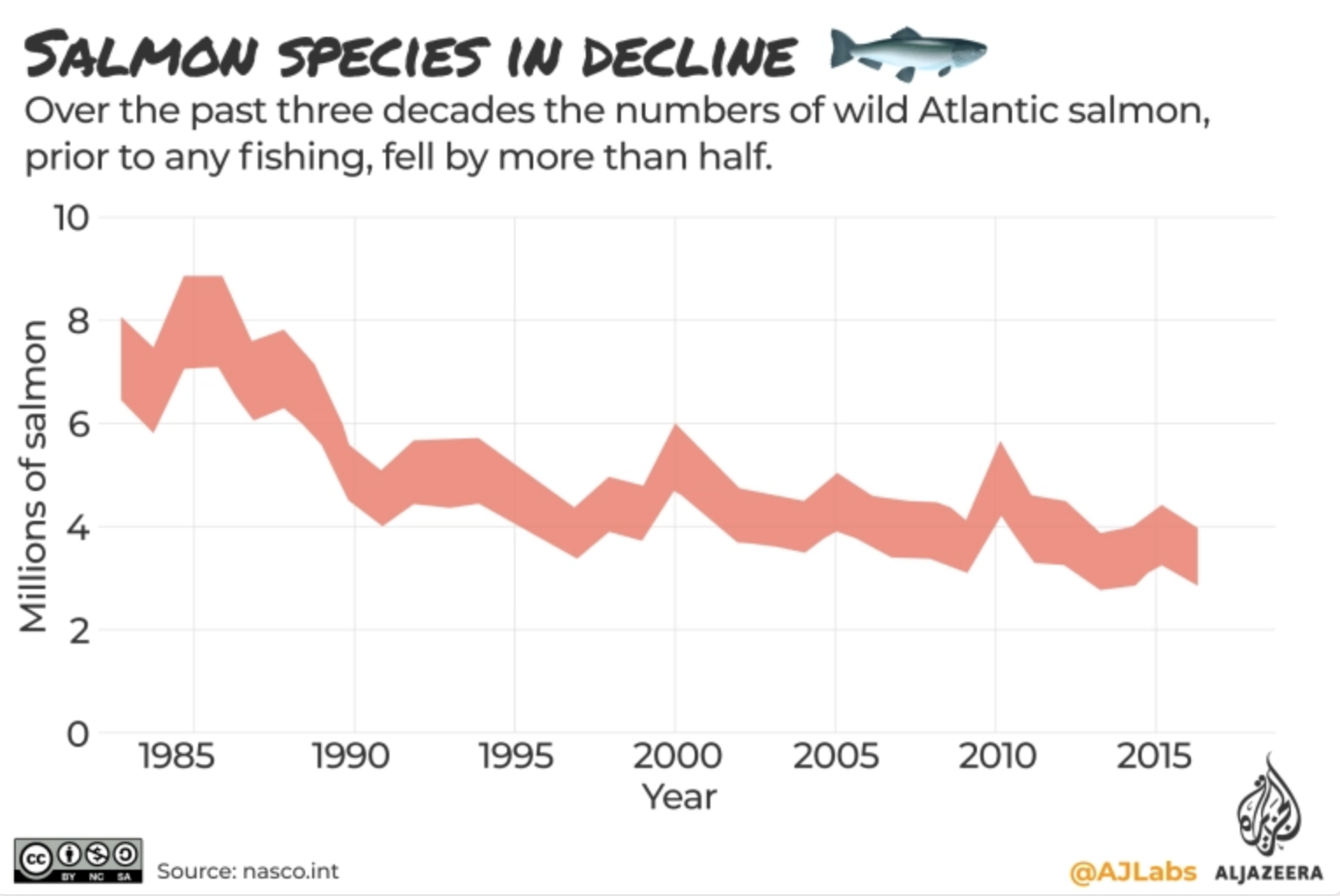
But year after year, the numbers of returning salmon have been decreasing. And in the last few years, the decline has been in freefall. In Scotland, it is estimated that less than 5 percent of salmon return to their rivers, compared with 20 percent 50 years ago. And it is a problem across the range of the Atlantic salmon, from the United States to Russia.
“In 1985 there were between eight to 10 million salmon in Atlantic waters and rivers,” said Mark Bilsby of the Atlantic Salmon Trust. “Now we estimate numbers of two to three million. They are the proverbial canary in the coal mine, telling us something is drastically wrong in our rivers and seas.”
Sea lice
Andrew Graham-Stewart is the director of Salmon and Trout Conservation, Scotland. He said that parasitic sea lice emanating from salmon farms have had a deadly impact on wild salmon numbers in the west highlands and islands of Scotland. The parasites latch on to and kill the fish before they even have a chance of reaching the open ocean. In Scotland, there are now more than 200 fish farms, which produce over 150,000 tonnes of salmon a year.
Graham-Stewart also stressed the need to address the factors limiting the number of juvenile salmon migrating from river to sea. “These include chemical and other pollution from agriculture and forestry, plus the impact of dams which deny or limit access for adult salmon to large areas of spawning habitat.”
Environmental issues
1. The warmest decade: Some key climate groups, as well as NASA, put last year in a tie with 2016 as the warmest year on record. The “exceptionally hot” 2020 also helped cement the last decade as the warmest ever recorded.
2. Can the northern white rhino be saved?: With only two animals remaining, and the species declared extinct in the wild in 2008, scientists are looking for hope in stem cell research.
3. Reversing Trump’s Monumental changes: Two national monuments in Utah – Bears Ears and Grand-Staircase Escalante – were shrunk significantly under the Donald Trump presidency, paving the way for resource extraction. But the Joe Biden administration is expected to reverse this.
4. No vaccine for climate change: The world has fallen far behind in adapting to climate change, a new UN report said, while the COVID-19 pandemic has also pushed the climate crisis down the list of priorities for most countries.