

— Key Resources / resource libraryResource Library
— FEATURED RESOURCE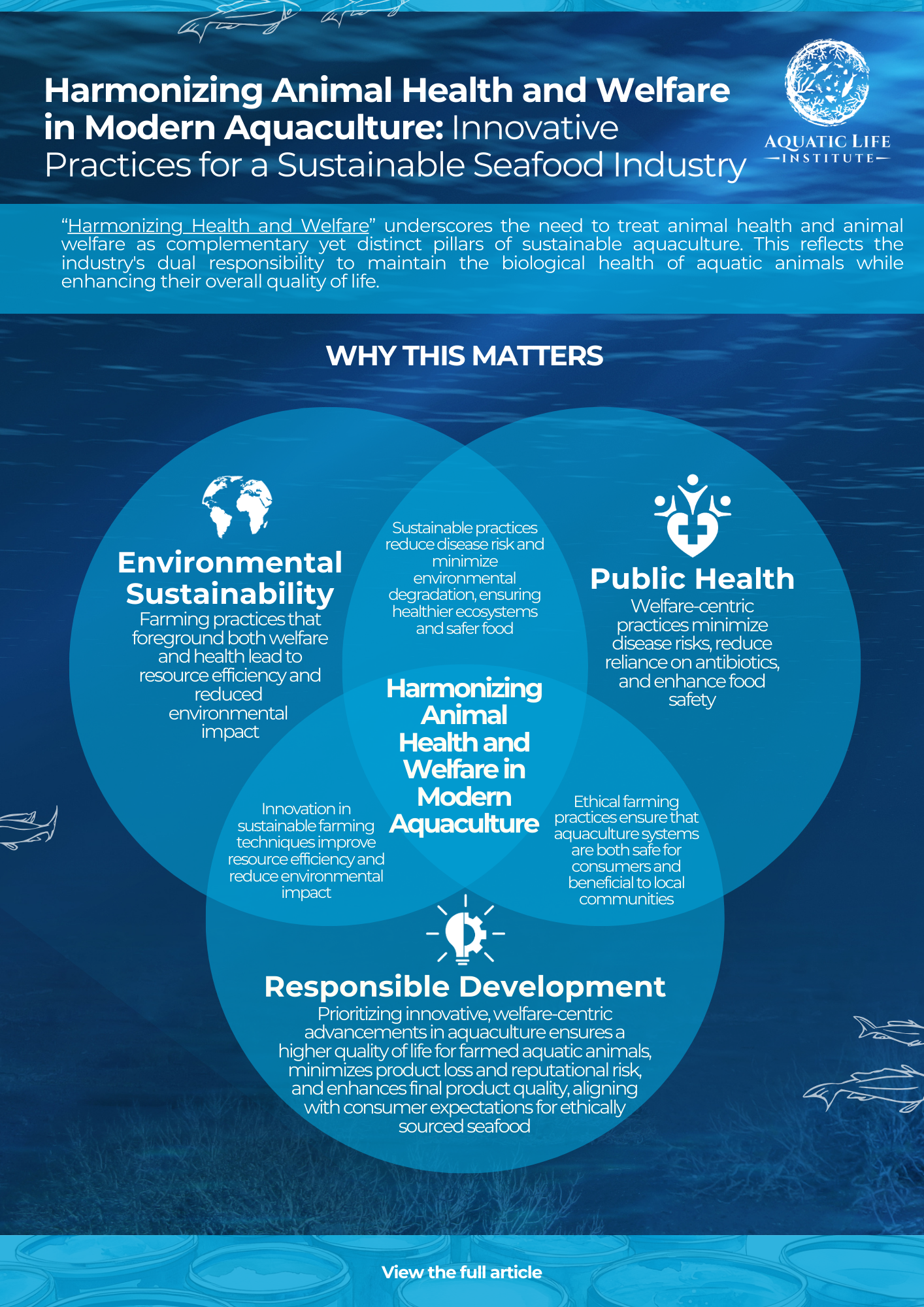
“Harmonizing Health and Welfare” underscores the need to treat animal health and animal welfare as complementary yet distinct pillars of sustainable aquaculture. This reflects the industry's dual responsibility to maintain the biological health of aquatic animals while enhancing their overall quality of life.

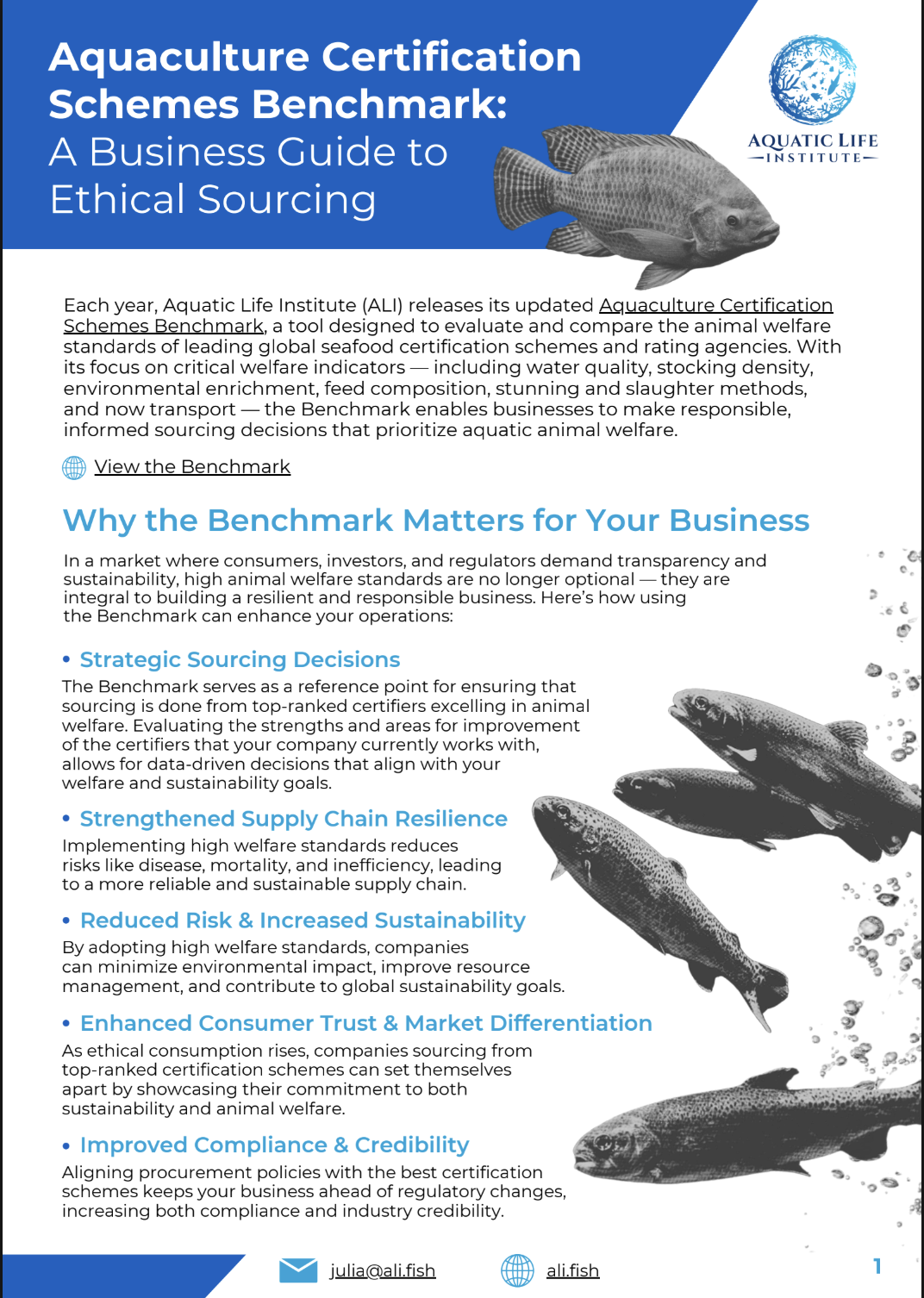
Learn how ALI’s Aquaculture Certification Schemes Benchmark can help businesses to make responsible, informed sourcing decisions that prioritize aquatic animal welfare
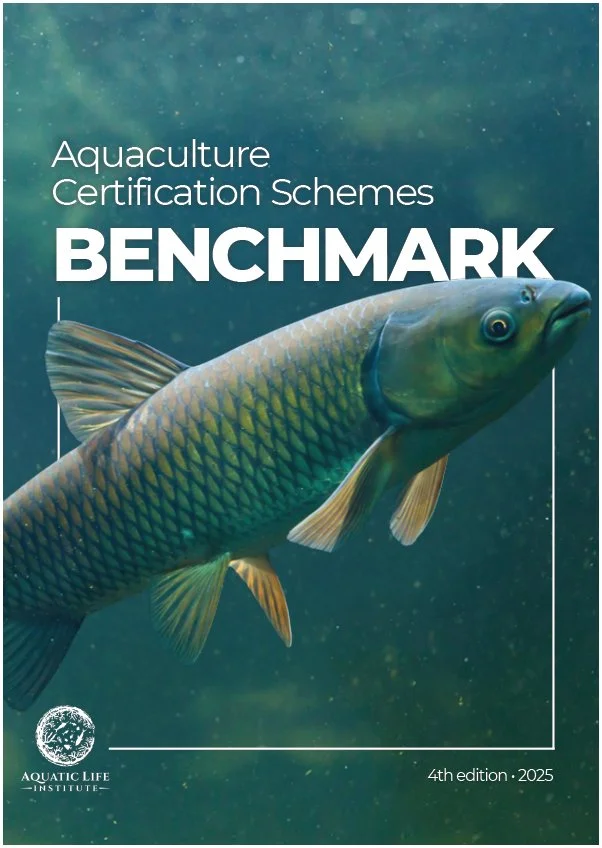
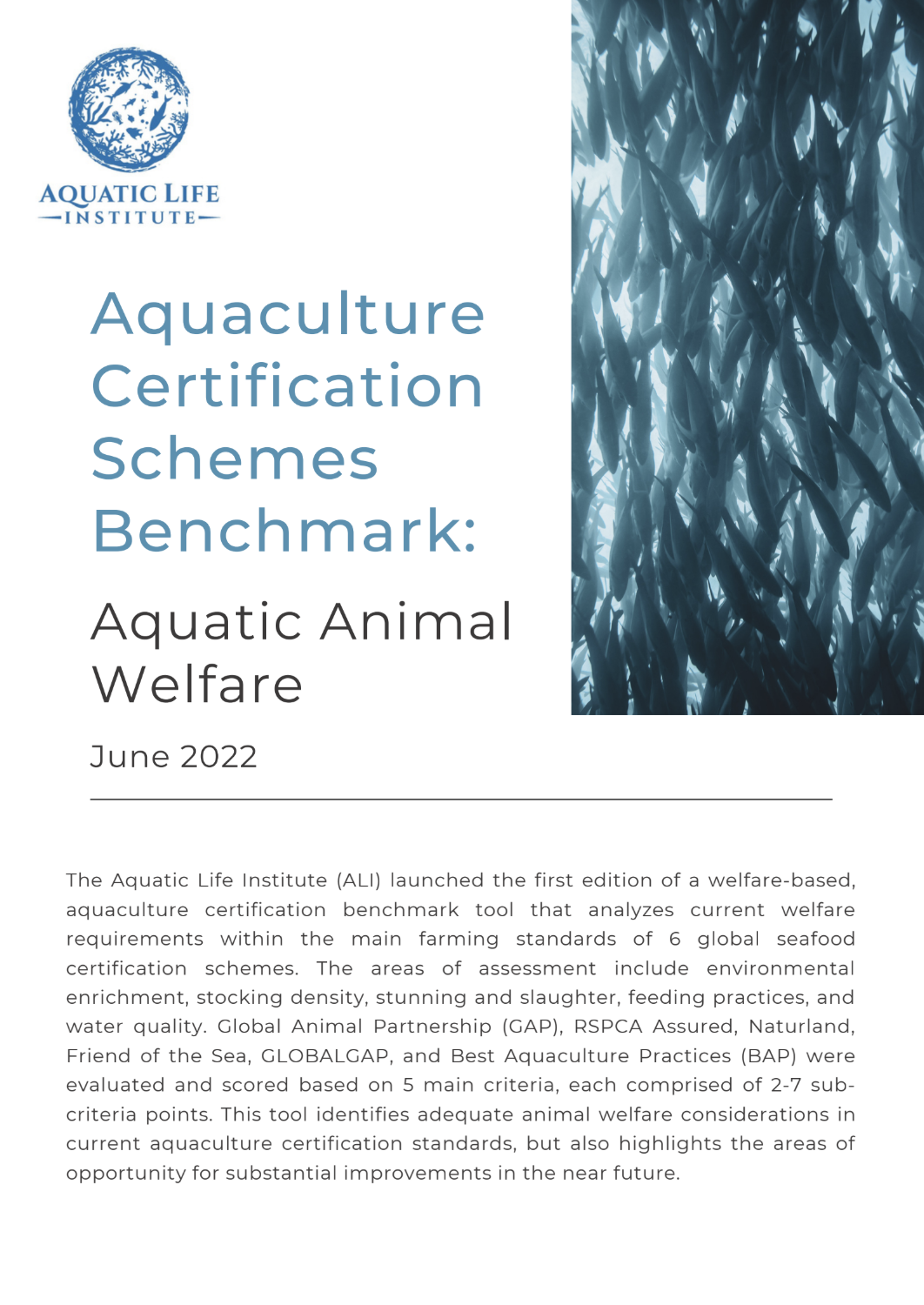
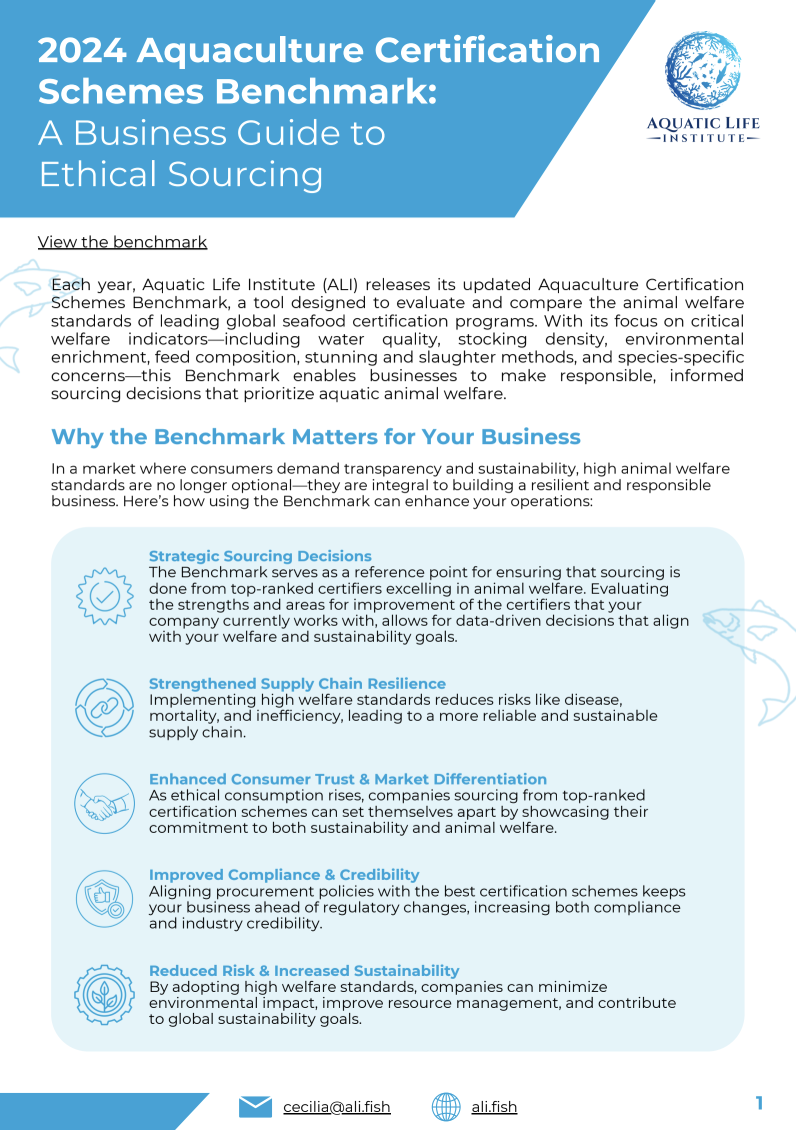
Aquatic Life Institute (ALI) has launched the fourth edition of the Aquaculture Certification Schemes Benchmark. In 2025, the report evaluated 9 certification schemes and 2 rating agencies, providing a comprehensive overview of how welfare commitments are currently embedded across leading global standards.
CERTIFICATION PROGRAM
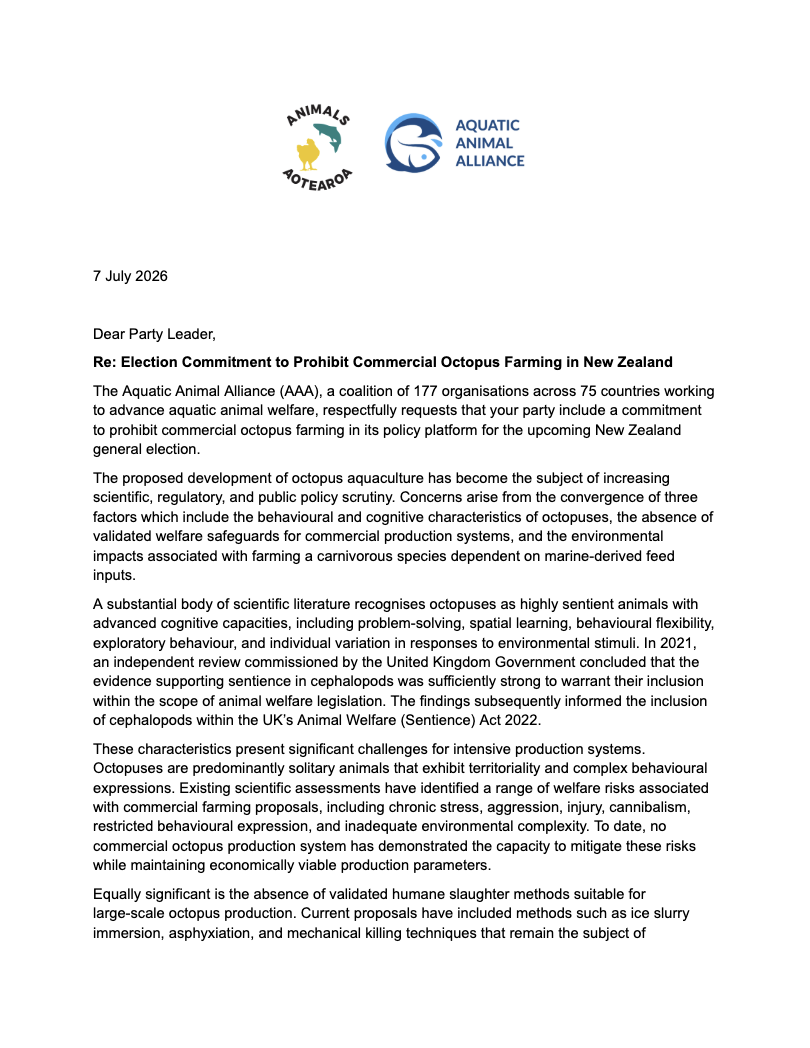
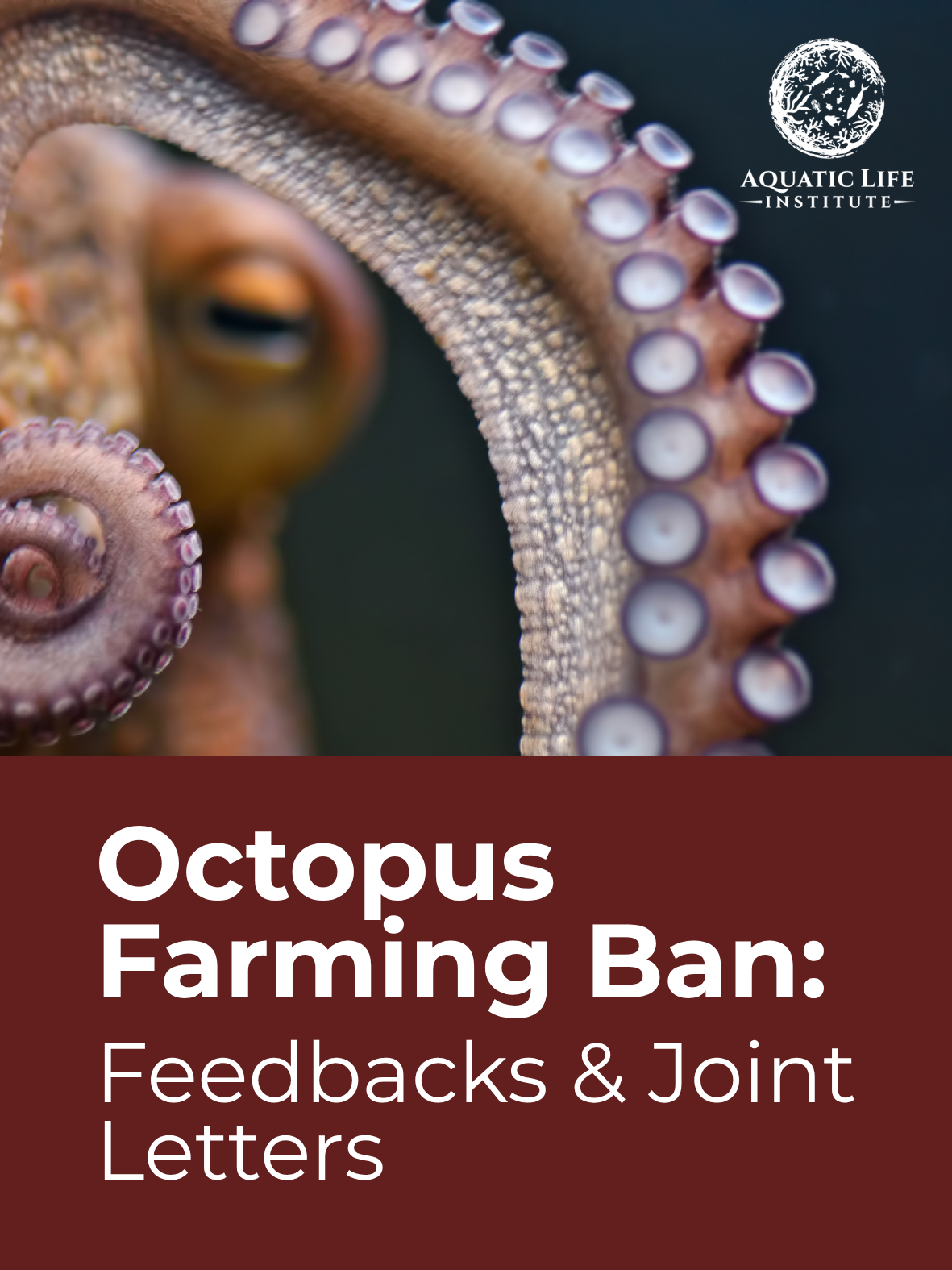
Advocacy charity Animals Aotearoa wrote to every New Zealand political party, requesting that they include a commitment to prohibit commercial octopus farming in their policy platforms for the upcoming election. The letter, cosigned by the Aquatic Animal Alliance coalition of 177 organizations across 75 countries - including NZ-based SPCA and SAFE - points to scientific evidence that octopuses are highly sentient animals with advanced cognitive abilities.
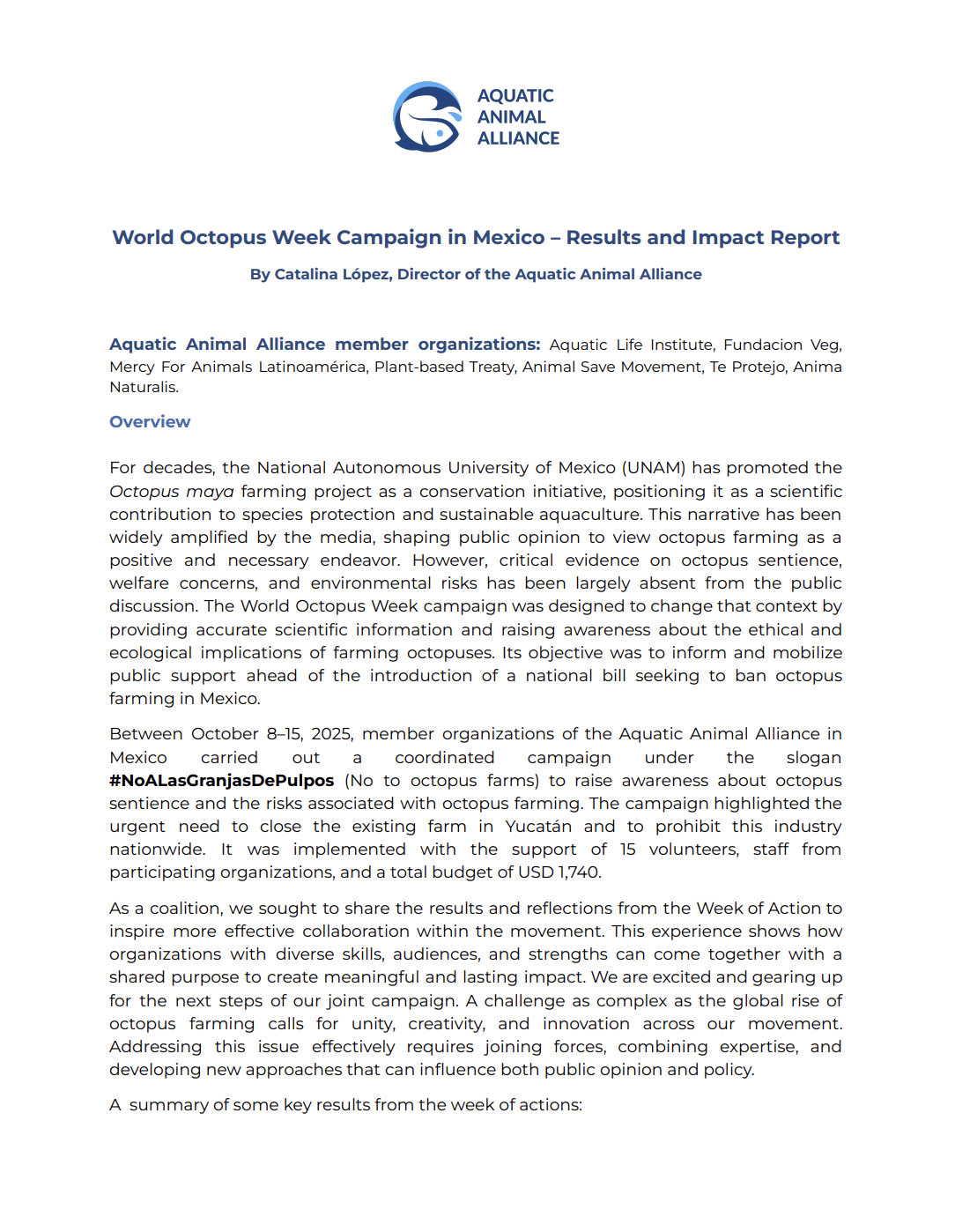
Between October 8–15, 2025, member organizations of the Aquatic Animal Alliance in Mexico carried out a coordinated campaign under the slogan #NoALasGranjasDePulpos (No to octopus farms) to raise awareness about octopus sentience and the risks associated with octopus farming
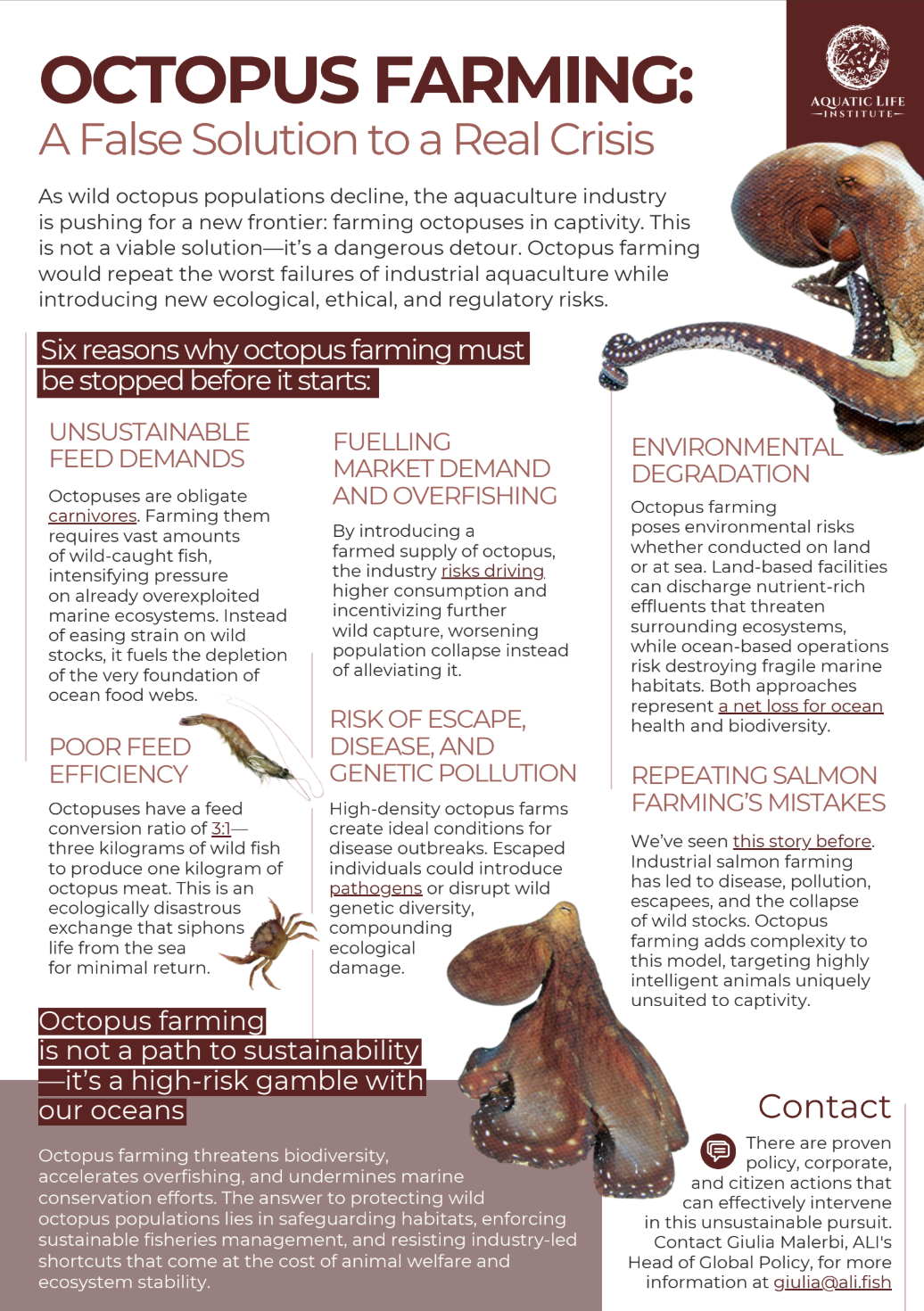
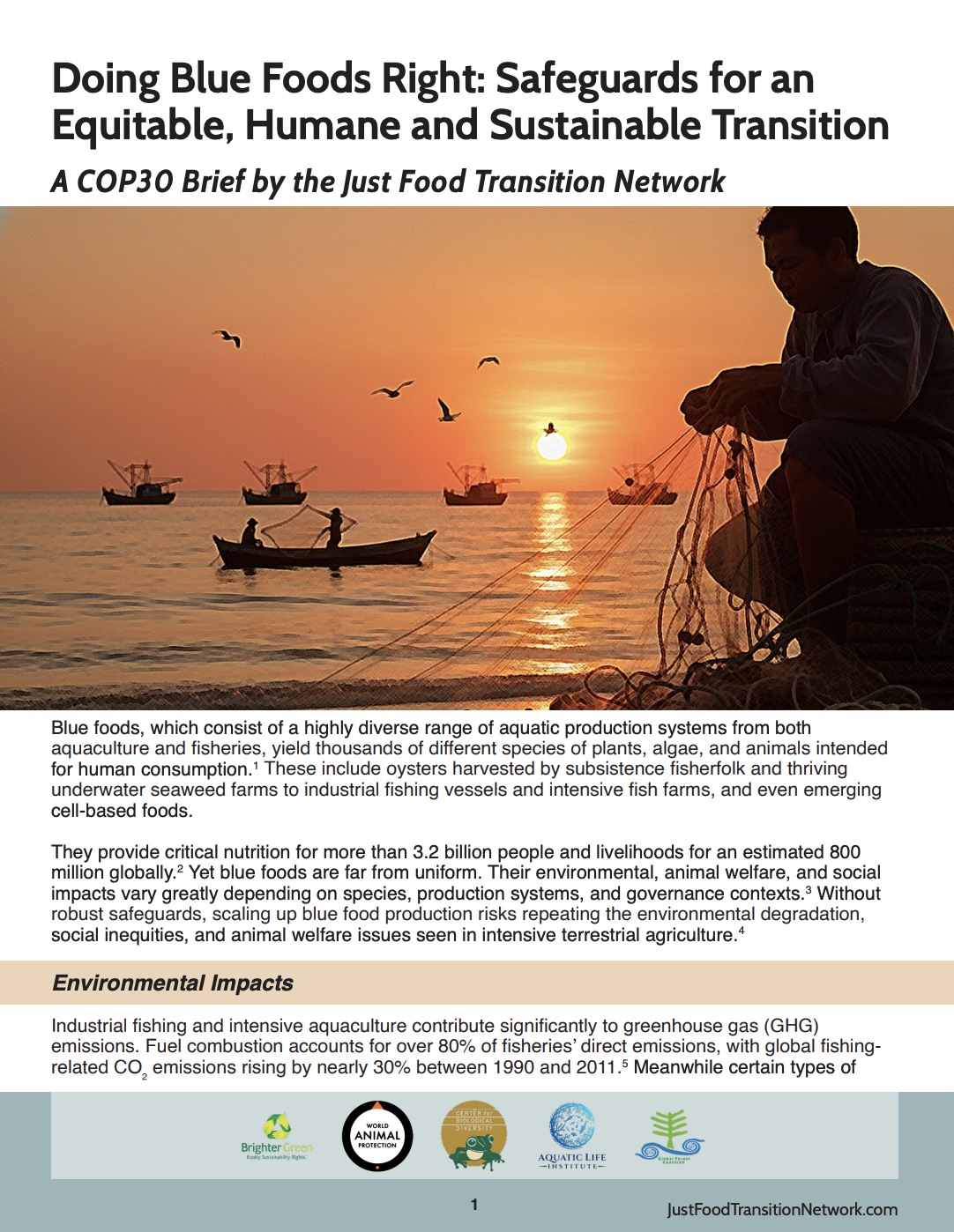
As wild octopus populations decline, the aquaculture industry is pushing for a new frontier: farming octopuses in captivity. This is not a viable solution—it’s a dangerous detour.
OCTOPUS FARMING BAN
“Harmonizing Health and Welfare” underscores the need to treat animal health and animal welfare as complementary yet distinct pillars of sustainable aquaculture. This reflects the industry's dual responsibility to maintain the biological health of aquatic animals while enhancing their overall quality of life.
WELFARE GUIDES
Learn how ALI’s Aquaculture Certification Schemes Benchmark can help businesses to make responsible, informed sourcing decisions that prioritize aquatic animal welfare
Aquatic Life Institute (ALI) has launched the fourth edition of the Aquaculture Certification Schemes Benchmark. In 2025, the report evaluated 9 certification schemes and 2 rating agencies, providing a comprehensive overview of how welfare commitments are currently embedded across leading global standards.
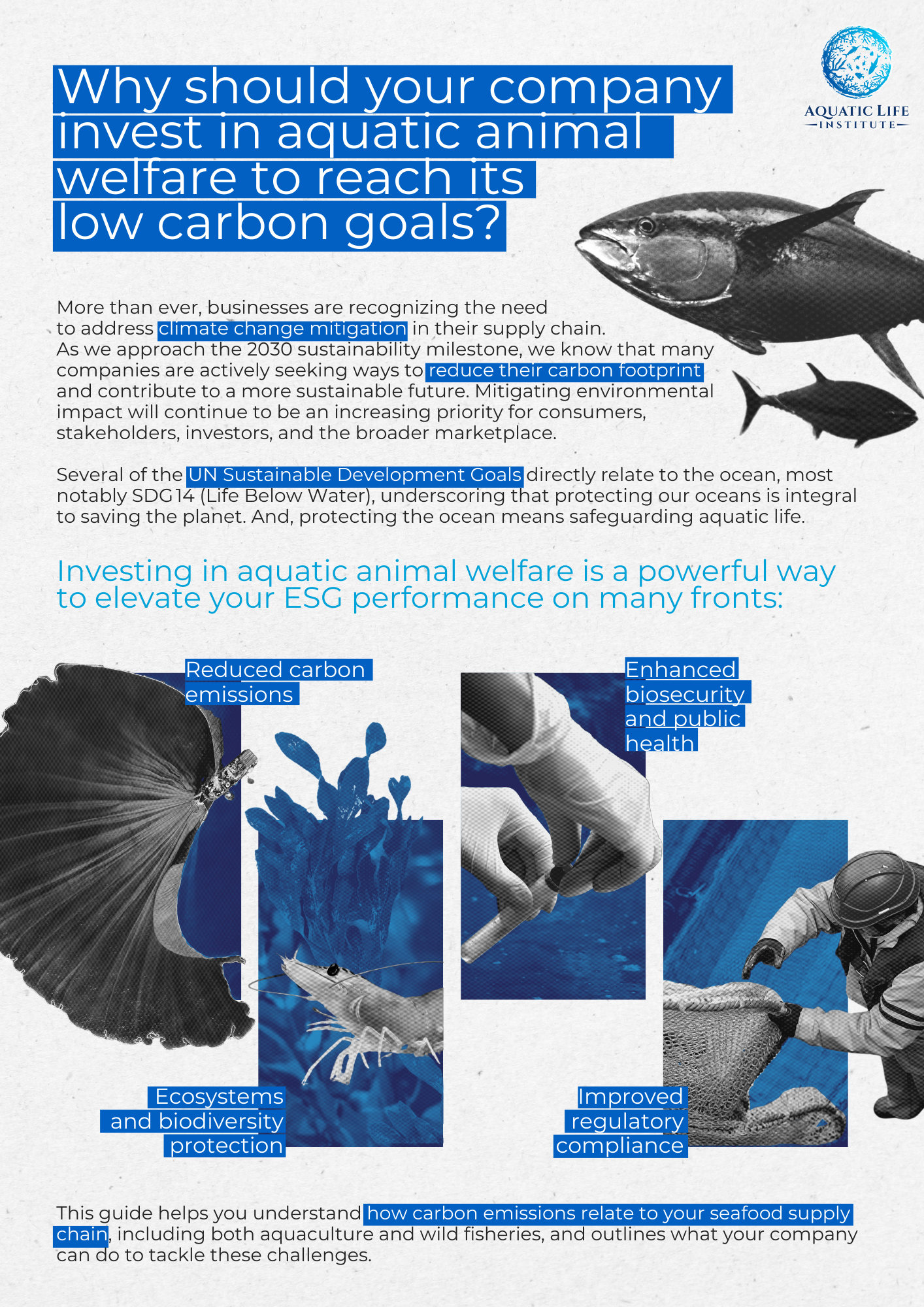
Aquatic Life Institute has put together a helpful guide to illustrate how carbon emissions relate to seafood supply chains, including both aquaculture and wild fisheries, and to outline what your company can do to tackle these challenges.
CORPORATE
POLICY REFORM
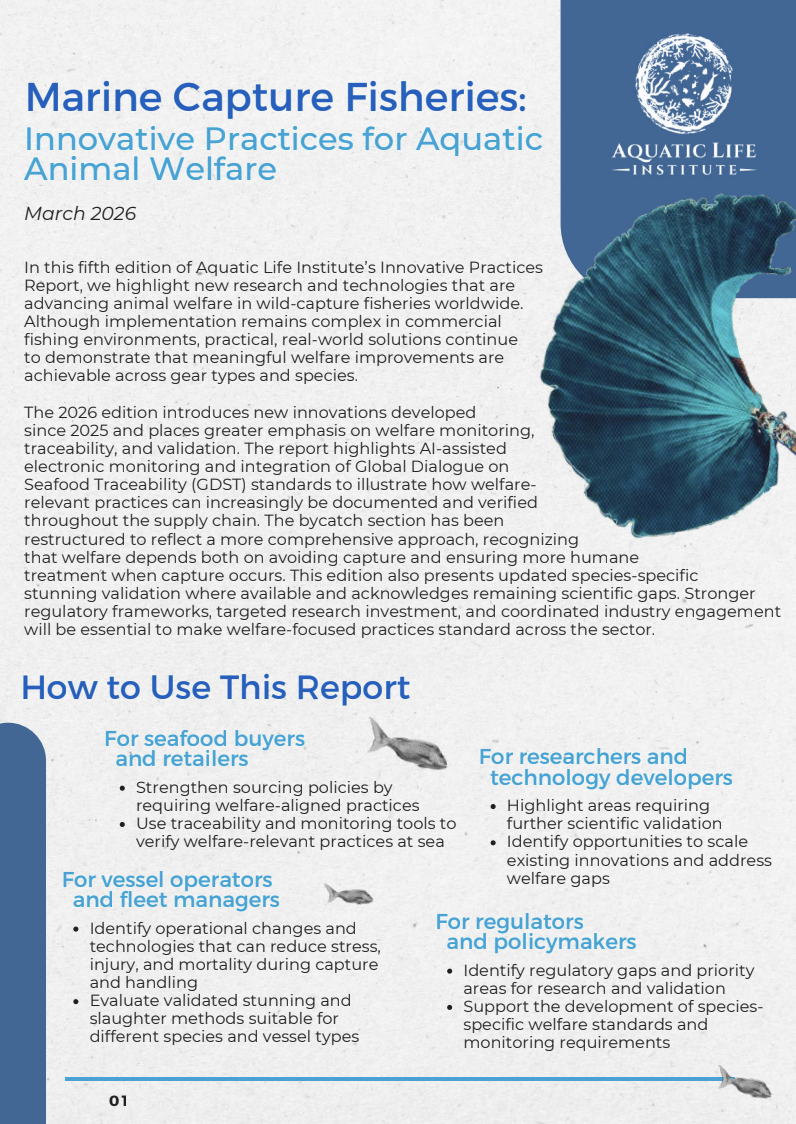
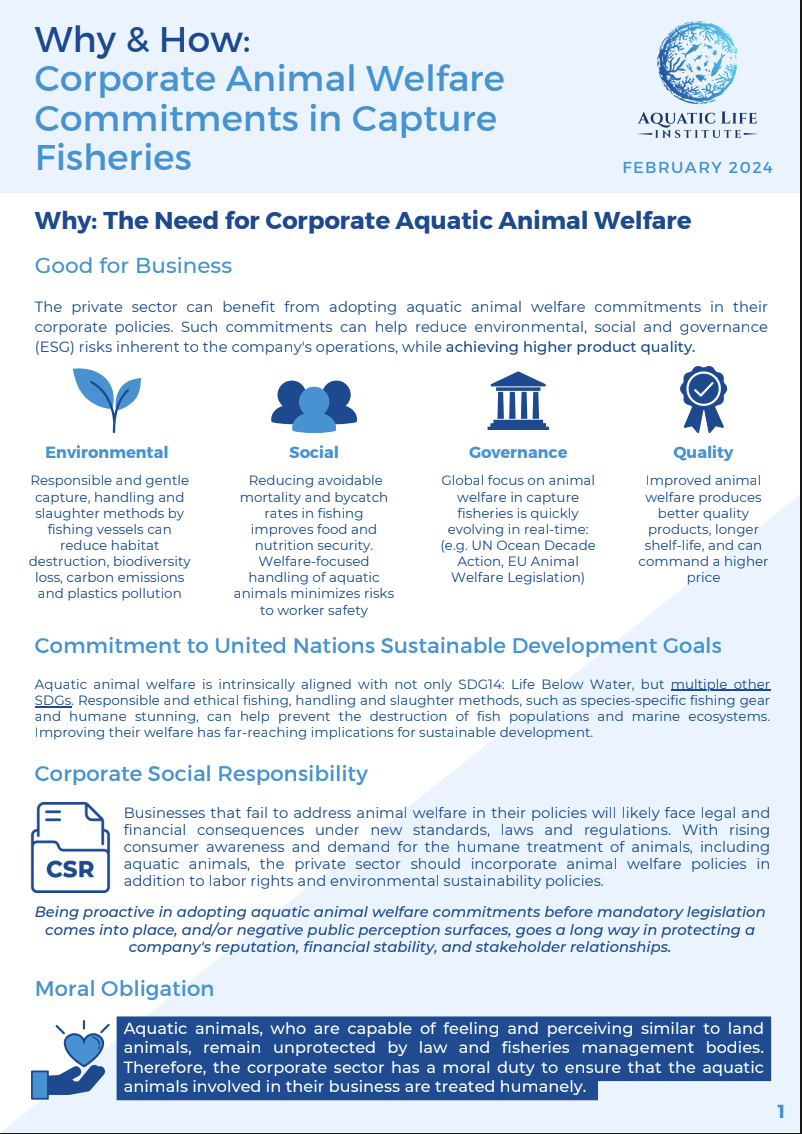
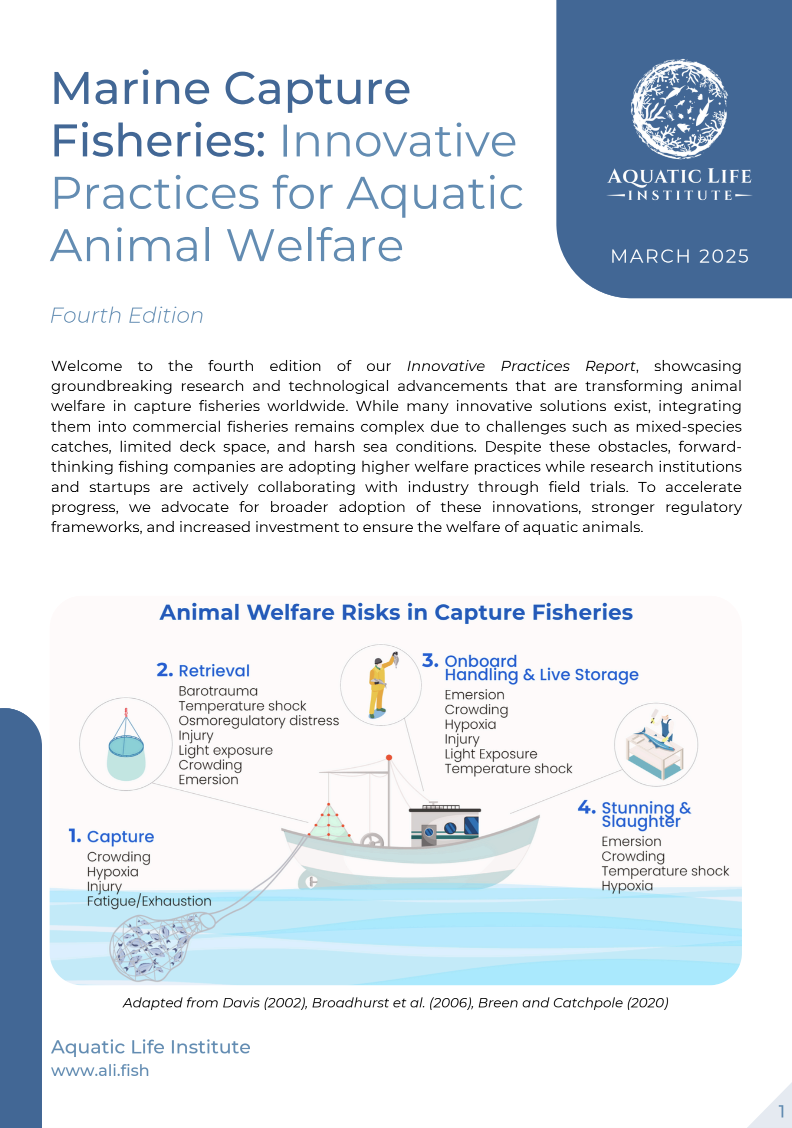
Discover new research and technologies shaping a more ethical future in the fifth edition of ALI’s “Marine Capture Fisheries: Innovative Practices for Aquatic Animal Welfare” Report
CAPTURE FISHERIES
Aquatic Life Institute (ALI) has launched the fourth edition of the Aquaculture Certification Schemes Benchmark. In 2025, the report evaluated 9 certification schemes and 2 rating agencies, providing a comprehensive overview of how welfare commitments are currently embedded across leading global standards.
“Harmonizing Health and Welfare” underscores the need to treat animal health and animal welfare as complementary yet distinct pillars of sustainable aquaculture. This reflects the industry's dual responsibility to maintain the biological health of aquatic animals while enhancing their overall quality of life.
AQUACULTURE
VIEW ALL →
GENERAL RESOURCES
Our 2025 Annual Report examines how ALI brought the invisible majority into focus throughout our defined Spheres of Influence this year. We invite you to take a deep dive in the featured case studies, which illustrate how ALI exerts scientific expertise, global coordination power, institutional credibility, and cross-sector relevance to achieve impact.
Our 2025 Half-Year Report explores ALI’s newly defined sphere of influence and our process for impact measurement through the stages of Recognition, Protection, and Prioritization - all illustrated through several detailed case studies.
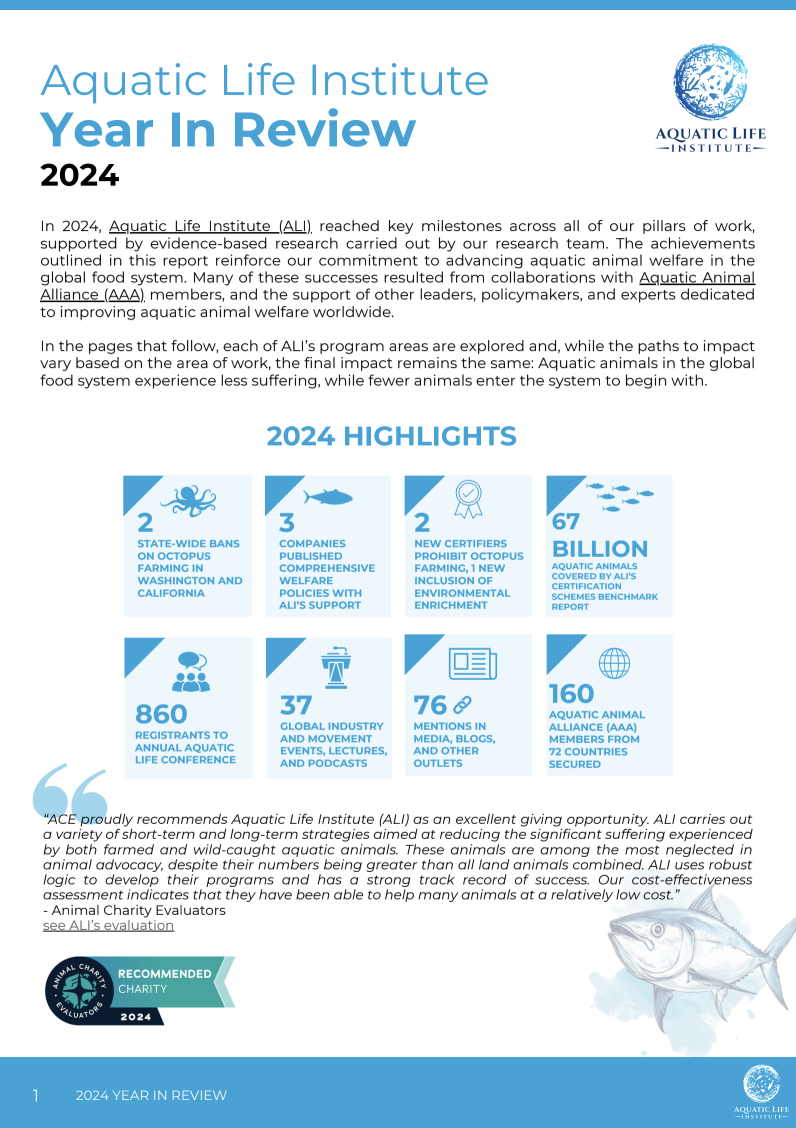
In 2024, Aquatic Life Institute (ALI) reached key milestones across all of our pillars of work, supported by evidence-based research carried out by our research team.
IMPACT REPORTS
Fish Facts
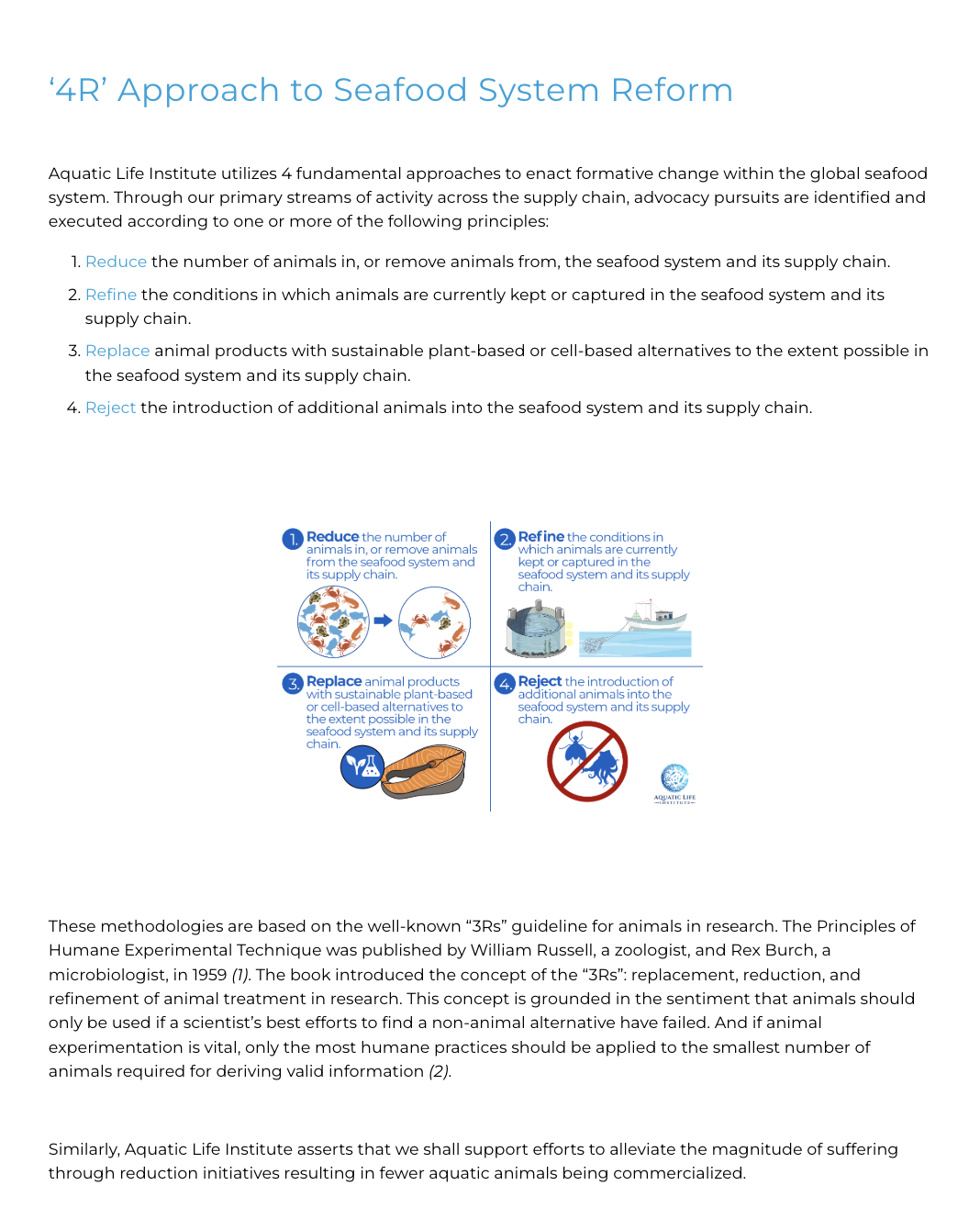
‘4R’ Approach to Seafood System Reform
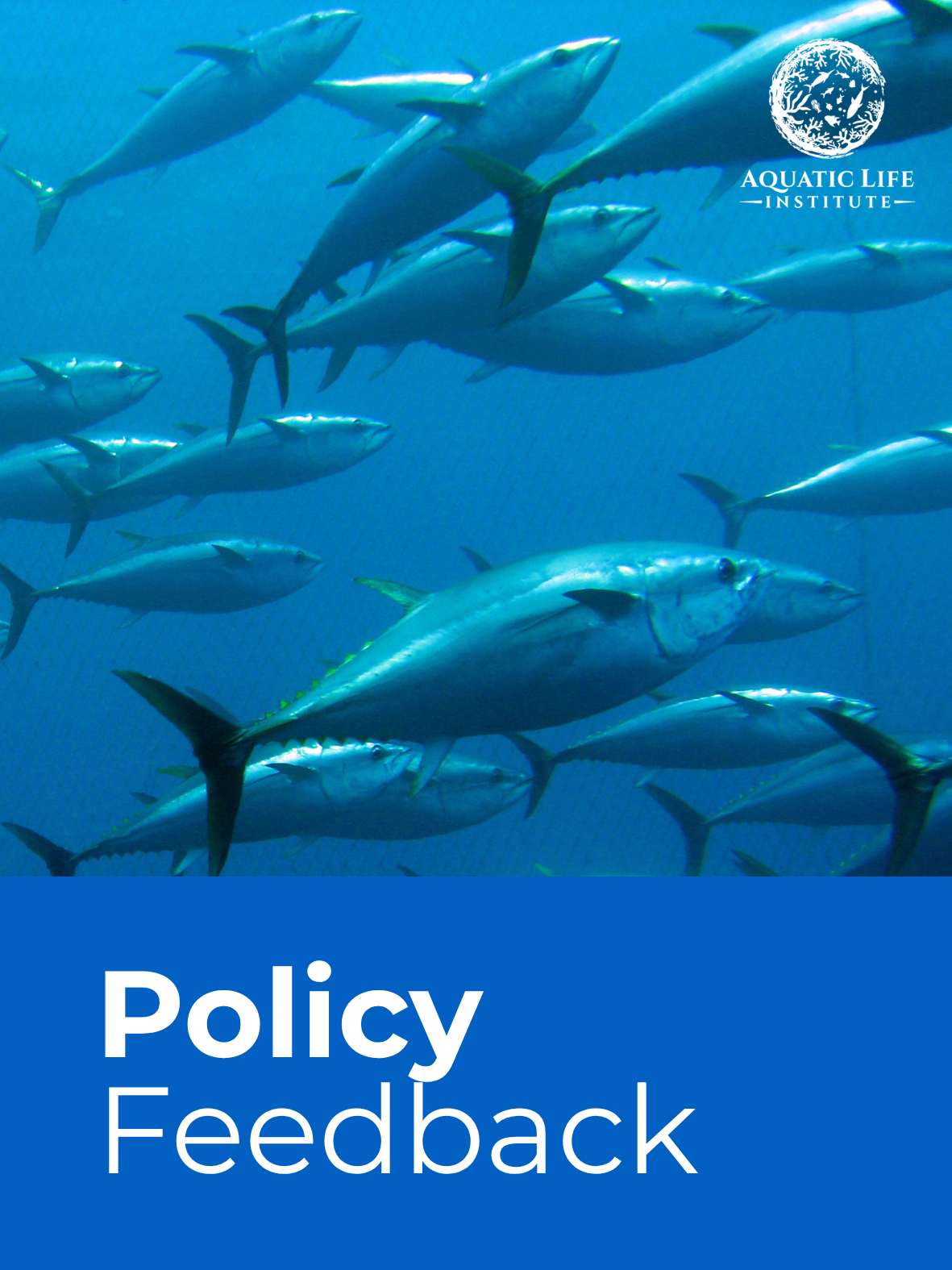
Certifier feedback
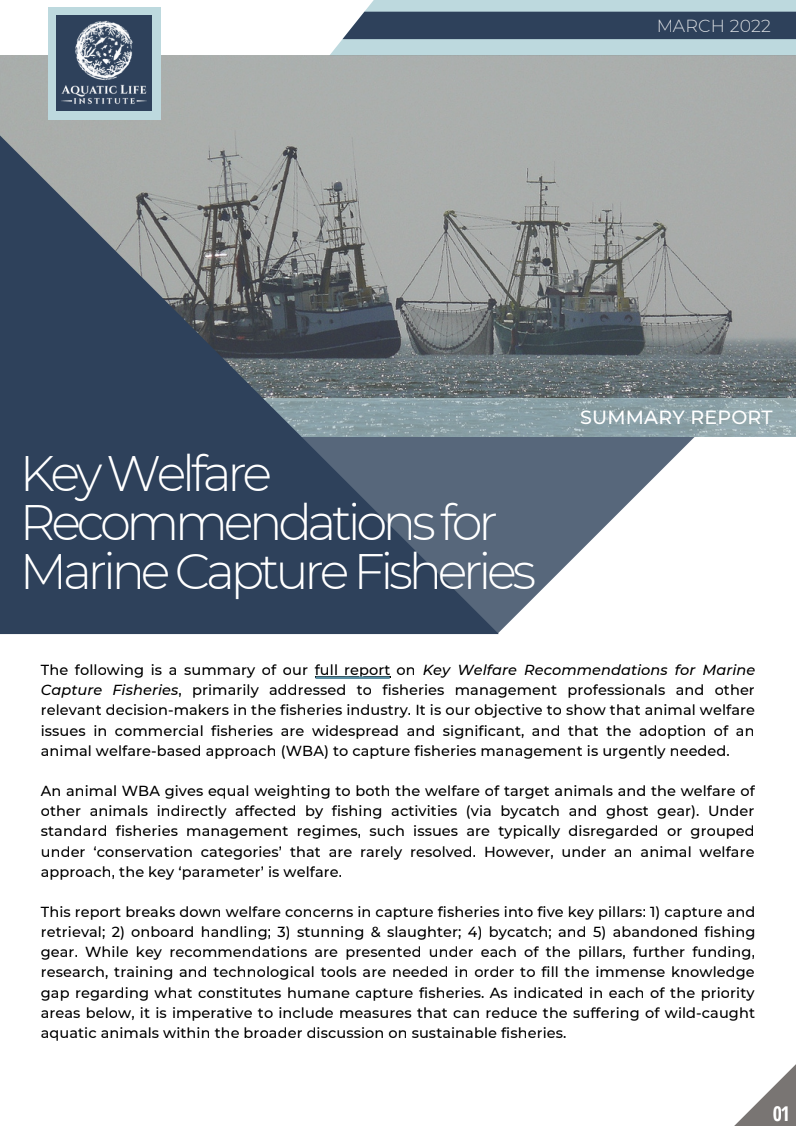
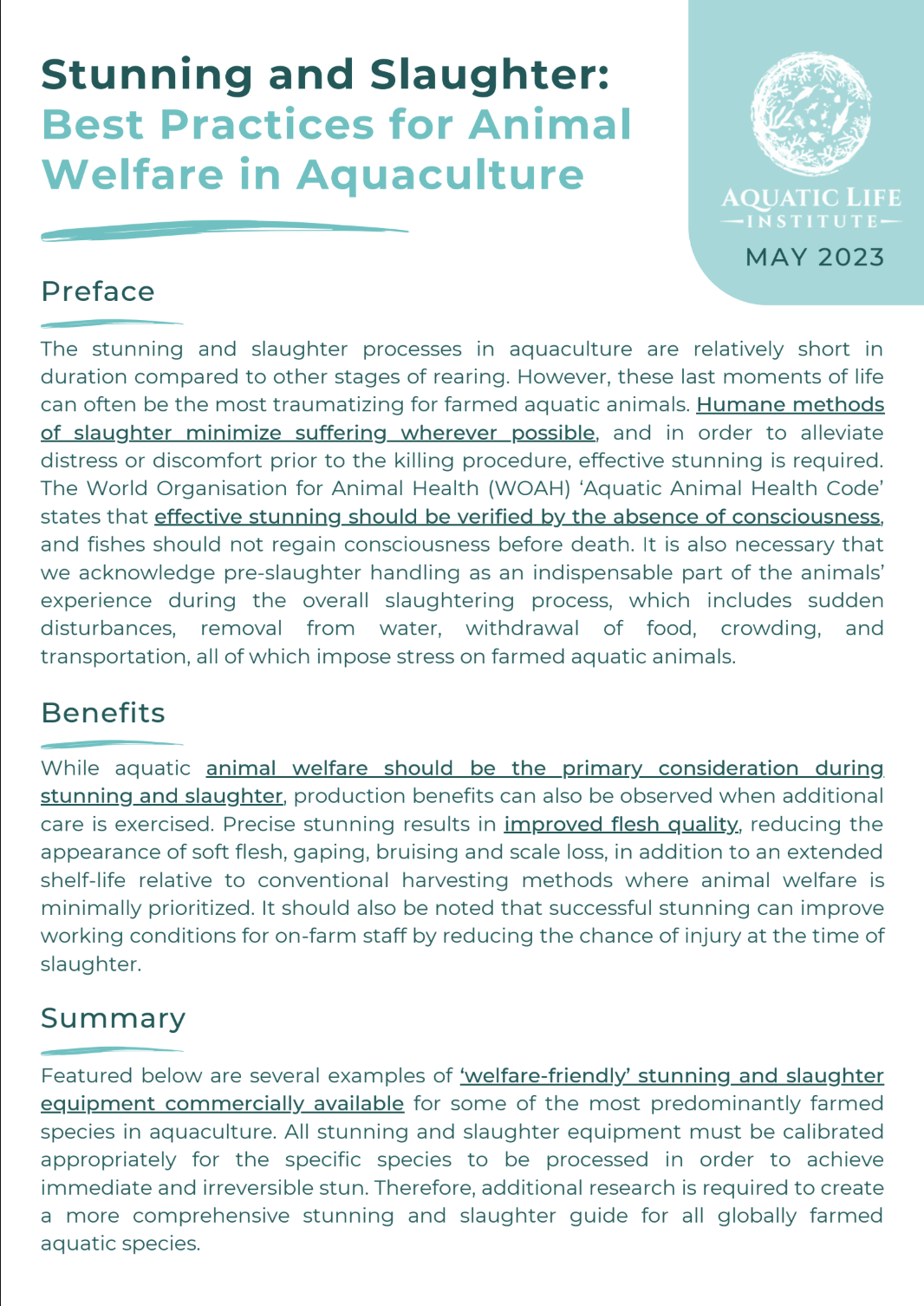
Key Welfare Recommendations for Marine Capture Fisheries
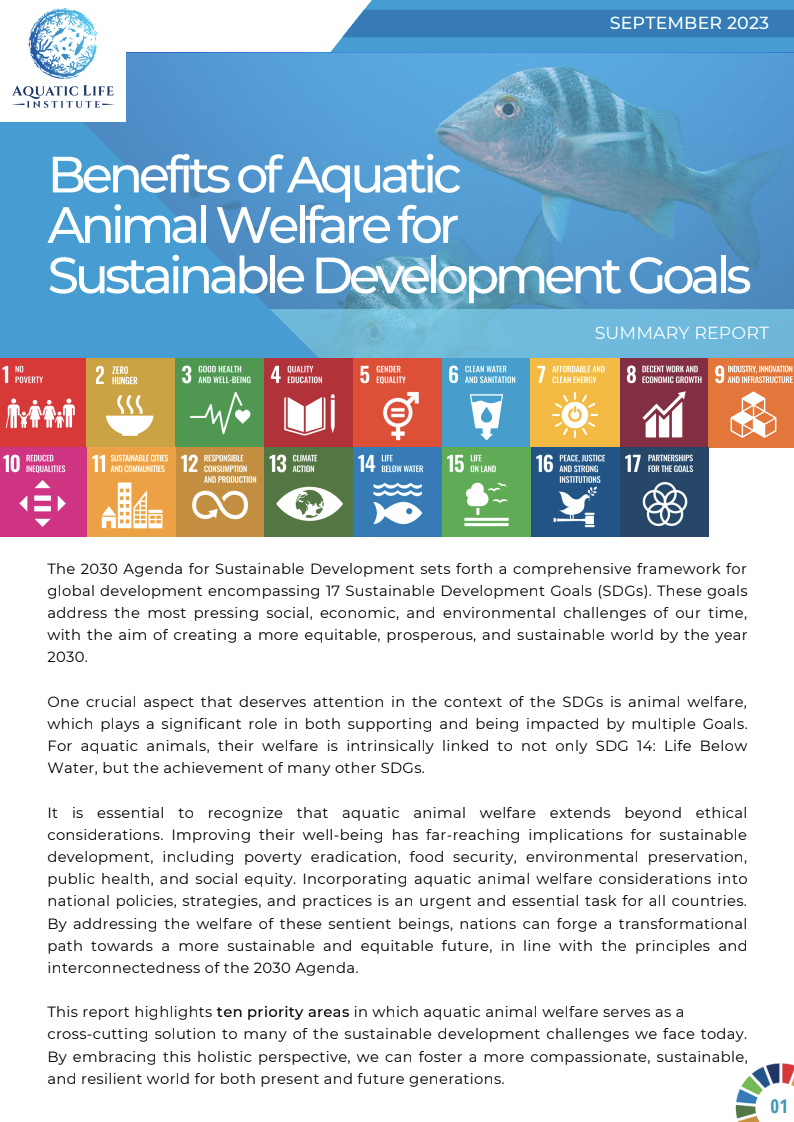
Benefits of Aquatic Animal Welfare for Sustainable Development Goals
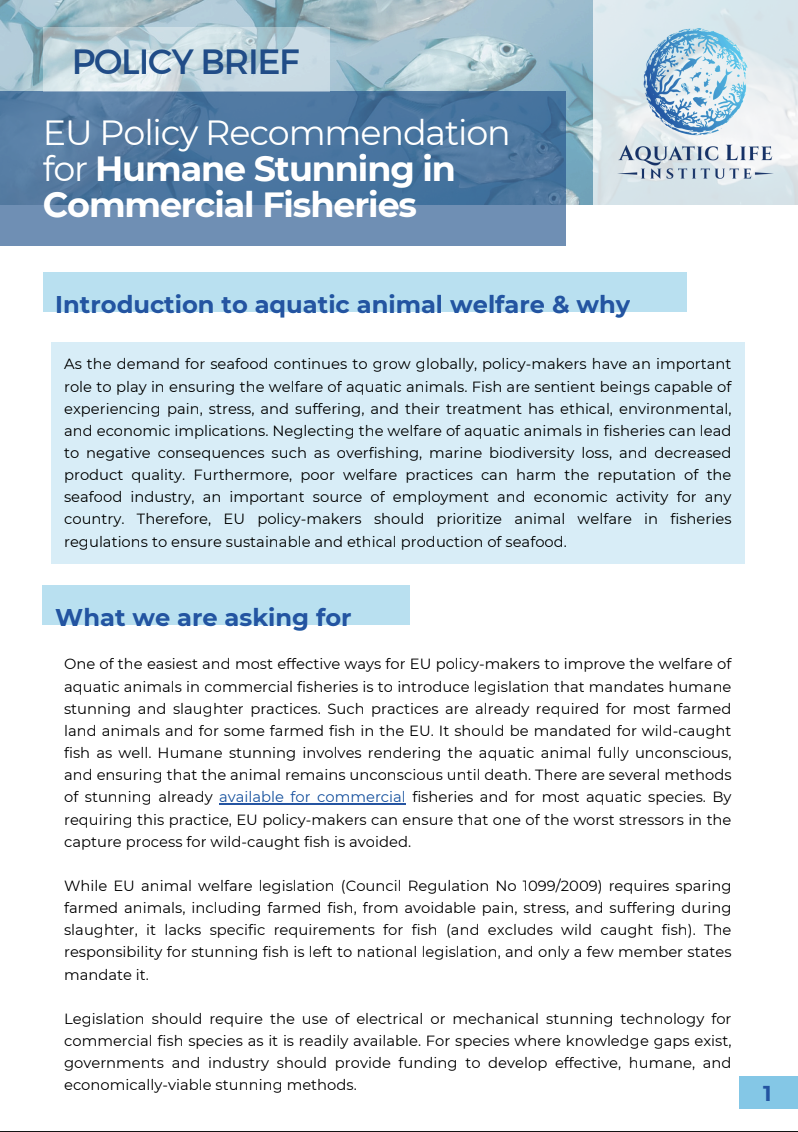
Video: An Introduction to Aquatic Animal Welfare
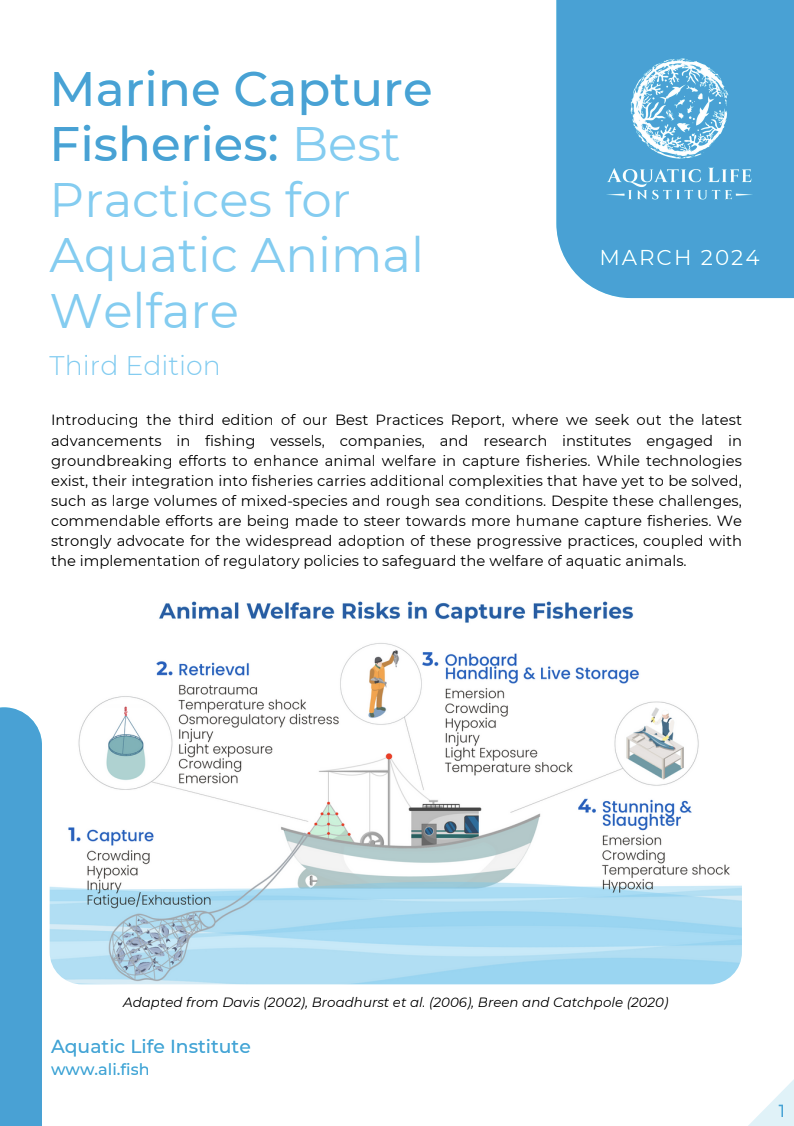
Marine Capture Fisheries: Best Practices for Aquatic Animal Welfare (3rd Edition)
An Industry Shift Towards Environmental Enrichment in Aquaculture
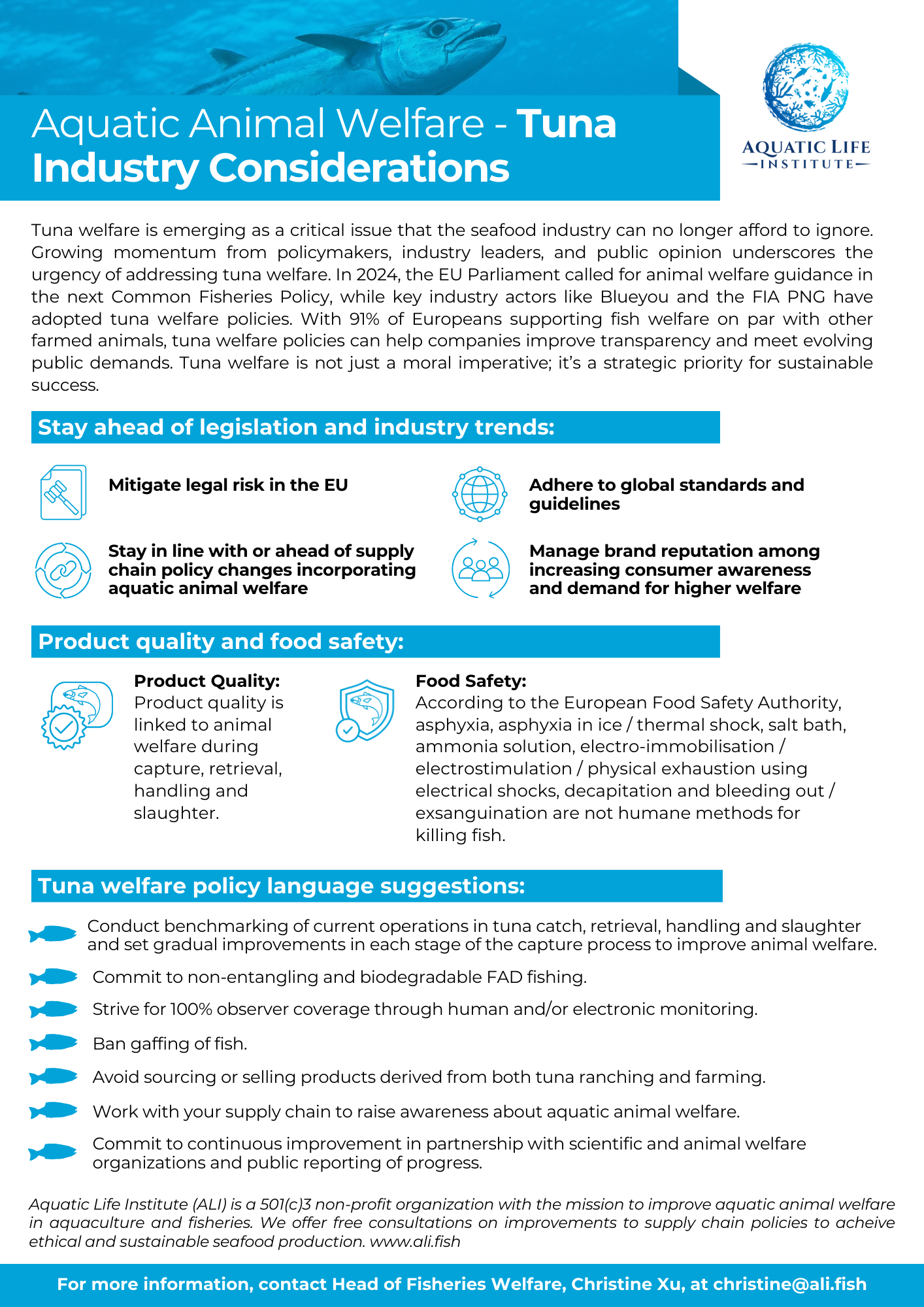
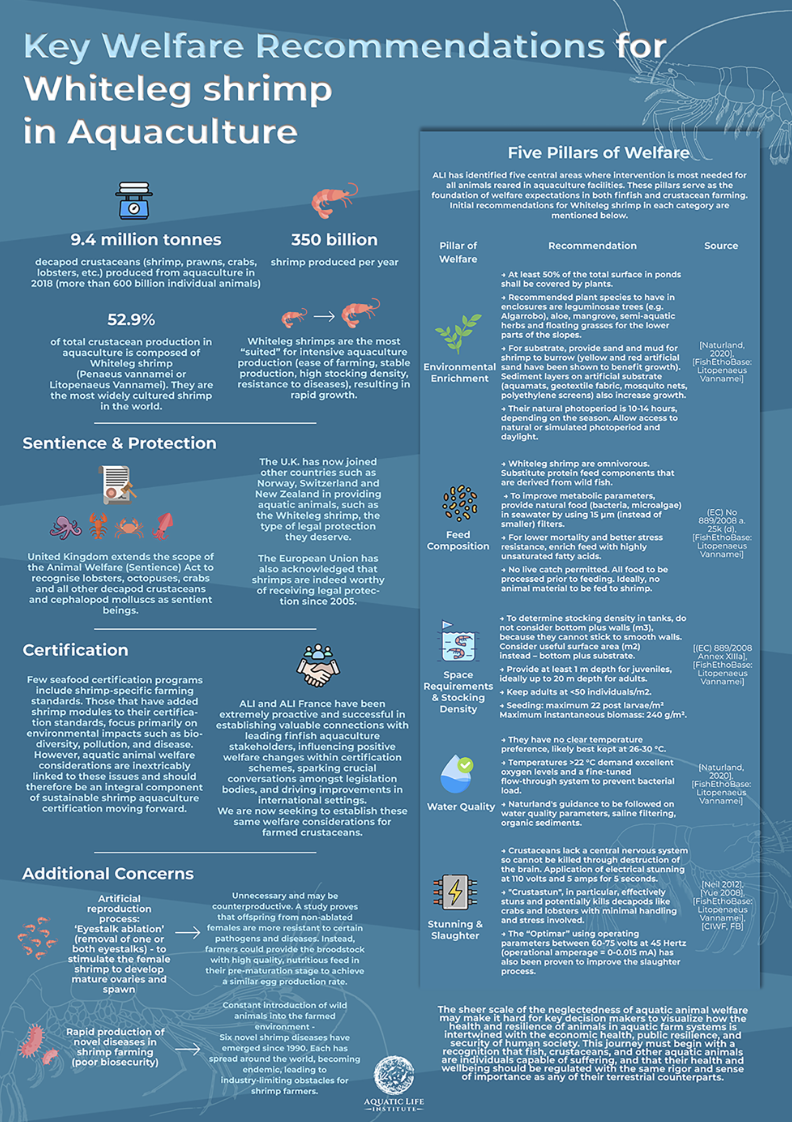
Key Welfare Recommendations for Whiteleg Shrimp in Aquaculture
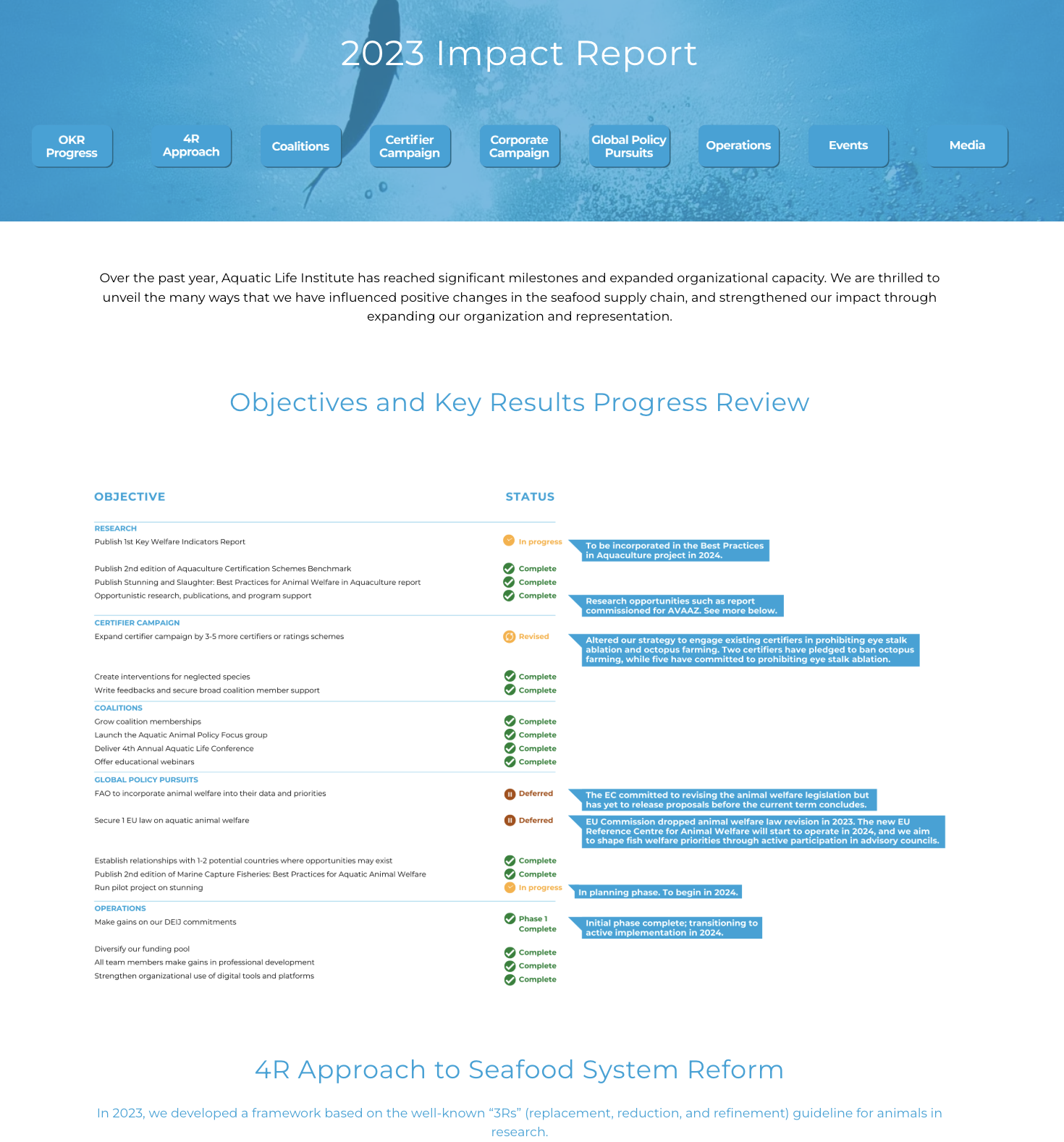
2023 Annual Report
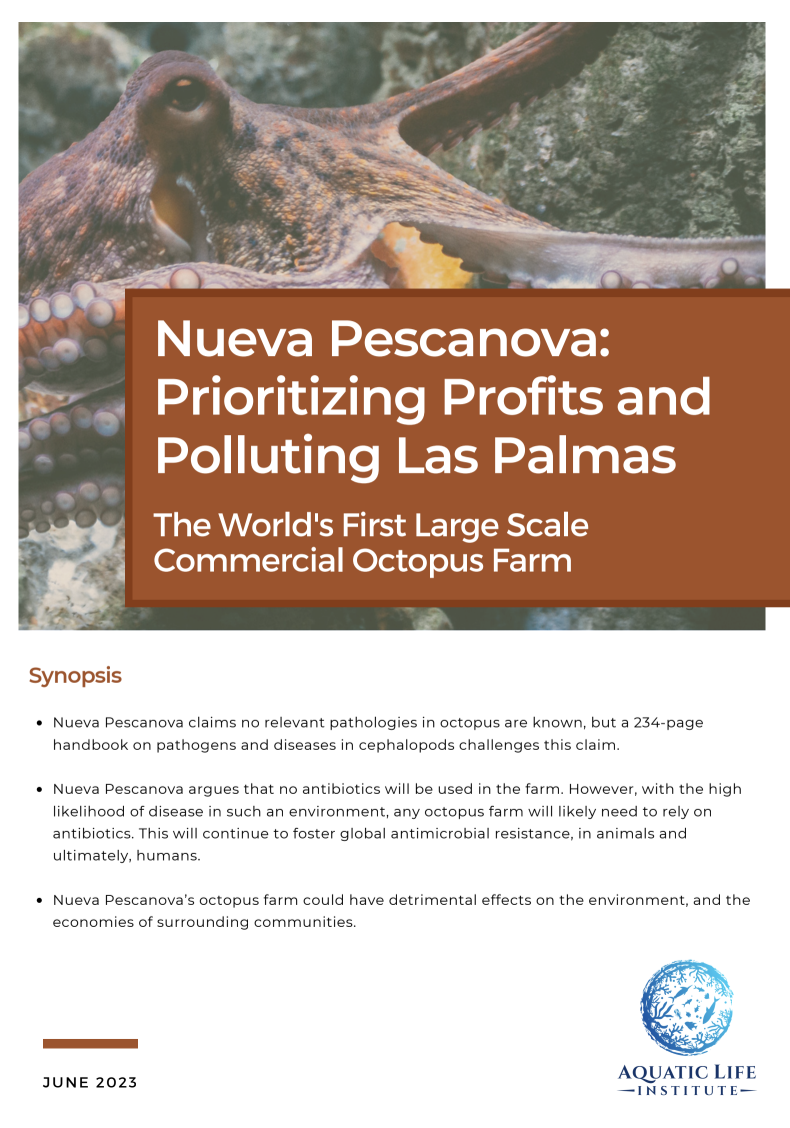
Nueva Pescanova: Prioritizing Profits and Polluting Las Palmas - The World's First Large Scale Commercial Octopus Farm
Nueva Pescanova: prioritizing profits and polluting Las Palmas. Known as the Port of Light, Las Palmas de Gran Canaria could soon become a dark scene of suffering for millions of octopuses, and the latest disaster for global food production.
In this document, we discuss the significant threats that this octopus farm could trigger within the surrounding communities, and pinpoint several examples of infractions that have already occurred in order to demonstrate the lack of consideration given to the health and wellness of the 404,000 people of Las Palmas.