
Why Fish Welfare Matters
The animal rights movement has grown into a global social movement that seeks to end the exploitation of animals by humans. Animals are subjected to suffering in a number of industries, including medical, food and entertainment industries. We have seen some improvement over the years for example in the conditions that some animals are kept, but still, the immense degree of suffering is indisputable.
Humans attach different levels of worth to different animals, which is often determined by the roles they play in our societies. For example, in general the animals we eat and the animals whose byproducts we consume are valued less than the animals we share our home with and call our ‘pets’. Some species have become mere products for consumption and others are cherished family members.
Fish have been overlooked in animal rights discussions and efforts
While there has been an increasing concern around animal welfare in farms, this concern has been primarily focused on terrestrial farm animals, including cows, chickens and pigs. The animal welfare movement has shown more effort in improving the lives of these animals and has overlooked the welfare of fish. Is this because humans are more concerned about the animals that they feel they can relate to more closely (for example those that show emotion in similar ways to them), or is it because they believe that fish lack intelligence or sentience?
It is easier for us to connect with, and understand the behaviours of, an animal who responds to stimuli in similar ways to us. A loud yelp in response to pain or a leap of happiness, or even facial expressions, are reactions that fish do not display. These are responses that humans are able to emotionally identify with, so it requires us to use a more objective and scientific approach to comprehend the way a fish responds to stimuli in its environment.
Why fish welfare matters
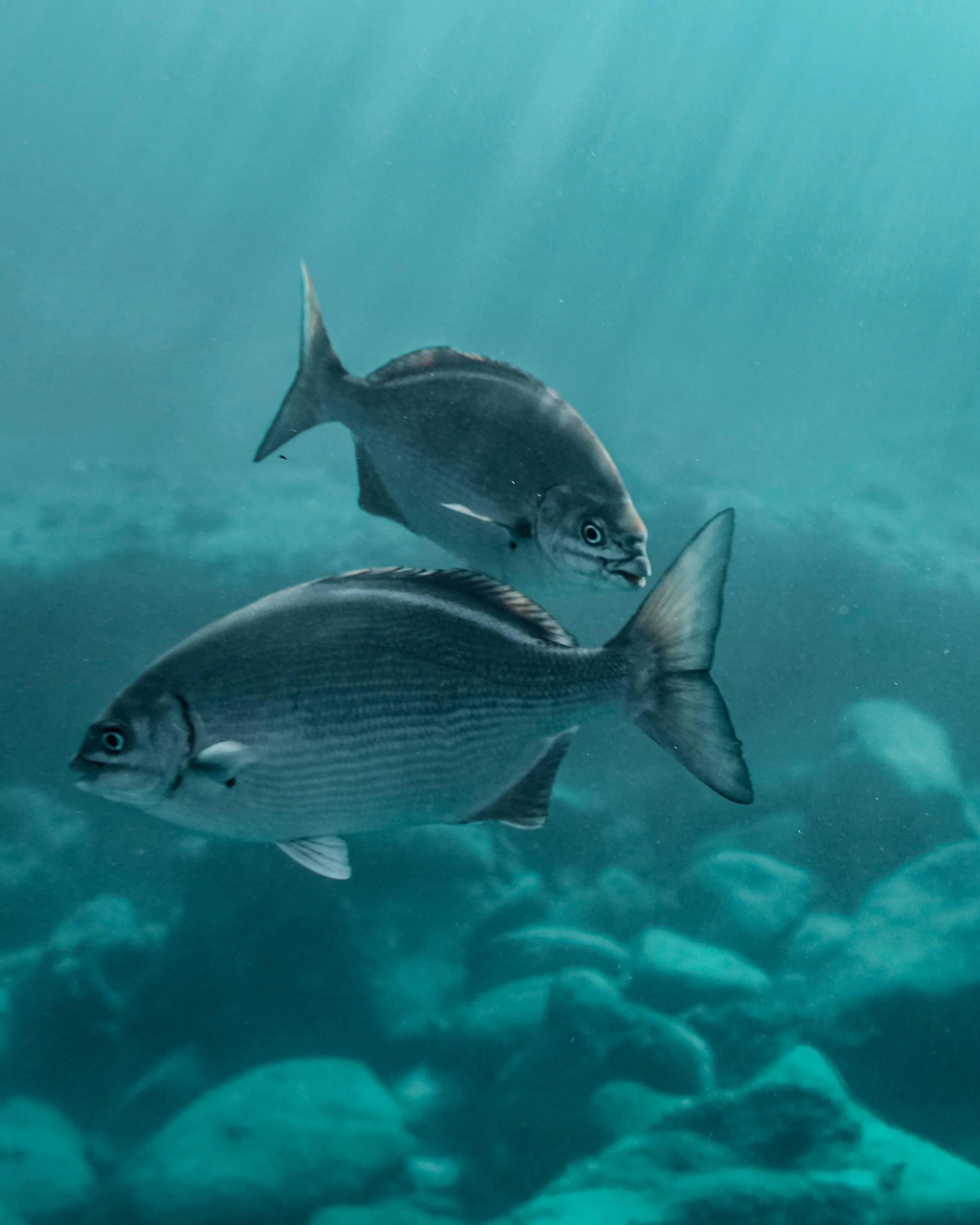
Around 40 times more fish are killed for consumption each year than all farmed land animals combined which holds serious implications for the environment, wild fish populations, and the welfare of wild and farmed fish. Scientific evidence shows that fish are sentient beings capable of forming relationships (also with non-fish species), communicating and solving problems, and experiencing fear and pain. The emotional and intellectual capacity of a fish increases its chances of survival and reproduction.
Observing the behaviours of fish in the wild and studying their physiological responses and cognitive skills has allowed researchers to understand the way fish think and feel in different situations and environments. This is particularly useful when thinking about the welfare of fish in captive and unnatural environments such as fisheries.
Consciousness and cognition
Studies have found that fish are self-aware, capable of remembering events from the past and planning and anticipating the future. A human’s limbic system (the part of the brain that influences our emotional behaviour and memory and works with the dopamine system) is very similar to a fish’s limbic system. Researchers have also found fish to be pessimistic or optimistic depending on whether their mate is present or absent. Females would carry out tasks optimistically when their preferred male was around and would be pessimistic while carrying out a task if a non-preferred male was present.
In a study, trout were exposed to mild electric shocks in their tank which they learned to avoid. More trout were added to the adjacent tank and the trout chose to socialise with one another which meant that they would have to tolerate the electric shocks. This concluded that socialising is an important natural behaviour for trout.
Fish remember to avoid harmful experiences from the past that have caused them fear or pain, they can remember which of the other fish are weaker in fights, and which fish they can trust. Fish use a number of different means of communication, including body language, release of chemicals into the water, bioluminescence, sounds and electrical pulses.
Physical and emotional responses to pain
A fish becomes aware of painful stimuli through its pain receptors. Physiological changes in response to pain include increased heart and breathing rate and release of stress hormones. Opioids are the body’s natural painkillers and like mammals, fish respond to pain relief and produce the same opioids as mammals.
A study using bee venom injected in fish has shown that a fish’s behaviour changes when it is in pain. A fish would normally avoid new objects in its environment, but with the injected bee venom, the fish paid less attention to new objects, highlighting the distraction of the pain. When the fish were given morphine on top of the bee venom, they returned to their normal behaviour and avoided the new objects. Some of the fish infected with the bee venom were also observed rubbing their mouths on the gravel and the sides of the tank.
Research has provided us with evidence that fish are sentient beings with the ability to make rational decisions and to feel pain and emotion. We have a moral obligation to recognise and protect the emotional and physical needs of fish, and to reevaluate the mass exploitation and mistreatment of fish that we support and reinforce.