

The Shark Fin Trade Around the World

We have lost more than 70% of the world's sharks in the last 50 years due to human activity. What should be an obvious solution to the reason 100 million sharks are slaughtered every year has been battled for decades. Fins from 73 million sharks enter the shark fin trade every year, for the sole purpose of being used for an ancient imperial Chinese dish, shark-fin soup. The fins are removed in a wasteful practice called shark finning, in which the live shark has its fins cut off and is thrown back into the ocean where it will die a gruesome and painful death.
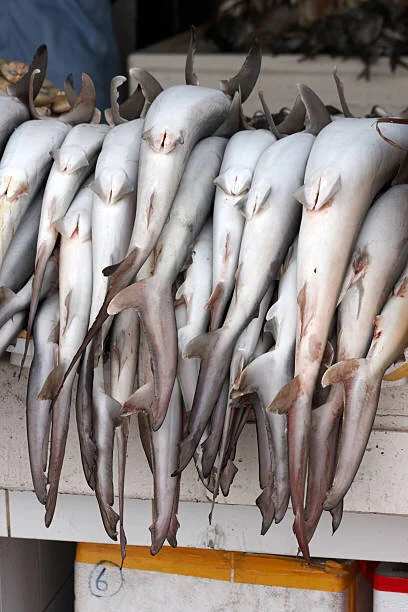
Dating back to the Song Dynasty (960-1279) shark-fin soup has been a symbol of luxury and high social class, often being served at weddings or celebrations. In today's society, some people still choose to consume shark meat to celebrate their outdated culture traditions as well as hope to appear wealthy. The street markets of Hong Kong and Taiwan are constantly filled with dried shark fins. Researchers took DNA samples of some of the fins, and found the most common sharks being sold are the Blue Shark, Silky Shark, Scalloped Hammerhead, Smooth Hammerhead, and Shortfin Mako, all of which are in danger of being wiped out.

The shark is an apex predator in the ocean, meaning they accumulate the toxins which were in their prey. Due to the high levels of pollution and chemicals in our oceans shark meat is filled with mercury, arsenic and other poisonous metals in concentrations high enough to be considered unsafe for human consumption. As an attempt to limit the consumption of shark fins, in 2012, the Chinese government banned shark fin soup at official functions, which led to a decrease of consumption by 80%. Unfortunately, the dish has emerged in other countries such as Indonesia, Thailand and Vietnam.
Countries around the world are beginning to recognize the economic importance of a living shark. In Costa Rica, a set of shark fins at a fishing market is valued at around $200. An average bowl of shark-fin soup costs $100. Meanwhile, a single shark nets more than $1.6 million in its lifetime and contributes to a sustainable multi-billion dollar industry.

While shark finning is illegal in U.S. waters, the country plays a major role in the global shark fin market by allowing the import, export and sales of shark fins. In 2018, Miami was the largest hub in the nation for shark fins - 1,400 pounds of shark fin valued at $1 million were seized from an international shipment. A 2020 study by the National Resources Defense Council reported that over the years of 2010 and 2017, there were between 591 and 859 metric tons of shark fins, about 900,000 sharks, that were exported through the United States. Current U.S. law requires fishermen to bring the shark carcass ashore whole, with their fins attached. Yet, legal loopholes and enforcement challenges have allowed the trade of endangered species to continue.
In 2019, the U.S. House of Representatives passed the Shark Fin Sales Elimination Act, which at the time was the most cosponsored bipartisan ocean conservation bill in the 116th Congress. The goal of this bill was to remove the U.S. from the shark fin trade by banning the sale, possession or purchase of shark fins which would result in the United States becoming one of the world leaders in shark conservation. There is only one person to blame for the bill not being passed, Florida Senator Marco Rubio, who blocked this bill and selfishly chose to represent only 20% of his state. Rubio believes that US shark populations are increasing as a result of humane harvesting practices and that the US does not engage in illegal shark finning. He is pushing for a new bill that would allow the import of shark fins but only from countries that are following the guidelines he created.
It’s not just individuals that recognize the need for a nationwide fin trade ban. Seventeen states, three US territories, more than 45 airlines, 15 major corporations, including Amazon, Hilton and Disney and 22 shipping companies have all refused to transport or trade shark fins. Nearly 700 businesses – more than a third of them from Florida, including more than 100 dive shops and SCUBA businesses, several aquariums, and SeaWorld Parks and Entertainment — all support the Shark Fin Sales Elimination Act.

Luckily, in 2021, U.S. Congress reintroduced the bipartisan Shark Fin Sales Elimination Act. Both national and international efforts will be needed to stop the trade. To make your voice heard, call your members of congress and urge them to pass this bill. We shouldn’t be scared of sharks, we should be scared for sharks. 11,416 sharks are being killed every hour, and everyday our marine ecosystems are getting closer and closer to collapsing.
If you are unaware of who your Representative or Senator is, you can find and contact them here.