2022 UN Ocean Conference Left Out Key Stakeholder; Aquatic Animals
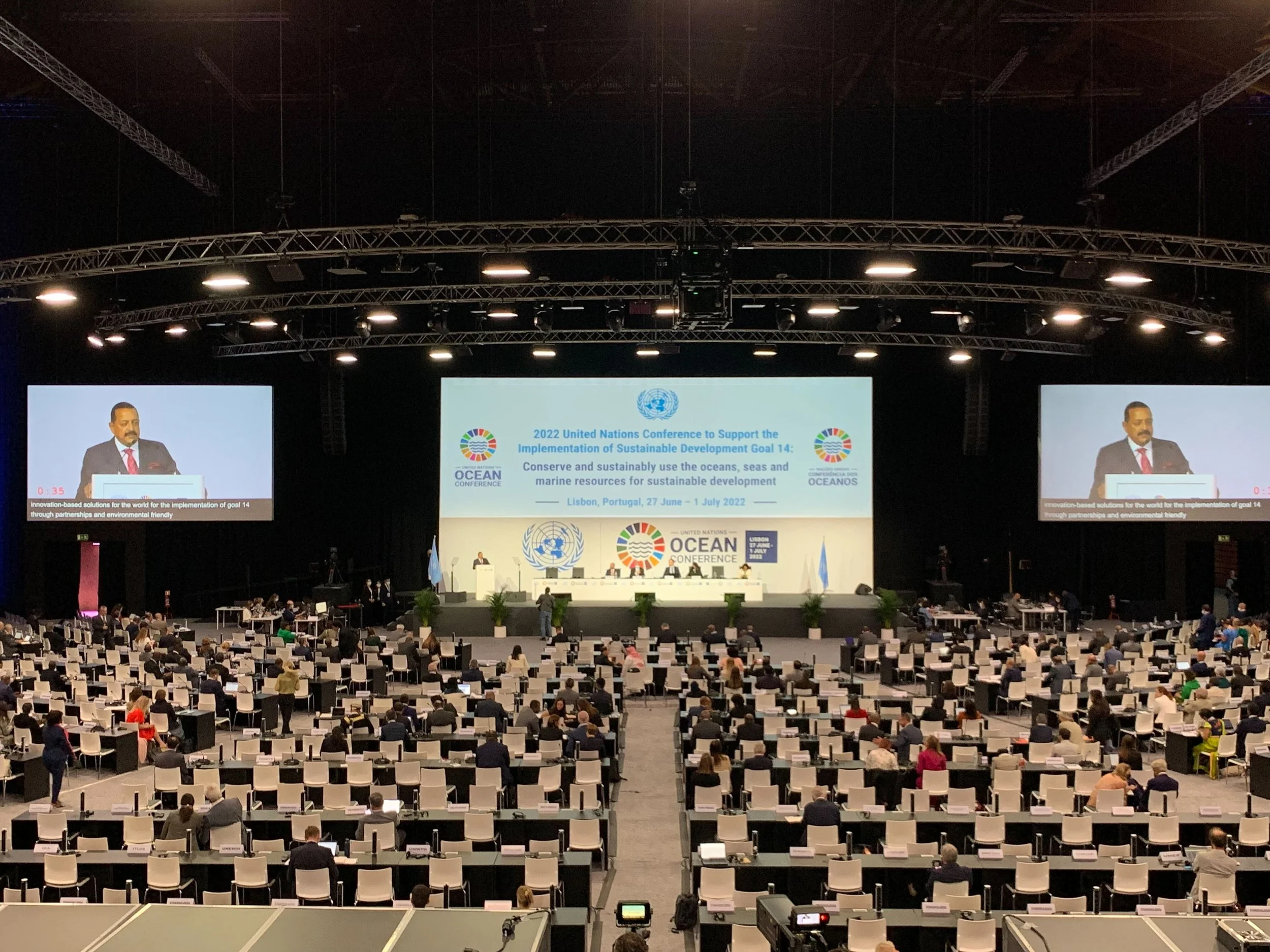
Between June 27 and July 1, the second UN Ocean Conference took place in Lisbon, Portugal, where governmental leaders, scientists, businesses, NGOs and activists convened to advance Sustainable Development Goal 14: Life Below Water. The Conference addressed a host of threats to our oceans, including marine pollution, acidification, illegal, unreported and unregulated fishing, and the loss of habitats and biodiversity, while governmental officials pledged to develop a blue economy and transition towards blue foods.
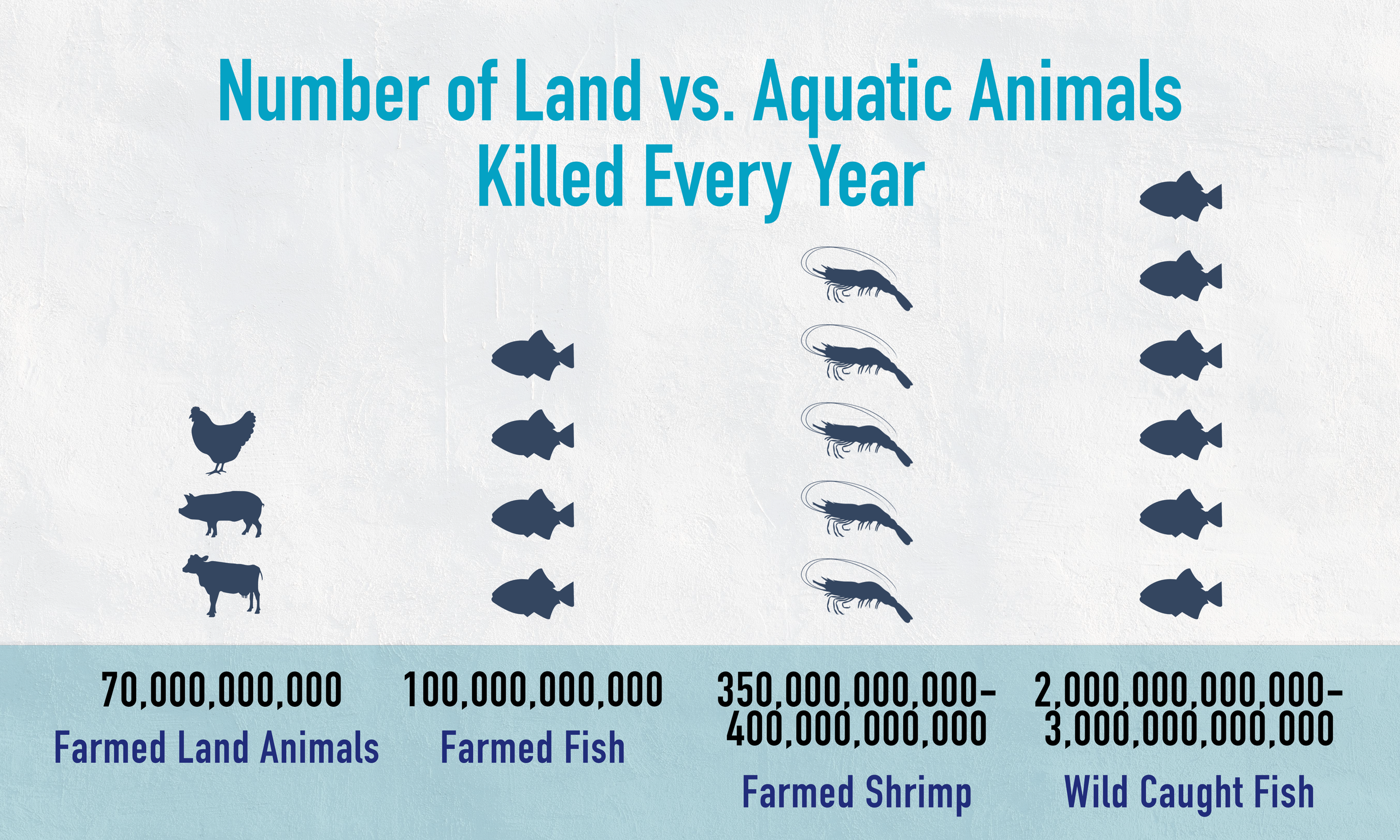
However, central to the oceans is a key stakeholder that no one (except for Aquatic Life Institute) spoke about – and that’s the aquatic animals themselves. As sentient beings, aquatic animals are unfortunately still largely seen as purely for food and economic purposes. This is extraordinary given the fact that the number of aquatic animals slaughtered each year for food is 35 times higher than the number of all farmed land animals killed. Yet, their welfare receives much less attention than farmed land animals.
Aquatic animals are not an infinite resource. At the current rate of fisheries catch, nearly 90% of the world’s fish populations are now fully exploited, overexploited or depleted. But we still treat these living beings as ‘stocks’ to be exploited and count them only in terms of tonnage, rather than individual animals. Moreover, in the thousands of voluntary commitments submitted to the UN in support of the implementation of SDG14, only three (including ours) mention fish or aquatic animal welfare. The official Declaration from the Conference also failed to mention the aquatic animals themselves.
Our work at the Aquatic Life Institute is dedicated to improving the welfare of aquatic animals in both aquaculture and capture fisheries, and one of our main objectives is to advocate for international institutions, such as the UN, and other relevant decision-makers, to start incorporating aquatic animals into animal welfare discussions as well as their welfare into sustainable development policies.
During the Conference, we held a virtual side event titled The Nexus Between Sustainable Development, Ocean Conservation and Aquatic Animal Welfare (recording here). The purpose is to drill home the message that we have reiterated again and again, that aquatic animal welfare is inextricably linked to ethical, environmental and social issues, and therefore must be an integral component of sustainable development policies moving forward. We also urge for an animal welfare-based approach to designing new capture, handling and slaughter technology as well as fisheries management policies for commercial fisheries.

Only policies that treat these animals with dignity can help reduce the pain, stress, and injury that 100 billion farmed fish and 2 to 3 trillion wild fish suffer each year. If you are interested in supporting our work, visit our site.