Improving Animal Welfare in the Fisheries Sector
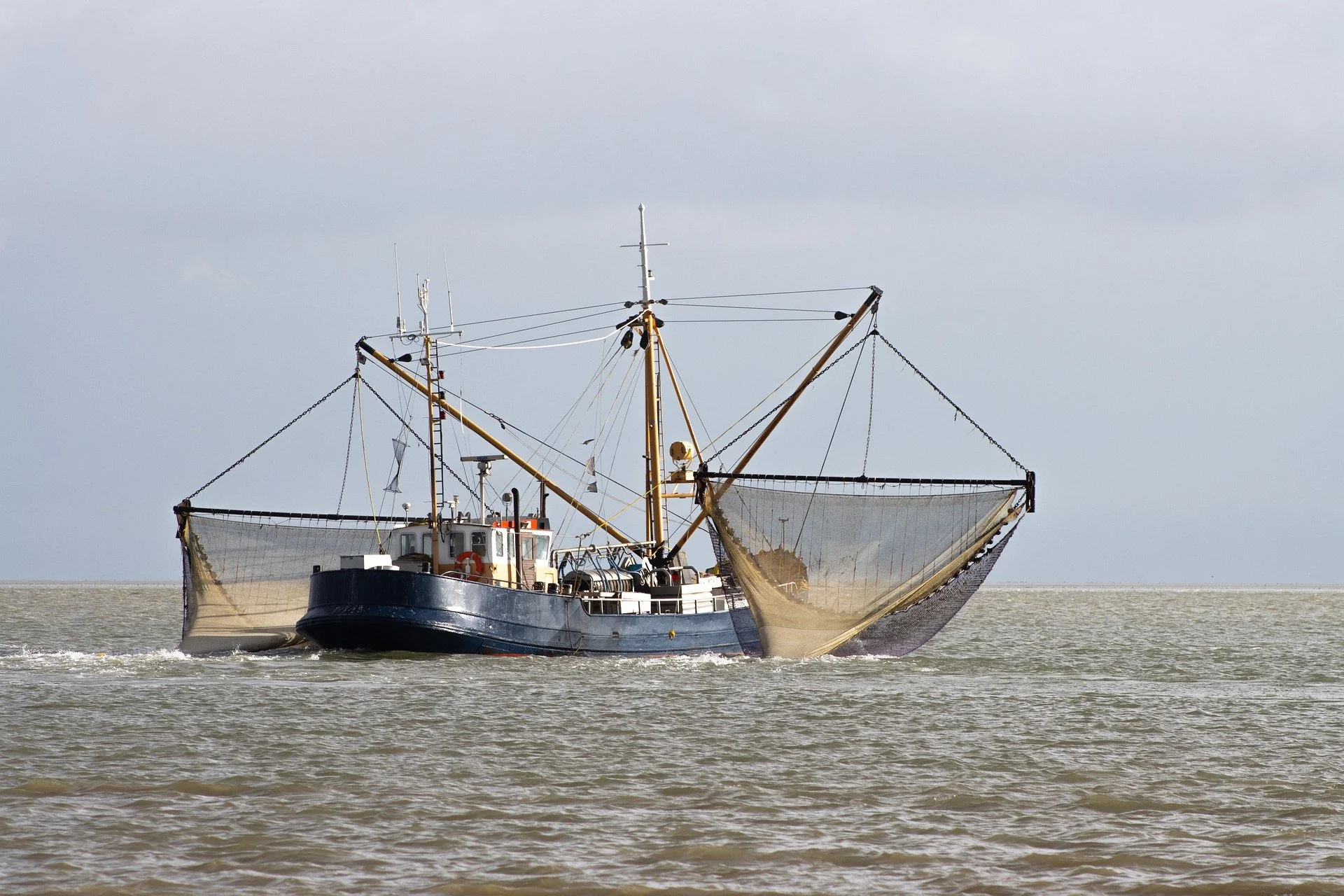
Animal welfare issues in commercial fisheries are widespread and significant. In fact, wild-caught seafood remains the last major food-producing sector that does not take animal welfare into consideration. We decided to take upon this highly-neglected issue by speaking with researchers, industry and NGOs to find out what technologies, if any, exist already in the fisheries sector that could improve the welfare of aquatic animals.
What we found was that gentler capture and slaughter methods exist and are already being practiced in select fisheries. We gathered this information and created a booklet on best welfare practices in commercial fisheries.
What Suffering Takes Place in Capture Fisheries?
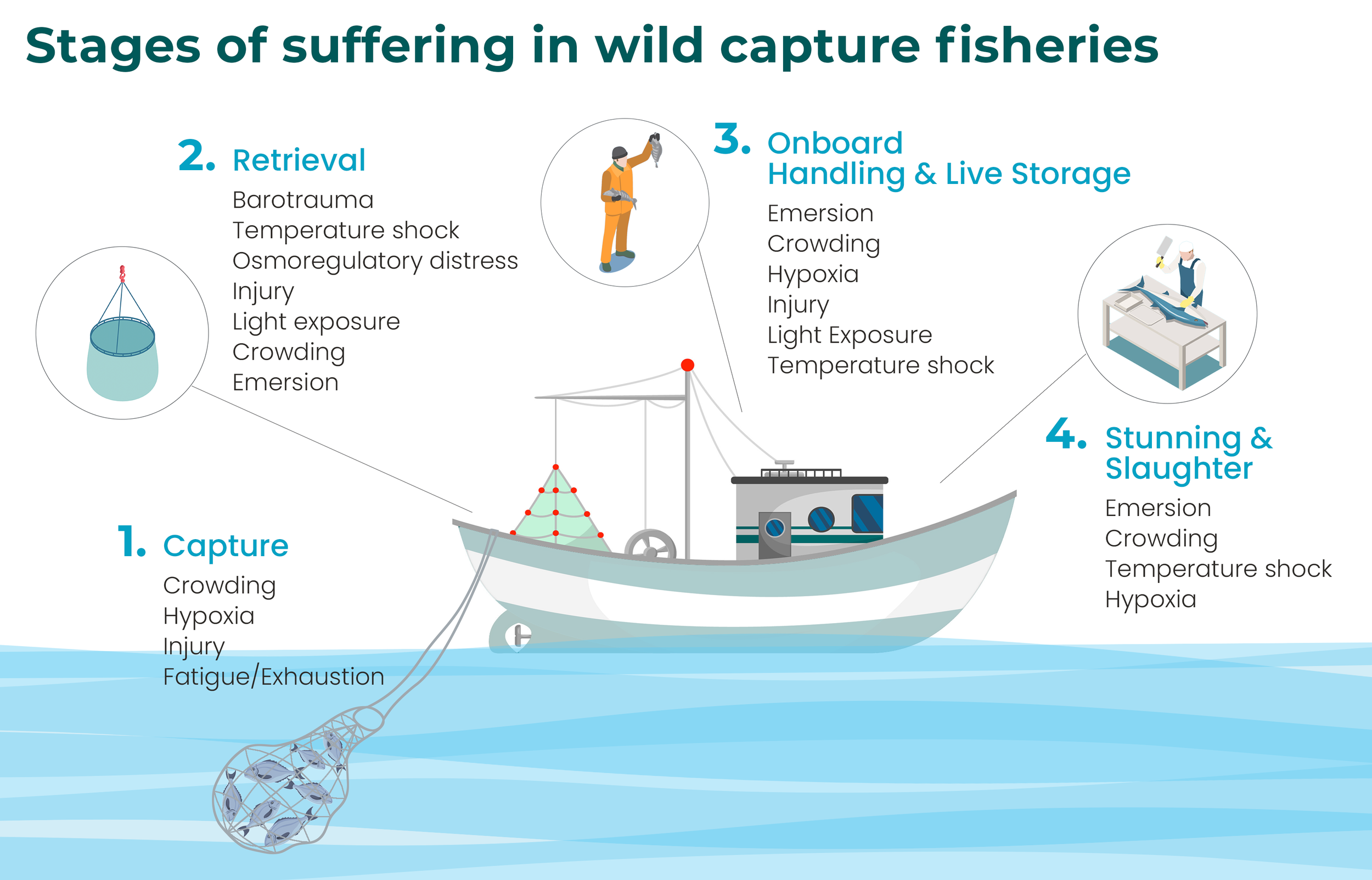
In the capture process, there are four main points of suffering, starting with how the aquatic animals are caught (longline, trawl, purse seine, etc.), how they are retrieved (pumped vs. lifting of traditional nets), how they are handled onboard (left in ice, left to suffocate onboard, mutilated, etc.), and how they are slaughtered.
How to Ensure Animal Welfare
Our research focused on these four points of suffering to try to find practical solutions that could be applied and replicated to reduce suffering.
Capture & Retrieval
In the capture and retrieval phase, gentle catch methods not only improve animal welfare but are key to good quality fish. For this reason, many vessels around the world choose to practice more humane capture and retrieval methods. For example, in large fishing nations such as Norway, a number of fishing vessels engage in gentler capture methods by limiting catch volumes through reduced fishing time and net sizes. In fact, Norwegian fishing producers’ organization, Fiskebåt, recommends its members to limit the size of their catches for a higher quality end product.
Moreover, simple modifications to gear can have a big impact. For example, the Norwegian Institute of Food, Fisheries and Aquaculture Research (NOFIMA) recommends the use of knotless netting in purse seines as it is less likely to injure the fish than traditional netting. Other modifications that improve both welfare and quality of product include demersal trawls that trawl just above the seafloor and modifying the codend to avoid bycatch.
In terms of retrieval, a simple pumping system to bring the fish onboard using water-filled pipes, rather than the traditional way of lifting the net into the air which causes crushing injuries and asphyxiation, can help reduce stress, injury and mortality. Without crushing the fishes together also improves product quality, as there is less injury and internal bleeding.
Onboard Handling
Once onboard, fish should be kept alive until slaughter in appropriate water-filled tanks. Norwegian supplies C-Flow has designed storage equipment that can be used for keeping live fish in good welfare conditions. There must also not be any mutilation, either for economic purposes or for ease of handling.
Stunning & Slaughter
Finally, if the fish are to be slaughtered onboard, they must be effectively stunned. Effective stunning means that they are fully unconscious and not simply immobilized. Several vessels have stunning equipment onboard, however it will be important to forge collaborations between industry and researchers to ensure that such stunning equipment actually carries out effective stunning. There are at least three companies that develop stunning equipment that commercial fishing vessels can operate: Ace Aquatec, Askvik Aqua, and Optimar.
Another key element that could push for further adoption of stunning equipment in commercial fisheries is writing it into law. For example, under European Union law, all animals killed for food must be stunned within a second before slaughter. However, this does not apply to wild-caught seafood. This must be amended so that further uptake of such technologies is regulated, incentivized and promoted. In Norway, all fish that are slaughtered onboard must be effectively stunned. Such legislation should be universally adopted.
What Can We Do to Improve Fish Welfare?
Seafood certification programs make an important contribution to improving the welfare of farmed fish. Their impact on wild-caught fish could be even greater given the number of aquatic animals affected.
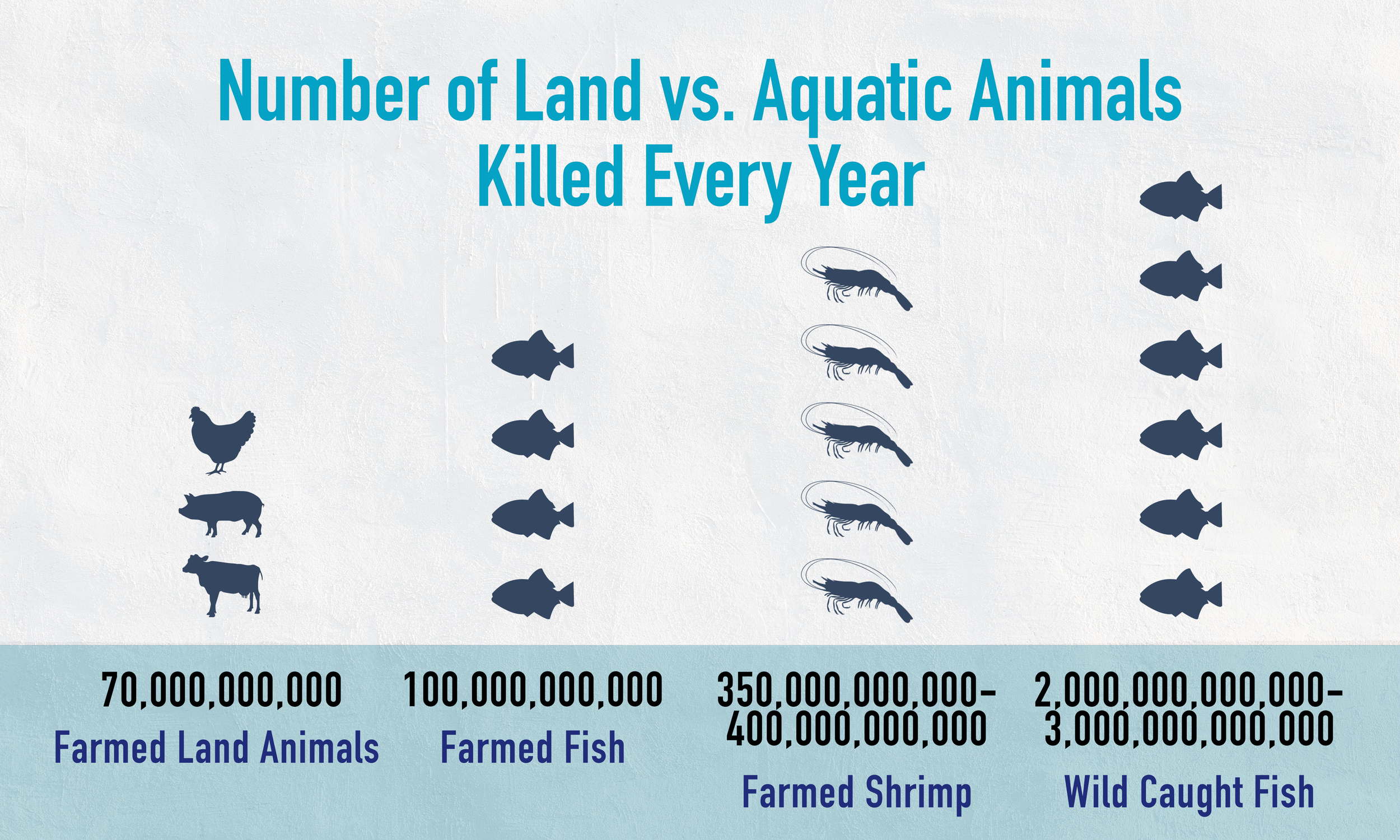
The majority of certification schemes that exist today for wild-caught fish are focused on environmental and human rights issues. The majority of fisheries management schemes are focused on reducing bycatch (incidental catch of non-target species) and ending shark finning, while increasing fisheries catch at the most sustainable level possible. What we need urgently is for global certification schemes to add animal welfare standards for fishing vessels and/or fisheries, such as limiting fishing times and net sizes and mandating pumping systems and stunning onboard.
Meanwhile, fisheries management bodies and governments need to set regulations and guidelines that consider the welfare of these animals, for example the inclusion of aquatic animals into national animal welfare and sentience laws, imitating Norway’s law of mandating stunning onboard prior to slaughter, and banning highly-destructive gear (such as bottom trawlers that dredge the seafloor). At Aquatic Life Institute, we will continue this work of providing best industry practices and advocating for wider adoption across the industry, push for certifiers to include animal welfare considerations for capture fisheries, and revise existing laws and regulations to protect aquatic animals.