Animal Welfare: a Crucial Issue in Fish Farming
While this end of the year is crucial for the orientation of fish farming with the establishment of an operational program and a sector plan for the coming years, around twenty associations and around fifty personalities are pleading for better consideration of animal welfare and recall the challenges of fish farming in this area.
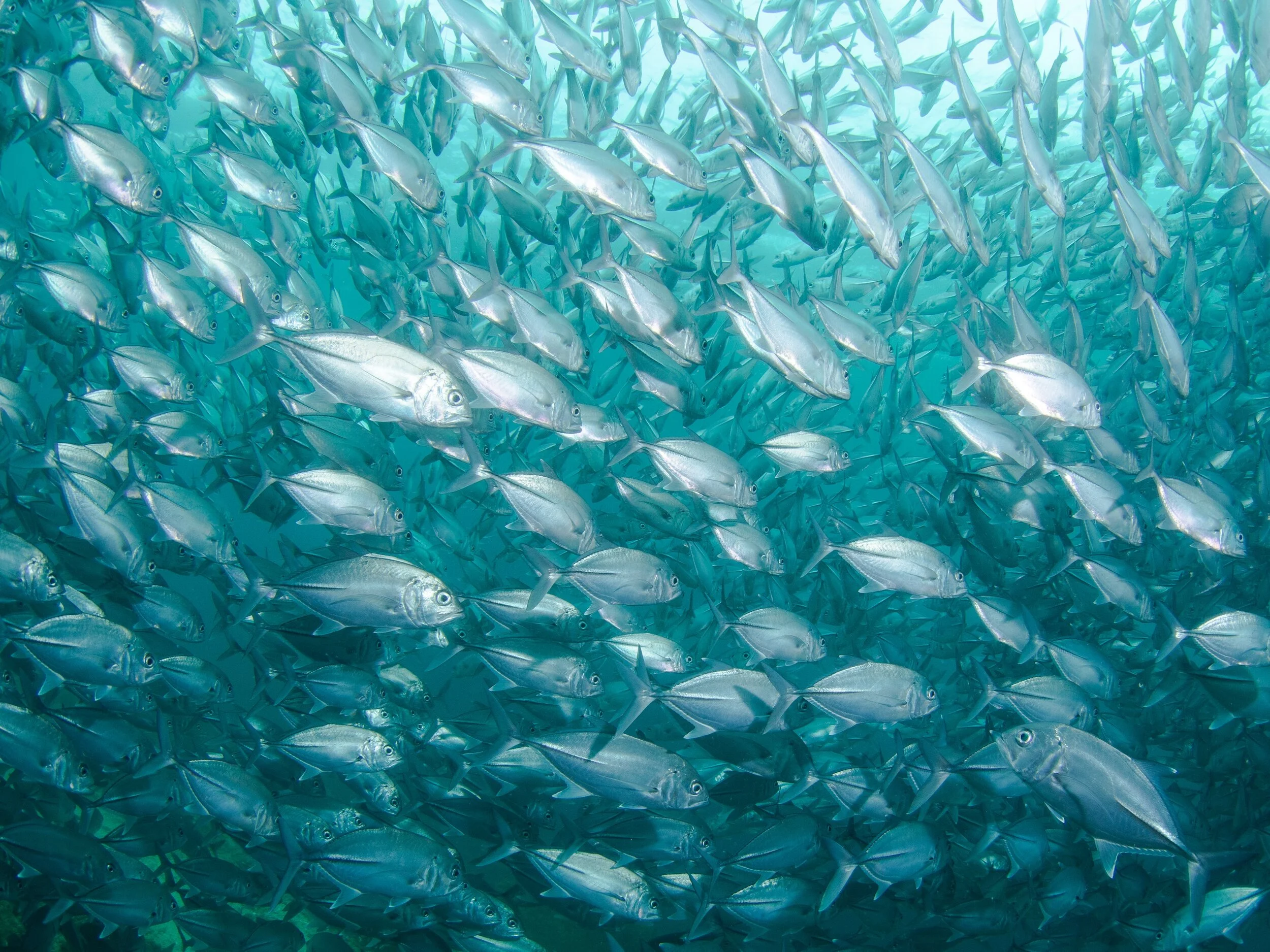
Globally, fish represent the majority of farmed vertebrate animals slaughtered for consumption. In addition, more than half of the fish meat consumed comes from marine and freshwater aquaculture farms. The constantly expanding global sector is growing at 7% per year . The European Union, the largest importer of fish in the world , itself slaughtered between 562 million and 1,260 million in 2017 in its farms.
The European Food Safety Authority now recognizes fish as sensitive beings that can experience stress and pain. Aquaculture developed at a time when nothing was known about this sensitivity. It must henceforth be taken into account to guide the evolution of practices towards greater animal welfare. Society as a whole is calling for this development: a 2018 survey of 9,000 Europeans reveals that 79% of citizens want farmed fish to be as protected as other farm animals.
However, if the government's stimulus plan to overcome the health crisis refers to the welfare of terrestrial animals, no measure mentions animal welfare in fish farming. And this, despite a budget of 50 million euros allocated to the fishing and aquaculture sectors over the period 2020-2022.
Major strategic orientations concerning the future of the aquaculture sector at European and French levels are expected in the coming months. The European Commission must therefore publish its new “Strategic guidelines for the development of sustainable aquaculture”. France must also publish its “National strategic plan for the development of sustainable aquacultures”. The objectives set by these plans will largely determine the distribution of expenditure for the next European Maritime and Fisheries Fund (EMFF) in Europe and France for the period 2021-2027.. Worth more than 6 billion euros, this fund is in a way the equivalent of the Common Agricultural Policy (CAP) for aquatic resources. A public consultation is also in progress concerning the French operational program for the use of the EMFF. On the other hand, at the French level, the Interprofessional Committee for Aquaculture Products (CIPA) will soon publish its sector plan . This document will outline the interprofession's strategy to meet the societal demand expressed during the General Food Conference.
We, the signatories of this forum, ask that the improvement of the conditions of rearing, transport and slaughter of fish really be at the heart of these future decisions. In March 2019 , the European Parliament also expressed its willingness to allocate a part of the EMFF grants in order to advance animal welfare.
The regulatory lever must also be activated. The deputy Typhanie Degois refers to the shortcomings of the law in this area in her information report presented last September. The aquaculture sector is only regulated in terms of health and the environment. The very few standards surrounding animal protection in aquaculture are either non-binding or unsuitable, because they are designed for terrestrial animals. The Council of the European Union itself calls on the Commission to assess the need for new legislation for animals currently not protected by specific standards, including aquaculture species, in its conclusions on animal welfare of 16 December 2019 . The French National Assembly has expressed the same commitment to the Commission in a resolution EU adopted on 1 st November, following the report of the MP Typhanie Degois.
As part of the “From farm to fork” strategy , the European Commission has announced the upcoming review of European regulations on the transport and slaughter of animals. This is the occasion truly integrating farmed fish with ambitious standards based on the latest scientific knowledge. In both French and European law, fish are excluded from the regulations protecting animals at the time of slaughter. A report from the European Commission points to the consequences of this lack of regulation: the slaughtering practices of fish in several European countries including France do not comply with the standards of the World Organization for Animal Health. The die is now ready to evolve, having itself initiated a group work with researchers to improve its slaughter practices. While transport and slaughter are critical steps, the rearing phase must also be regulated.
Practices can only be reformed through the advancement of knowledge. However, research applied to the welfare of fish lags significantly behind that targeting terrestrial animals. Supporting it is absolutely crucial and the creation of a European reference center on the welfare of fish, as there is for pigs and poultry , would provide essential scientific support.
In addition, many farmed fish belong to carnivorous species such as trout and salmon, partly fed with oils and meal from fish caught at sea, called “forage fish”. The animal sufferings generated by aquaculture practices are therefore also those suffered by these wild fish caught by so-called “milling” fishing. Wearing themselves out in the nets, crushed on top of each other, suffocating in the open air and slaughtered without stunning, they end their lives in long and intense suffering . Between 460 and 1,100 billion fish are sacrificed for this purpose each year around the world.
For the sake of their suffering, and in a context of a biodiversity crisis and the depletion of marine populations , recourse to the breeding of herbivorous species must henceforth be preferred to carnivorous species. At the same time, the search for technical solutions aimed at reducing the suffering of fish in the context of commercial fishing must be initiated. The association of British veterinarians has come out in this direction and researchers are already getting down to the task in the Netherlands and Norway.
Currently, two intensive salmon farming projects in Boulogne-sur-mer propose to increase our national fish production, all species combined, by more than 45% by using a carnivorous species. In addition to sustainability issues, this raises important questions about the suffering of farmed salmon, but also about the fish on which they will be fed.
Considerations around promoting animal welfare and reducing suffering should no longer be limited to the issue of terrestrial animals.
List of signatories:
Associations
ALI France (Aquatic Life Institute)
Association Ailerons
Association for the slaughter of animals with dignity (AFAAD)
Association française du Poisson Rouge (AFPR)
Association for the right to conscientious objection in universities (ADOCMU)
Association Stéphane Lamart for the defense of animal rights
C'est Enough
Compassion In World Farming France (CIWF)
Animal Code Animal
Rights
Education Animal Ethics
Fish Welfare Initiative
Brigitte Bardot Foundation
L214 ethics and animals
The Fondation Droit Animal Ethique et Sciences (LFDA)
Work of 'assistance to slaughterhouse animals (OABA)
PAZ (Paris Animaux Zoopolis)
For Animal Equality (PEA)
National Society for the Defense of Animals (SNDA)
Welfarm
Originally shared on MediaPart