Learn what fisheries welfare is, why fish welfare matters, how commercial fishing affects aquatic animals, and what can be done to improve welfare in wild capture fisheries!

What Is Fisheries Welfare
Fisheries welfare refers to the physical and mental well-being of wild aquatic animals during capture, retrieval, handling, and slaughter. It examines how fishing practices affect individual animals and seeks to reduce avoidable fear, pain, stress, injury, and exhaustion while supporting responsible fisheries management.
At a Glance
Fisheries welfare focuses on the experiences of individual aquatic animals during capture, retrieval, handling, and slaughter.
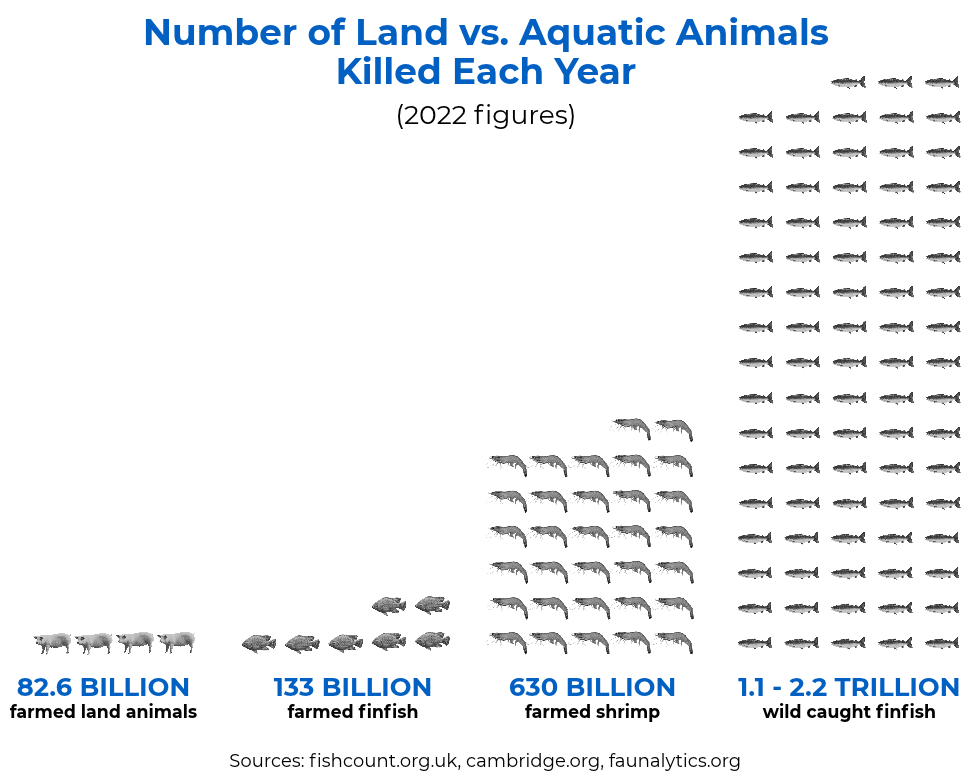
An estimated 1.1–2.2 trillion aquatic animals are caught each year for food or animal feed.
Fish and other aquatic animals can experience pain, stress, and injury during capture.
Welfare improvements can benefit animals while also supporting seafood product quality, operational efficiency, and responsible fisheries management.

Why Fisheries Welfare Matters

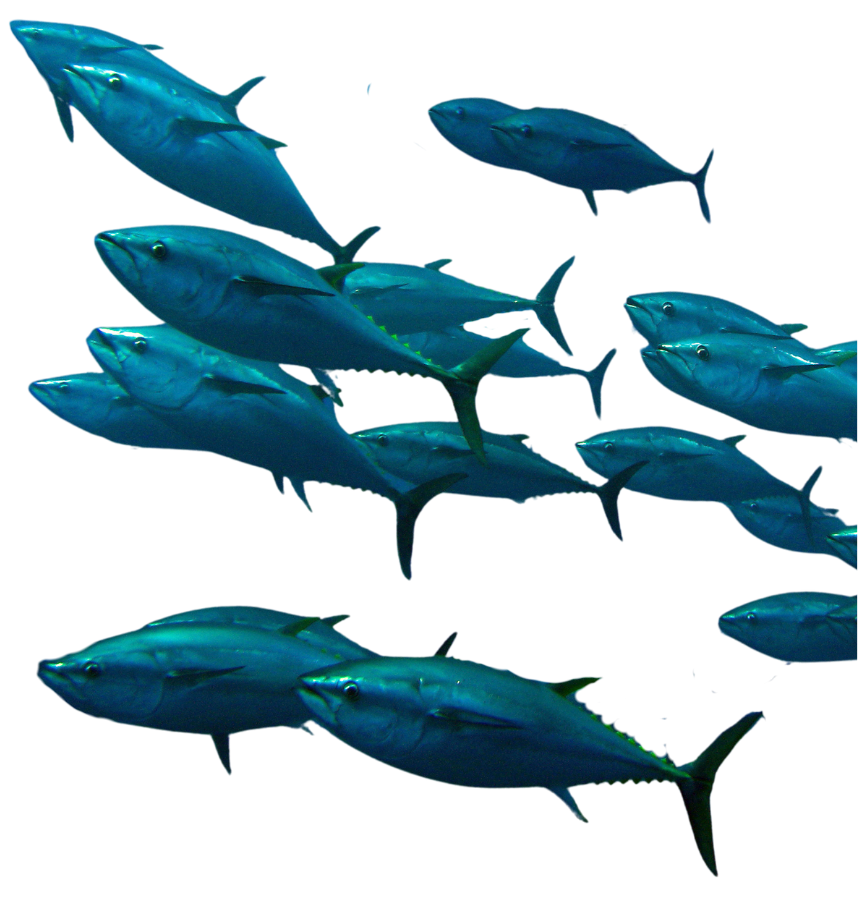
When most people think about animal welfare, they picture farmed land animals like chickens, pigs, and cows. Fish rarely come to mind. But the scale is enormous. Every year, an estimated 1.1 to 2.2 trillion individual aquatic animals are caught for food or animal feed.
The true number, however, is likely much higher because fisheries statistics do not fully capture illegal, unreported, and unregulated fishing, subsistence catches, or some animals caught and discarded at sea.
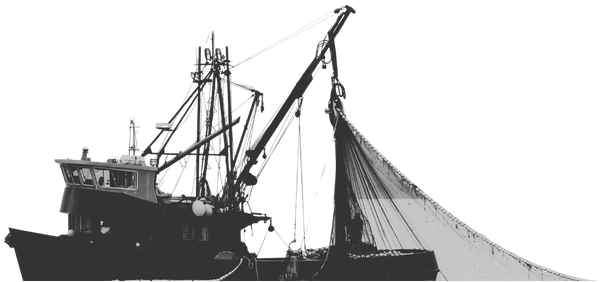
Many fishing operations can expose animals to severe stress, injury, exhaustion, crowding, air exposure, and a slow death. Yet legal protections for wild caught aquatic animals remain very limited. Fisheries policy has traditionally focused on populations, stocks, and ecosystems, while paying much less attention to what individual animals experience during the capture process.
Aquatic Life Institute works to help close this gap.
We have had a dedicated fisheries welfare program since 2021 that focuses on three pillars: recognition, protection and prioritization.
Recognition involves raising awareness about the scale and neglectedness of the issue. Protection means turning that awareness into formal standards, certifications, and laws. Prioritization is embedding welfare into the decisions that already shape fisheries, including fisheries management plans, scientific advice, and the global sustainability and food systems agendas that increasingly define what counts as sustainable seafood.

Frequently Asked Questions
How You Can Help Improve Fisheries Welfare
If I am a fisher, vessel operator, or crew
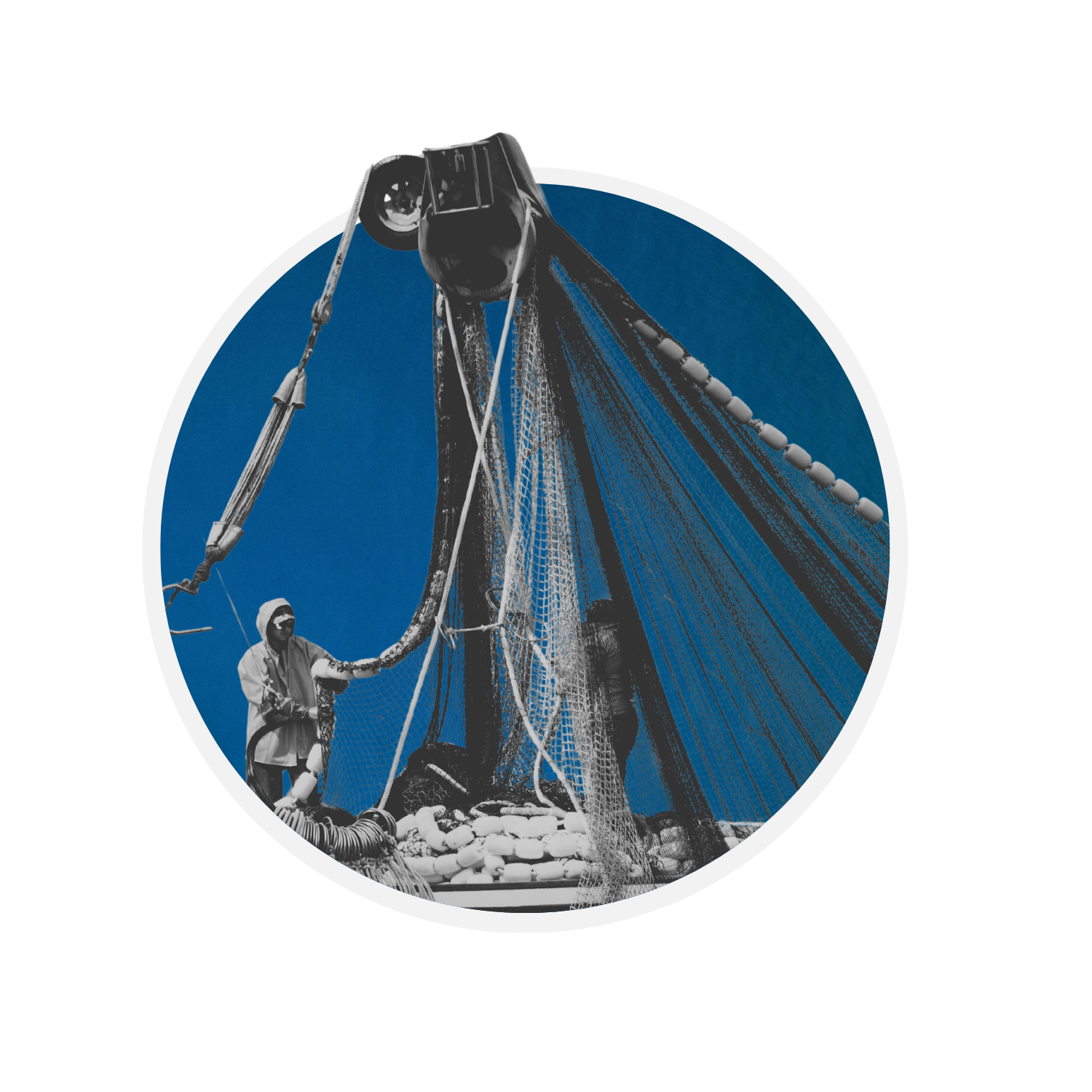
General knowledge of aquatic animal welfare among crew members is essential for generating support for any welfare improvements on board. You can start by identifying the stages where animals are most likely to suffer. Crew participation can help identify what happens in reality and design solutions that work at sea. Practical first steps can include:
Reducing unnecessary capture and retrieval time
Avoiding catches that are too large for the vessel to handle well
Reducing drops, rough handling, and time on deck
Improving water flow and oxygen for animals held alive
Separating and releasing bycatch quickly
Recording welfare data, like capture duration, volume, depth, and onboard handling and storage measures
Testing stunning equipment with scientists and crew
Providing clear training and procedures
Some welfare improvements are low-cost or cost-neutral. For example, changing how fish are handled on deck, is primarily training and cultural change. Others require investment, such as stunning equipment, gear modifications, cameras, and AI-assisted monitoring systems. Welfare improvements could help recover the upfront costs by improving flesh quality and opening up premium markets.

If I am a seafood company, retailer, or food-service business
Many companies know their species, gear and fishing area but have little information about what happens to the animal during capture and onboard the vessel. So first, understand how the products you buy are caught, retrieved, handled and killed.
Questions you can ask your supplies could include typical capture duration, capture volume, capture depth, onboard handling procedures, live storage (if relevant), stunning and killing methods, and bycatch prevention, handling, and release.
Use this information to identify the highest risks and set realistic, time-bound goals. Supporting trials and equipment improvements via pilot projects and collaborations with scientists and NGOs can help spur improvements.
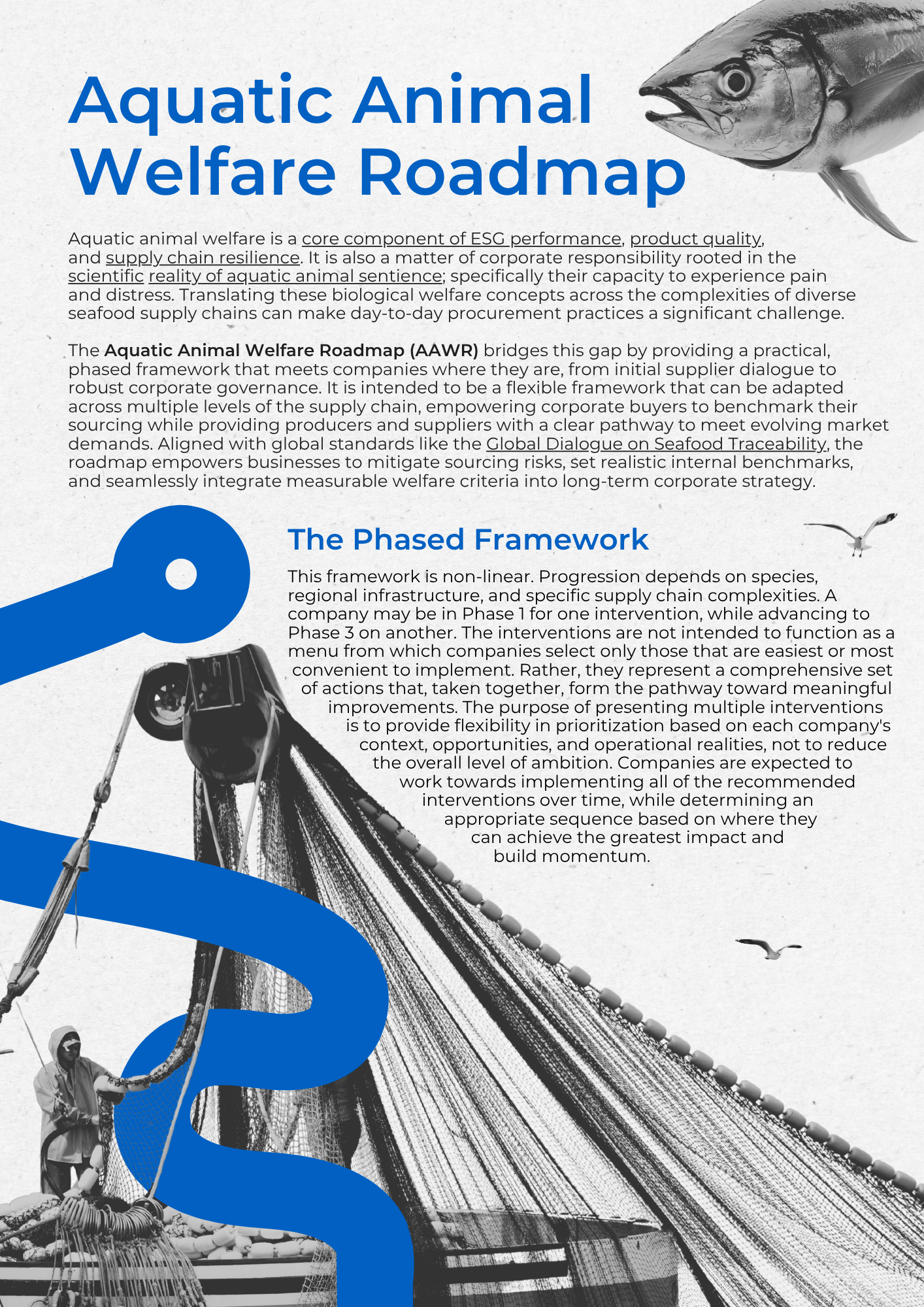
Fisheries are complex and there is no one size fits all solution. The companies that engage early are better positioned against evolving consumer expectations and regulatory changes. ALI has developed an incremental roadmap to help companies start this process should you need support.
If I am a policymaker or fisheries manager
As a fisheries manager, you can consider both population health and the experience of individual animals.
Welfare can be included in research priorities, management plans, technical measures, funding programs, vessel guidance, data collection, and decisions about new gear or technology.
Welfare is also connected to issues already being addressed in fisheries policy. These include bycatch reduction, ghost gear, selectivity, post release survival, catch quality, crew safety, climate impacts, and healthy fish populations.
So as a policymaker, adding a welfare lens can strengthen existing work rather than creating a completely separate system. It is important for governments to reform subsidy structures or regulatory requirements that incentivize and reward welfare-conscious operators.

If I am a scientist or research institution
Advocates, companies, fishers, and policy makers need evidence that can lead to practical decisions and guidance. The important evidence gaps include:
Acceptable capture durations and volumes by gear and species
Effectiveness of stunning methods by species and gear at commercial scale
Humane handle methods, including release methods
Affordable solutions for small vessels
Correlations between improved welfare and product quality/shelf life
Prioritizing these areas of research could help us produce educational materials, outreach materials, advocacy asks, and best practices.
Research that links welfare outcomes to quality and economics is particularly valuable because it speaks to those who may not be motivated by the welfare argument alone.

If I am a certifier or standard-setter
Standards are critical in translating welfare evidence into clear market expectations. As more scientific evidence develops, adding welfare metrics into seafood certifications helps make welfare visible, comparable and actionable across the seafood supply chain. It is also important to review criteria regularly. A standard should not lock in outdated practices when better evidence or technology becomes available.
To date, no GSSI-recognized seafood certification explicitly includes animal welfare criteria for wild-caught aquatic animals. This is a significant gap. Without welfare criteria in seafood certifications, there is no market mechanism to reward better practices or drive systematic change across supply chains. Aquatic Life Institute has a Certification Benchmark that evaluates how aquatic animal welfare standards fare in regional and global seafood certifications. Although it is focused on aquaculture at the moment, we intend to expand to wild capture fisheries in order to assess welfare gaps in fisheries certifications.
If I am an investor or lender
Recognizing that poor welfare is a potential operational and reputational risk is now highly relevant with growing consumer awareness and upcoming regulatory changes.
Useful questions include whether the company has a welfare policy, collects data, sets goals, supports suppliers, and reports progress.
Finance can also support equipment, vessel changes, training, and commercial trials. This can move welfare from a small pilot into normal business practice.

If I am a consumer
Most seafood labels and guides for wild capture fisheries do not yet include animal welfare, so asking retailers and restaurants how their fish are captured, handled, or killed sends a clear message that it’s not just about stock sustainability. Look for retailers that are transparent about their supply chains and policies.
Consumers can also voice your concerns on aquatic animal welfare to their government officials.
If I am a funder organization or individual donor
Fisheries welfare still receives very little funding compared with the scale of the issue. Funding is needed for research, practical trials, equipment development, policy work, company engagement, and tools that help the sector measure progress.
In a complex system like the seafood sector, funders should give projects enough time to test, adjust, and scale. Systems change in fisheries is slow and usually requires collaboration across science, industry, government, and civil society.
Learn More
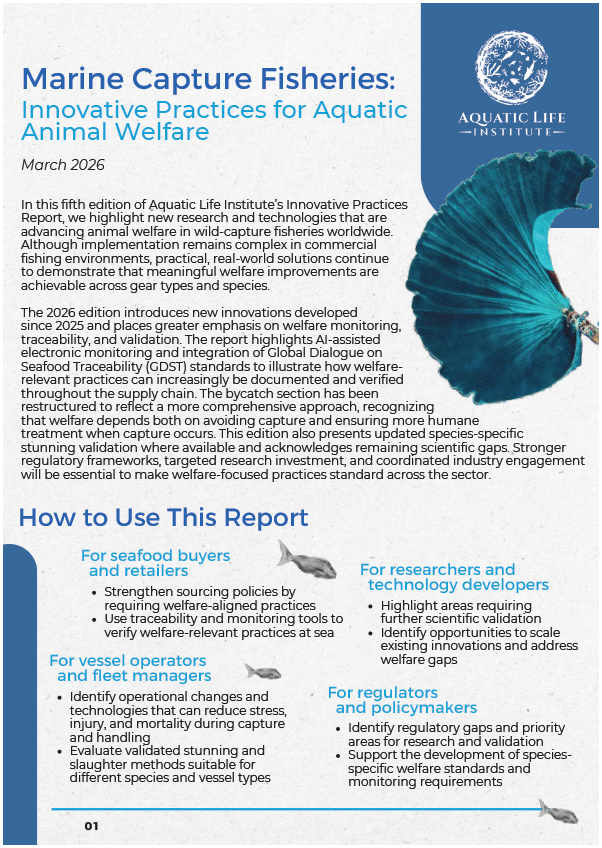
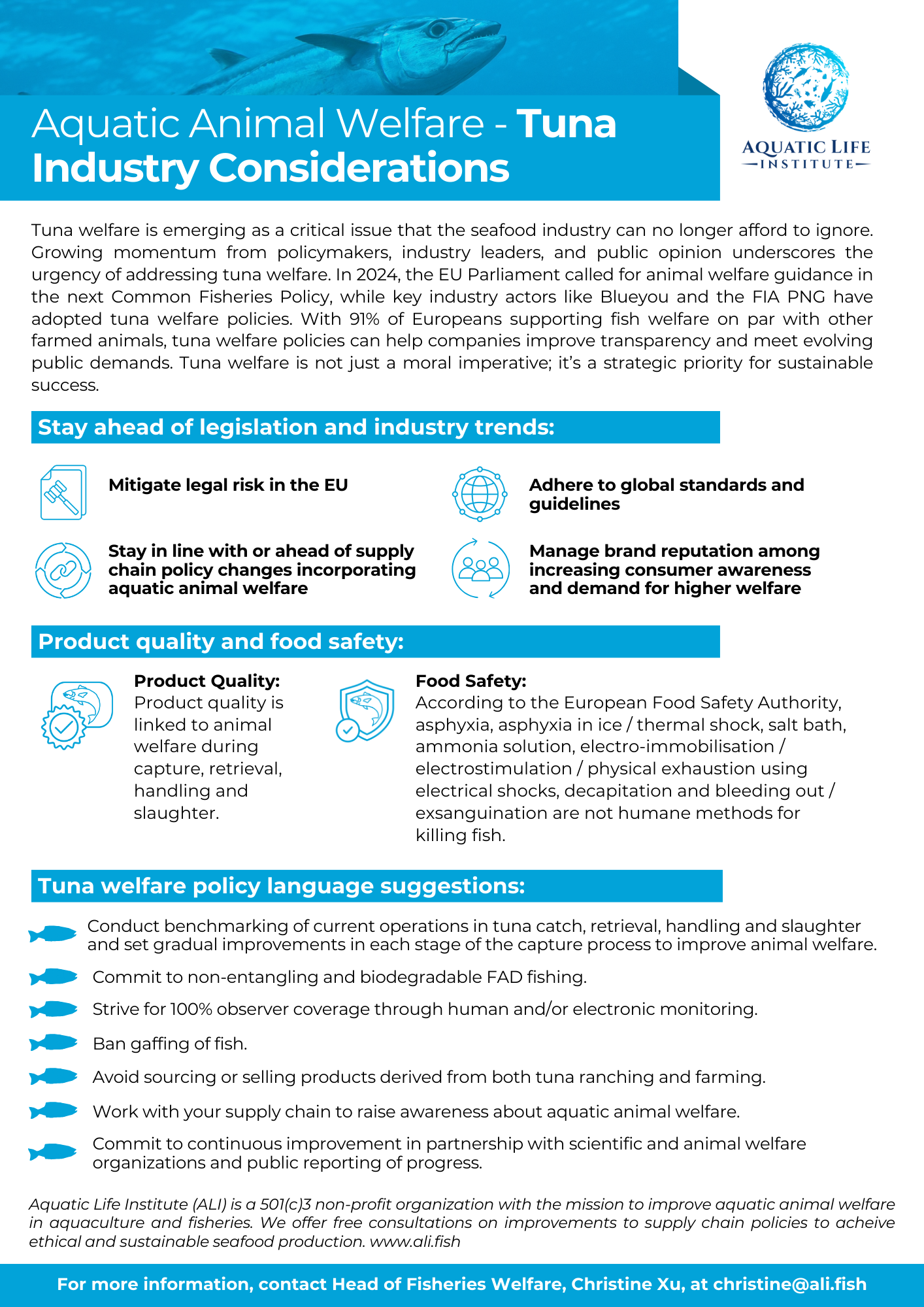
Explore ALI’s resources for readers who want to learn more or take action:
These selected sources provide background on fish sentience, welfare risks in wild capture fisheries, and humane stunning (this is not a complete scientific review):
European Food Safety Authority. General approach to fish welfare and the concept of sentience and pain in fish.
Fisheries Welfare papers from Mike Breen.
World Organisation for Animal Health. Aquatic Animal Health Code and animal welfare standards for farmed fish.
Humane Slaughter Association report