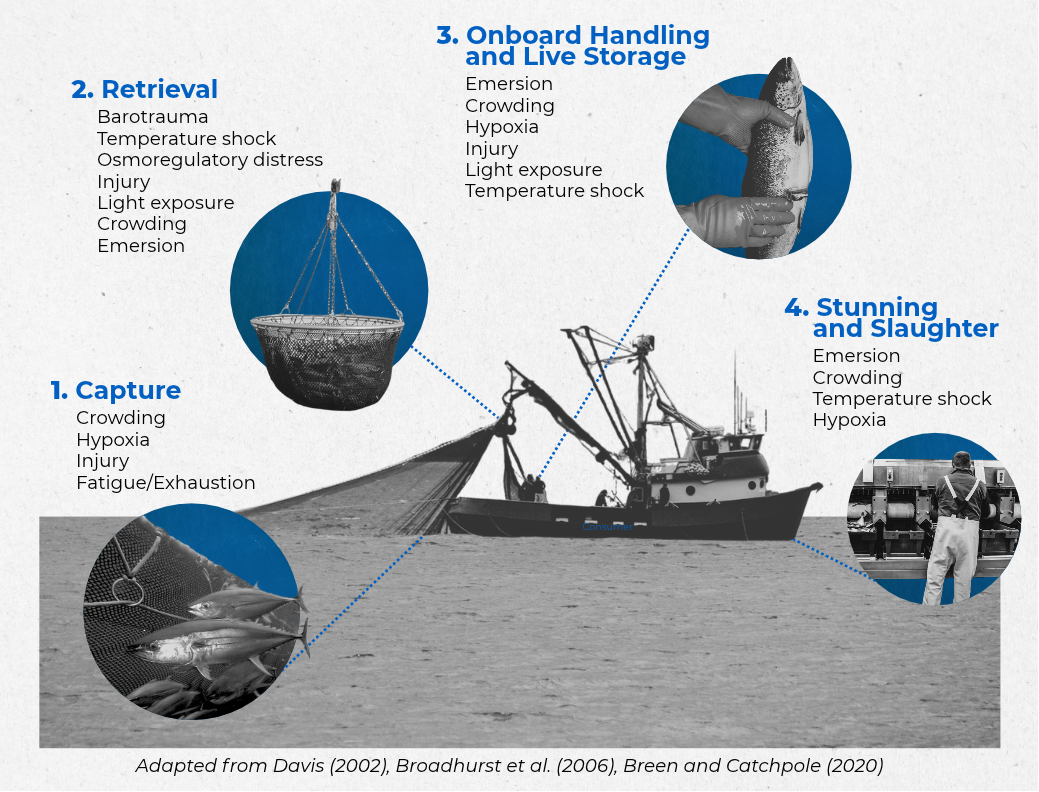
The risks vary depending on species and gear. They exist in every stage of the capture process, though common welfare risks include:
• Exhaustion from swimming or struggling against gear
• Crushing and crowding injuries
• Cuts, hook injuries, scale loss, and other physical damage
• Restricted movement and prolonged confinement
• Predation while an animal is trapped
• Rapid pressure changes when animals are brought up from depth
• Temperature, light or salinity changes
• Low oxygen levels
• Air exposure
• Fear and stress when animals cannot escape
Several risks can happen during the same stage of the capture process with varying degrees of duration and severity.
The greatest welfare risks experienced by aquatic animals in wild capture fisheries include crowding, injury, exhaustion, pressure changes, air exposure, and prolonged death.