What is Aquaculture?

What is Aquaculture?
Aquaculture is the farming of aquatic animals, plants, and other organisms through cultivating freshwater and saltwater. The other main alternative is commercial fishing which involves the capture of animals from the wild. Since the 1980’s, aquaculture production has more than doubled in size and is now considered the fastest growing food sector, but the legislation and support for animals on such farms is often ignored. Aquatic animals are the second largest* category of animals killed worldwide. Approximately one billion are farmed each year and an estimated two to three trillion in the wild are killed annually. China is currently the world’s top fish producer by a lot and since 2002 they have also been the largest exporter of fish products.
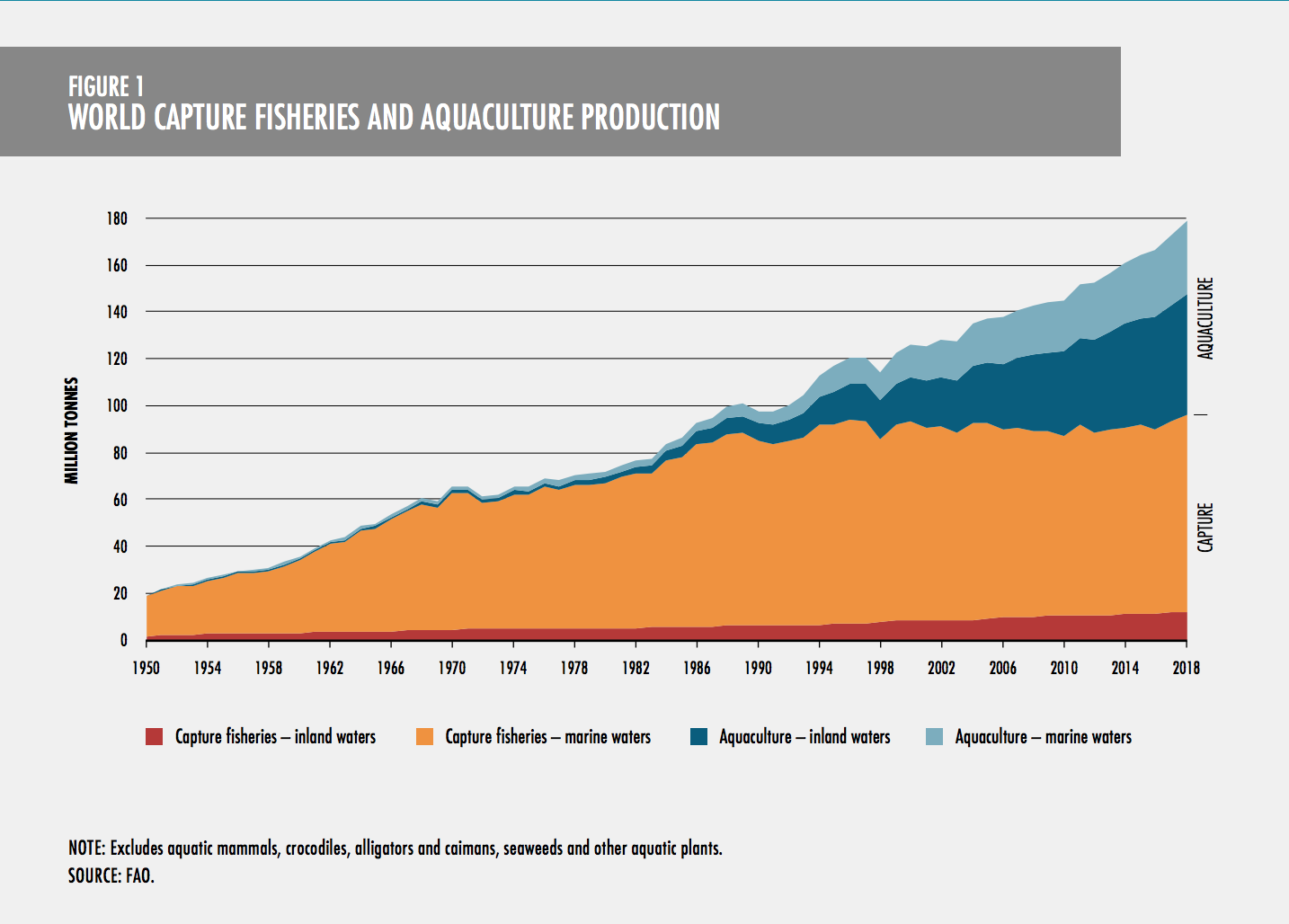
Although fisheries and aquaculture sector has expanded significantly in the past few decades, fish welfare for aquatic animals has not improved much. Since the early 1990s, much of this growth has been has been through aquaculture.
Highlights:
+14% Rise in global capture fisheries production from 1990 to 2018.
+527% Rise in global aquaculture production from 1990 to 2018.
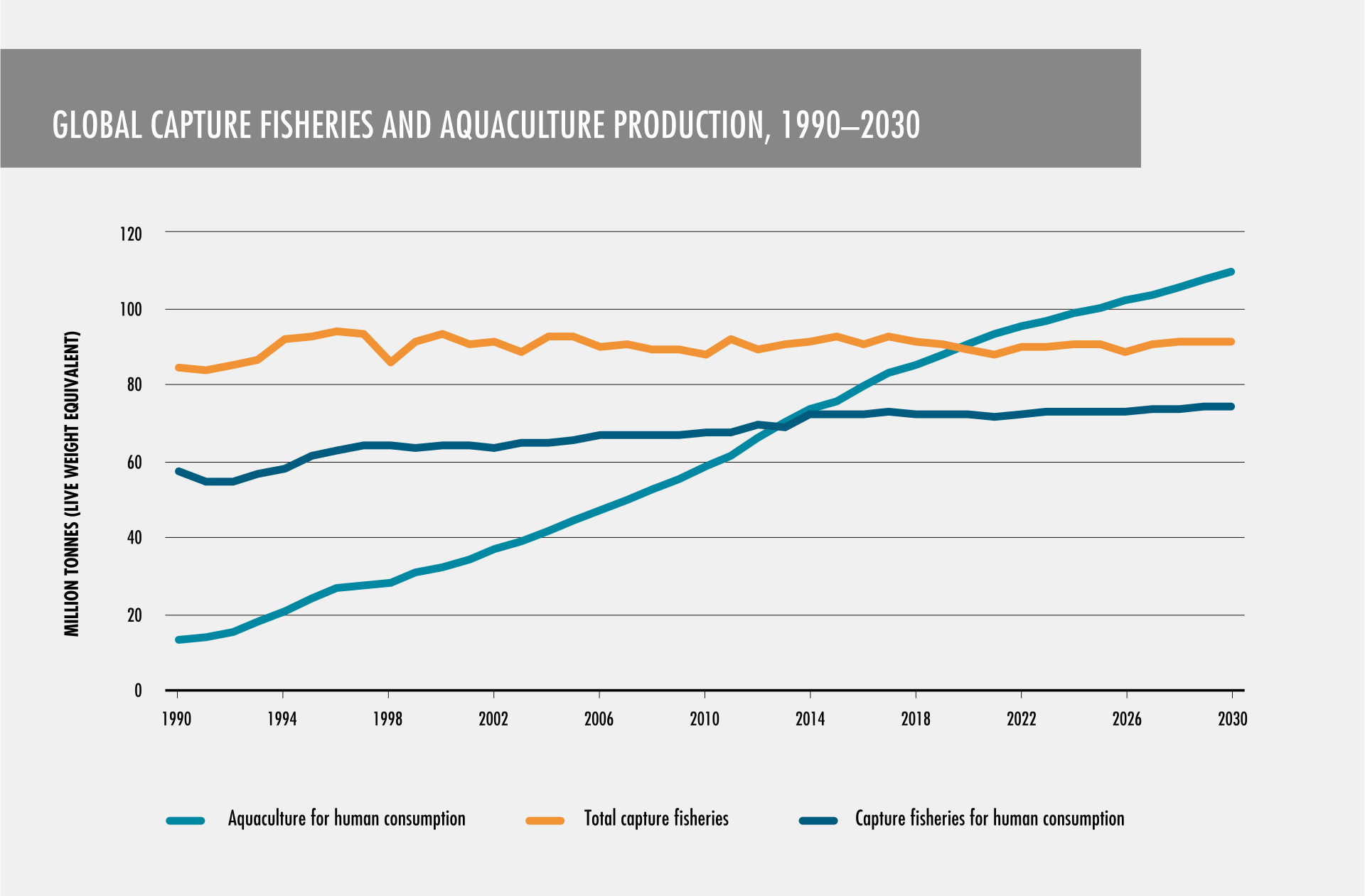
+122% Rise in total food fish consumption from 1990 to 2018.
Improving the lives and welfare of aquatic animals.
Although the fisheries and aquaculture sector has expanded significantly in the past few decades, fish welfare for aquatic animals has not improved much. Since the early 1990s, much of this growth has been through aquaculture. In the United States, aquaculture produces various species such as salmon, black sea bass, sablefish, pompano and yellowtail fish.
Here at ALI we seek to support and accelerate activities that positively impact on aquatic life, while also advising and funding research on aquatic animals to mobilize our findings to guide welfare interventions. We aim to have a positive impact on the lives of aquatic animals and focus our work on effective altruistic principles.