
Tanya Houppermans: Protecting Sharks
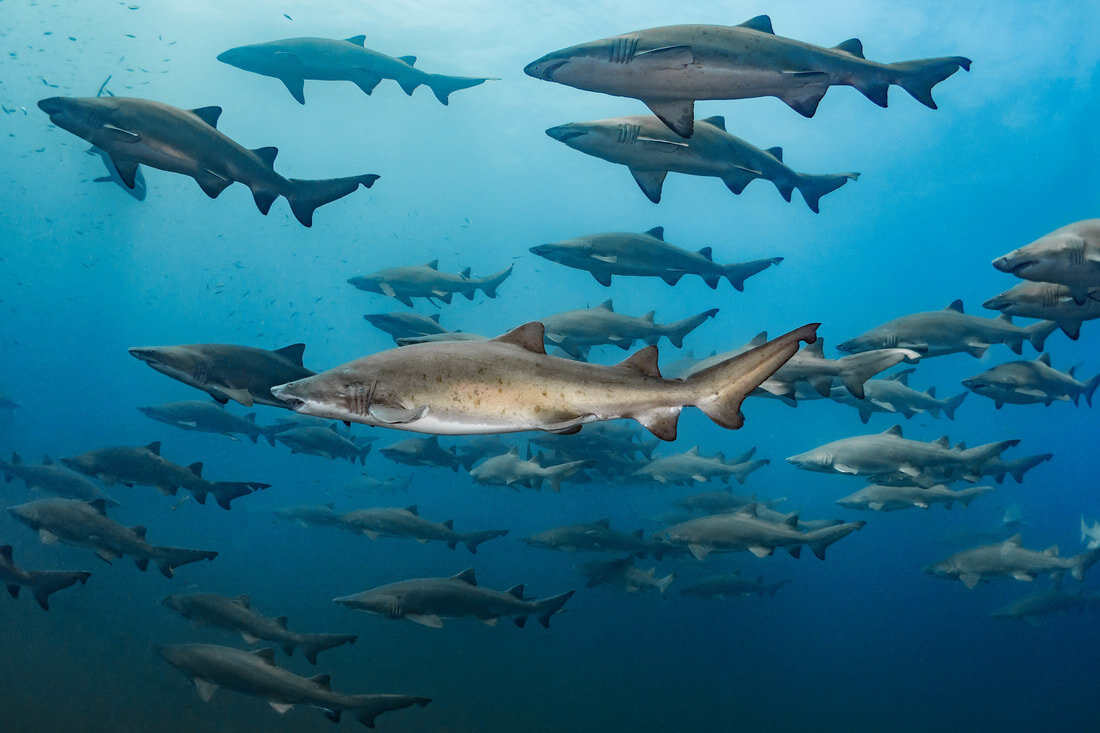
A large aggregation of sand tiger sharks off the coast of North Carolina
Tanya Houppermans is an underwater photographer that began her diving career in 2008 and quickly became passionate about shark conservation. She hopes to use her photographs to show the public how miss-understood sharks are and her photographs have become recognised around the world winning various competitions.
Underwater Photography
I started scuba diving back in 2008 because it was always something I had wanted to do. At the time, I was teaching skydiving on the weekends, and many of my skydiver friends were also scuba divers. I heard them talk about the fun they were having on scuba trips, so I decided to get certified. After I was certified, I started diving in North Carolina where it’s very common to see sand tiger sharks. I became fascinated by sharks after seeing them in the water, and quickly realized they were not the monsters so often portrayed by the media. I also learned that over 70 million sharks are killed by humans every year, and that several shark species are on the verge of extinction. To put this in perspective, every year on average between 5-7 people are killed by sharks worldwide. We are much more of a threat to them than they are to us. I thought that maybe I could take some pictures of the sharks I see on my dives to hopefully inspire people to care more about them and want to save them. I knew nothing about photography when I bought my camera in 2014, so I started reading everything I could about taking good pictures, and then got into the water to start practicing. Thankfully, my skills improved quickly, and my photos of sharks and other underwater animals began to be noticed. Then in 2015 I left the corporate world to become a full time underwater photographer and conservationist. But there is also another reason I decided to take pictures underwater, and that is to document my son’s journey as a scuba diver. My son Richard is 21 years old and he has autism. He became a certified diver through the Handicapped Scuba Association when he was 17, and diving is one of his favorite things to do. I hope that when people see images of Richard diving, they will be inspired to try things they may have thought they couldn’t do. So I see my work as dispelling misconceptions – both misconceptions about sharks, and misconceptions about what those with disabilities are capable of.
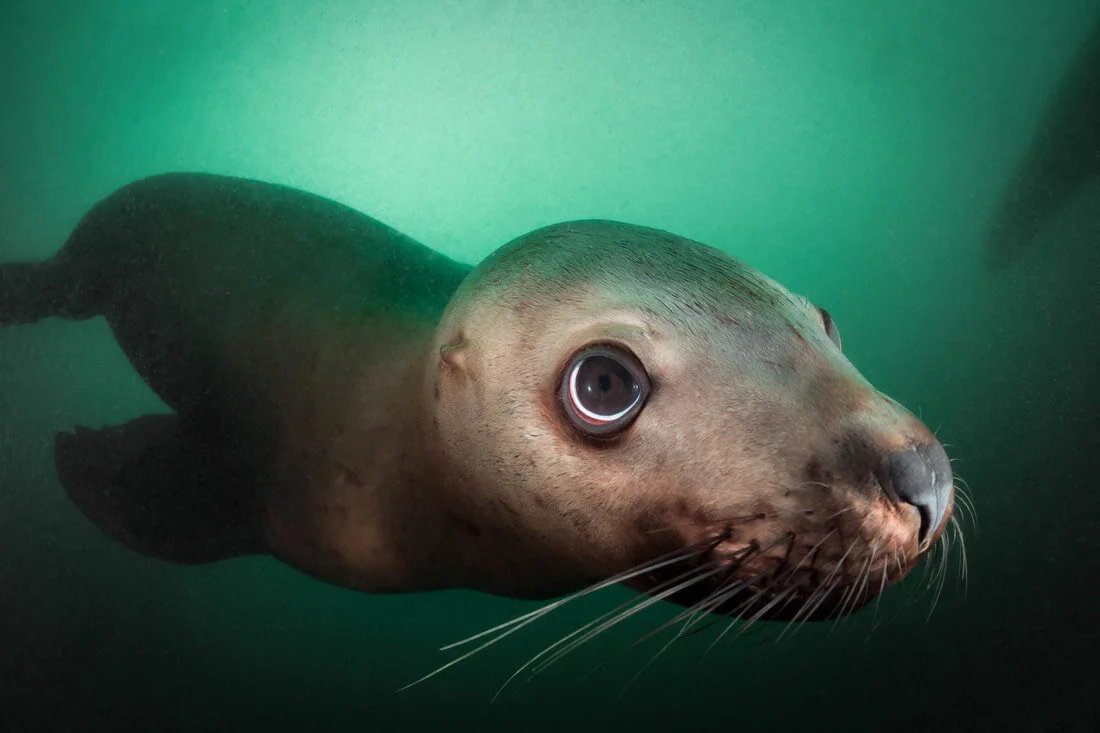
A Steller sea lion swims through the chilly green waters off the coast of Vancouver Island British Columbia
Protecting Wildlife
No matter who you are or where you live, there is always something you can do to protect marine life. One of the biggest threats to all marine life is pollution, especially plastics. You wouldn’t believe how much plastic makes its way to the ocean, and the damage is catastrophic, not only to marine life but the marine environment as a whole. So use less plastic! This is easy to do – skip the straw when you order a drink, use a refillable water bottle, and buy products that don’t use plastic in their packaging. When you do use plastics, please make sure you dispose of them in a proper recycling container. To help specific marine animals, there are some wonderful conservation organisations out there working tirelessly on their behalf. Donations are always appreciated, and desperately needed. When I first became involved in shark conservation, I raised $1000 for a shark conservation group by running a marathon!
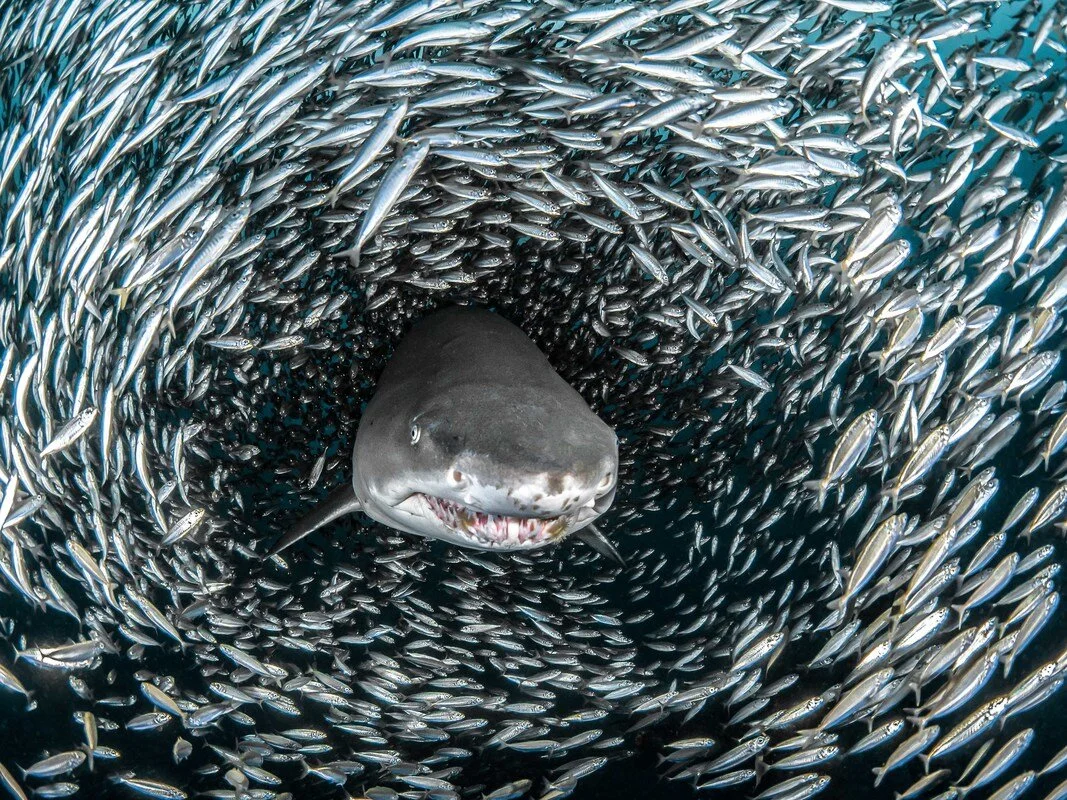
A sand tiger shark inside a massive bait ball of tiny fish off the coast of North Carolina
Inspirations and plans
First, I am inspired by the animals I have the honor of diving with. From the tiniest shrimp to the largest whale shark, you really can’t help but care about them when you see them in the wild. Second, I am inspired by my son being a diver. The look on his face and his huge smile (even underwater!) when he sees these animals let me know that I’m doing what I was meant to do, both for the ocean’s creatures and for Richard. I believe the purpose of photography in conservation is to make a connection with the viewer. We can speak all we want about what is happening below the surface of the water, but to many people these are abstract notions. Yet a single image has the power to change minds. In some of my presentations, I have shown an image of a dying sand tiger shark. This shark had been hooked by a fisherman. But instead of just cutting the hook and letting her go, they also stabbed her through the back of the head and threw her overboard. She lay dying on the sea floor near a shipwreck, where I found her. Whenever I show that image, and tell the story of finding her, I always see at least a few people in the audience with tears running down their faces. And inevitably they will ask me, “What can I do to help?” But it’s not just the sad images that create a connection. I’ve also had people tell me, “I never knew sharks could be so beautiful!” And that also inspires them to want to act. But the common factor is that they have seen an image that has created an emotional response, and that is what I try to do with my photographs.
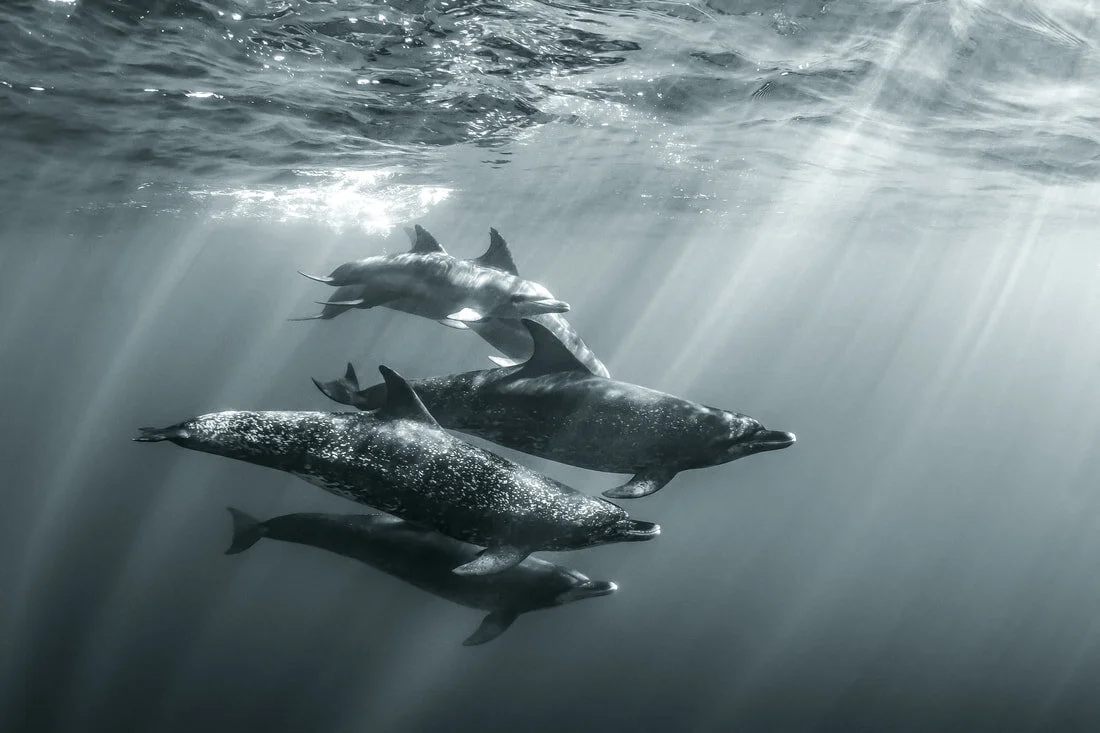
A pod of spotted dolphins off the coast of North Carolina
Right now I am involved in developing a citizen science project that will allow divers to upload their images of sand tiger sharks to a website where the software will identify the individual sharks based on their unique spot patterns. That way researchers can learn more about the health of the sand tiger populations along the east coast of the U.S. I love using my images to further conservation and research efforts, so I definitely want to continue that type of work in the future. But I do have some personal goals with my photography, such as capturing images of sharks in more extreme environments such as Greenland sharks in the Arctic, and also photographing whales such as orcas, blue whales, and humpbacks. I also recently became certified to start doing deeper decompression dives that will allow me to access some shipwrecks that until now have been out of my reach. That’s one of the great things about underwater photography – it’s nearly impossible to run out of amazing subjects!