Marine Capture Fisheries: Key Welfare Recommendations
New report released by Aquatic Life Institute identifies major welfare issues in capture fisheries and proposes key recommendations.
Words by Christine Xu, Head of Strategic Initiatives
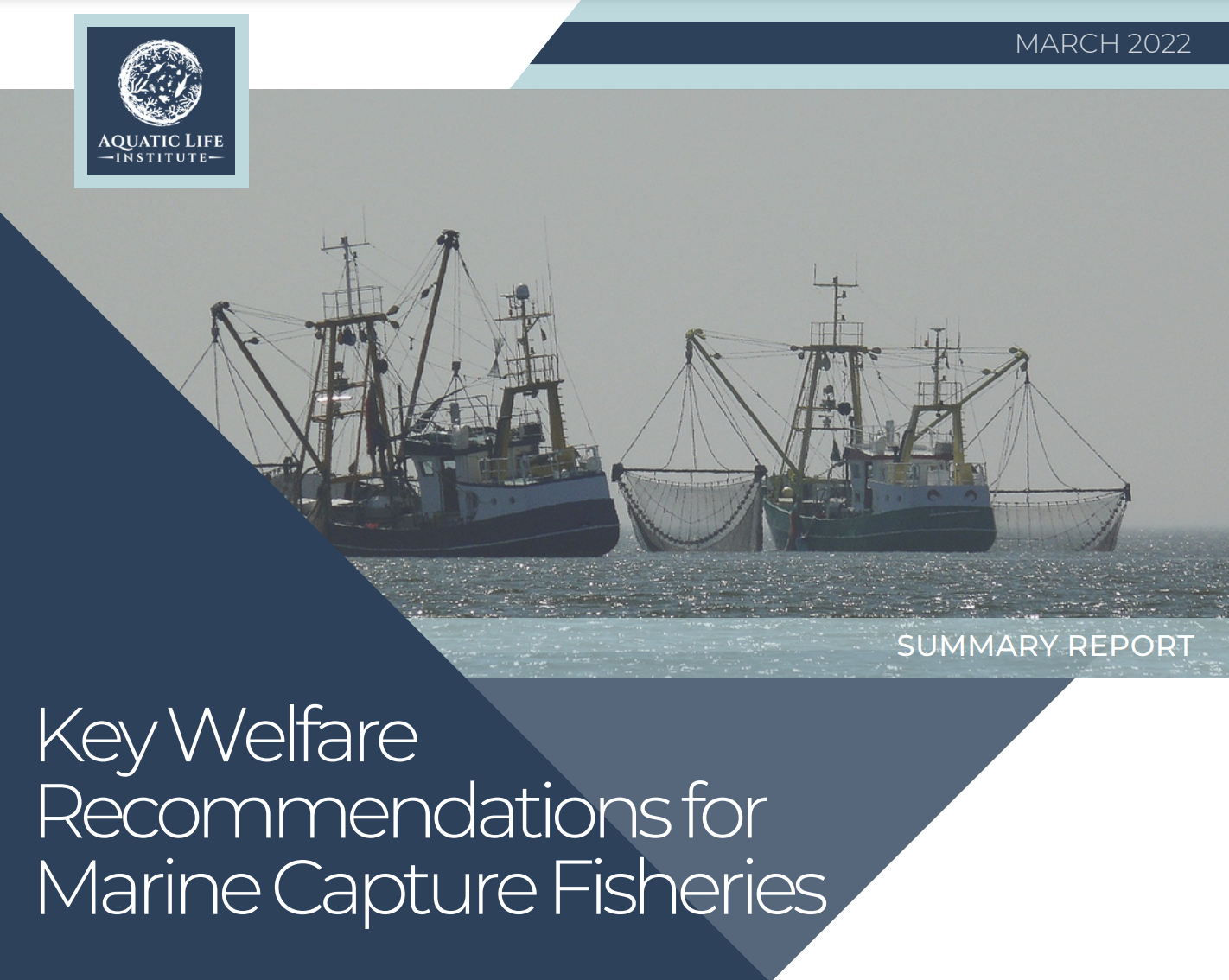
I am pleased to announce the release of our latest report, Key Welfare Recommendations for Marine Capture Fisheries! This report highlights major welfare issues that take place in wild capture fisheries. Intended for fisheries management practitioners, fishing industry actors, global certification bodies and other relevant decision-makers, the report urges for the adoption of an animal welfare-based approach (WBA) to fisheries management policies and practices.
We identified five priority areas during the fishing process in which animal welfare issues are widespread and significant: 1) capture and retrieval, 2) onboard handling, 3) stunning and slaughter, 4) incidental catch of non-target species (e.g., bycatch), and 5) abandoned fishing gear (e.g., ghost gear). The type of welfare issues experienced in capture fisheries includes injury, exhaustion, thermal shock, barometric trauma, mutilation, and death by asphyxiation. To put the scale of this suffering into perspective, an estimated two to three trillion aquatic animals are caught at sea on an annual basis, 35 times more than the number of land animals killed for food.
To tackle these points of extreme low welfare, we introduce the concept of an ‘animal welfare-based approach (WBA)’ to capture fisheries – where the key factor to consider when creating fisheries management policies, retrofitting fishing vessels, and designing new fishing technology, is welfare.
The animal WBA is centered around the following principles:
Refining the methods used to capture and retrieve aquatic animals;
Improving the ways in which captured animals are handled on-board;
Implementing effective stunning and slaughter of captured animals; and,
Eliminating the indirect adverse welfare impacts on non-target species.
Welfare in capture fisheries is a completely new concept, even among dedicated fisheries management professionals. However, there is ample scientific consensus that aquatic animals have the capacity to suffer in the same way as terrestrial animals. Therefore, we have a moral and in many cases, legal obligation, to look after the animals. It is also in the interest of the fishing sector itself to minimize the suffering inflicted on aquatic animals as much as possible, given the growing consumer awareness around animal welfare and that the long-term viability of the fisheries sector depends on healthy fish populations.
What is important to note is that during our research in creating this report, we noticed a huge gap in scientific knowledge around what constitutes good welfare in capture fisheries. Therefore, in order to accelerate the adoption of humane capture and slaughter techniques in fisheries, we strongly urge more research and financial support by all relevant stakeholders, including developing ‘welfare-minded’ fishing gear, refining current soak times and retrieval rates, scaling up humane stunning and slaughter onboard, and limiting the capture of non-target species.
However, while we recognize that knowledge gaps exist, our report lists various actionable steps that can already be taken and features several fishing companies that are setting great examples for others to follow. We intend to create best practice case studies and newer versions of this report as more research becomes available.
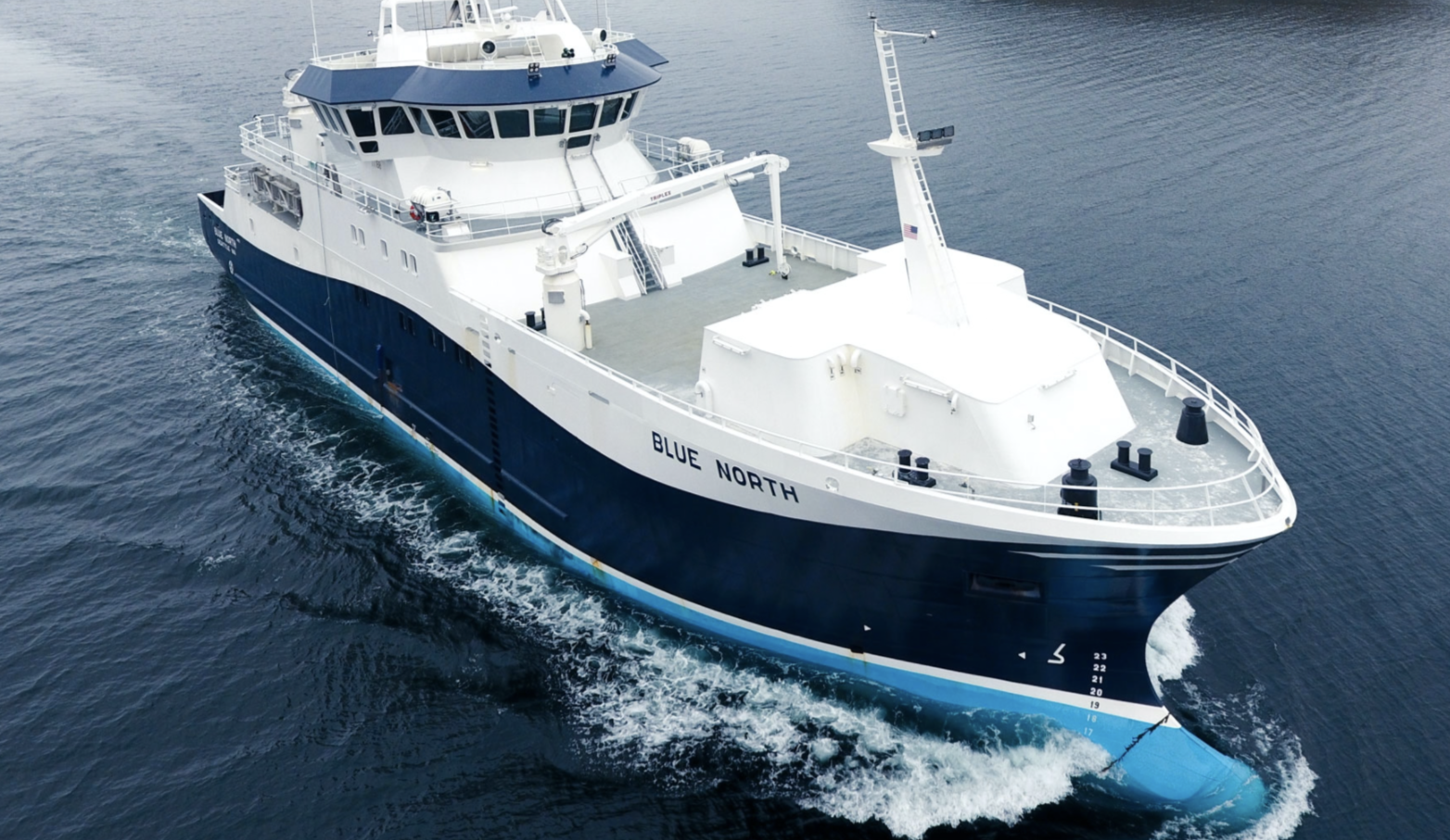
Bristol Wave Seafoods’ vessel, Blue North, is one of the only vessels in the world to implement humane catch strategies.
What is astounding is that wild-caught fish is the only remaining major food-producing sector that does not take animal welfare into consideration, even though it kills an estimated 2-3 trillion animals each year. This is slowly starting to change with growing consumer awareness around animal welfare. Global certification schemes are also starting to take heed. Several are beginning to revise their fisheries standards, including the Marine Stewardship Council and Best Seafood Practices (Global Seafood Alliance). We hope to advocate for these and other global eco-labelling schemes to require high welfare standards that are long-overdue for capture fisheries. You can check out our existing certifier campaign and contact us if you want to support this initiative.
The summary report is available here. Please share this widely to get the conversation going on welfare in capture fisheries.