Animal Welfare Guide for Aquaculture Receives Support
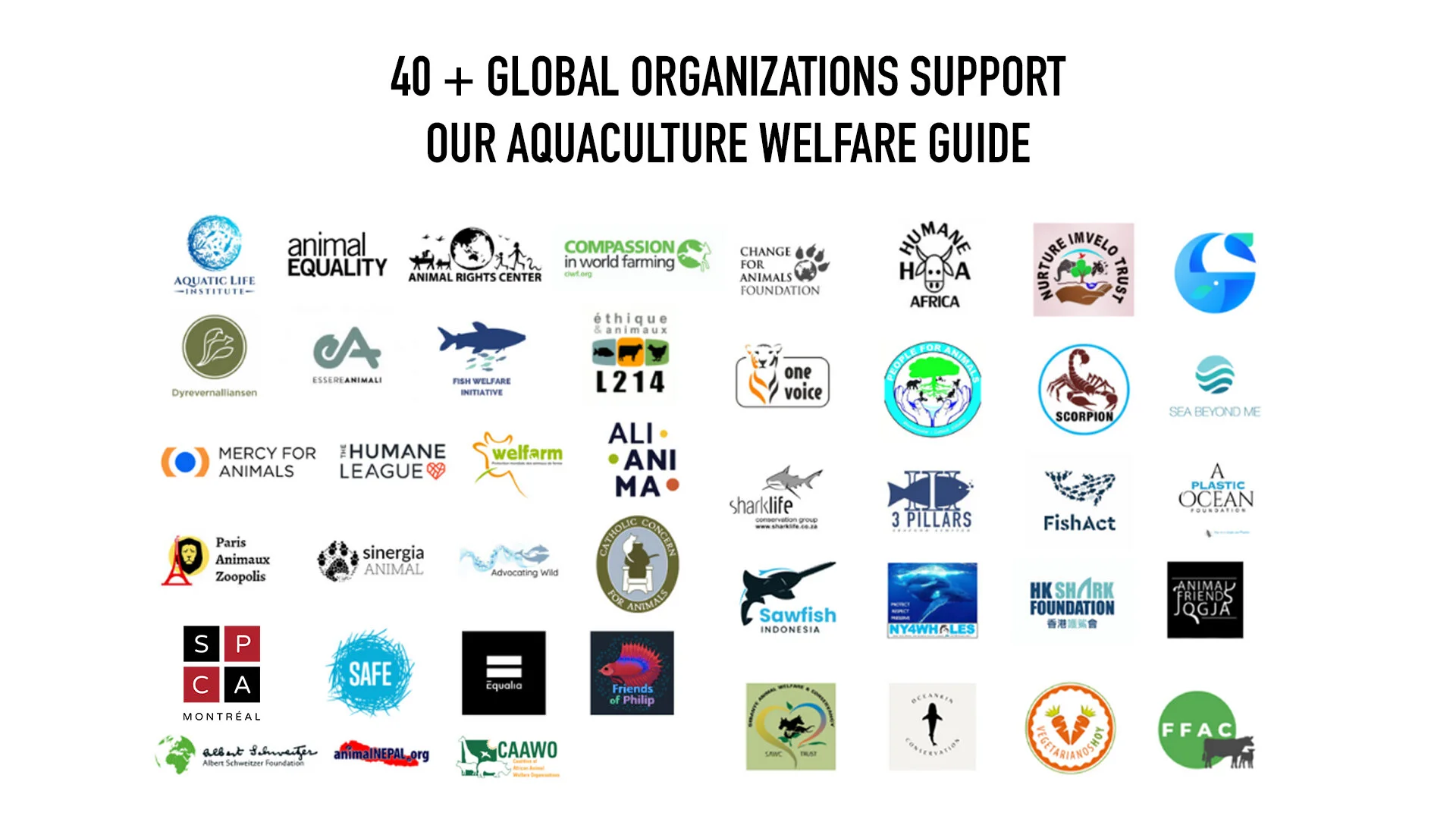
We are thrilled to see such overwhelming support for our Key Aquatic Animal Welfare Recommendations for Aquaculture. This guide was developed last year after consulting with global experts and has become a key advocacy tool in the nascent aquatic animal welfare movement. Supported by over 40 global animal rights and ocean conservation organizations, the guide allows advocates to urge for consistent and high welfare asks in their own work, harmonizing the movement from the get-go.
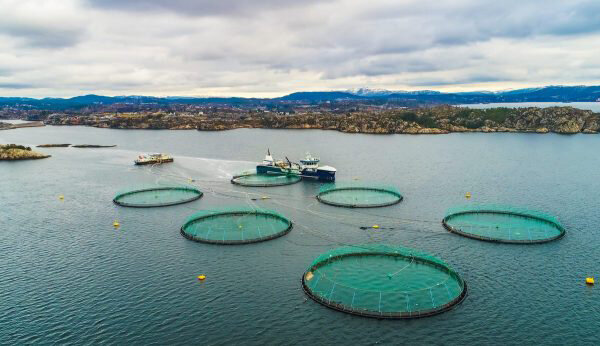
Animal welfare issues in aquaculture have been documented by several organizations here, here, and here and require swift and urgent action, as aquaculture is the fastest-growing food sector in the world, already supplying over 50% of the fish that people consume. However, unlike farmed terrestrial animals, aquaculture involves hundreds of different species, while existing welfare knowledge is available for only about 20% of those species, according to a new study.
Our welfare guide is the first step in attempting to address this knowledge gap through a concerted effort by offering five main pillars of aquatic animal welfare and their key interventions. Those pillars revolve around creating an environment that meets species-specific ethological needs analogous to their ideal habitat, reducing the amount of wild-caught fish required in aquaculture feed, providing appropriate space requirements and stocking densities, maintaining quality water, and requiring effective stunning and slaughter methods.
The welfare guide has been a central piece in our certifier campaign to draw attention to and improve existing fish product certification standards. We urge all labeling schemes to take into account the welfare of aquatic animals required in the entire chain of aquaculture production, including cleaner fish, feeder animals, and broodstock, as well as the process of catching fish in the wild used for aquaculture and livestock feed.
Welfare considerations in aquaculture can serve as a cross-cutting solution to issues such as biosecurity, antimicrobial resistance, food safety, food security and climate change. Safeguarding welfare of these aquatic animals is a win-win for animal welfare and the sustainability of the fisheries industry. This is why it is particularly exciting that many ocean conservation groups from our Coalition for Aquatic Conservation (CAC) are also in support of our welfare guide.