
Creating Sanctuary for Aquatic Animals
At Aquatic Life Institute (ALI), our team is working hard to research and define what higher welfare means for aquatic animals. It’s a tremendous task for a number of reasons, among them the vast variety of species farmed and the dearth of existing information on what is required for each species to psychologically thrive, rather than simply physically survive. Another obstacle is the gap between our own needs as terrestrial beings and the needs of aquatic animals. Most of us are disconnected from what life in the water actually looks like and the intuitions we might have about farmed terrestrial animal welfare--the need for clean air to breathe, for space to roam, or to form specific social groups, for example--just don’t translate precisely to aquatic welfare. This is one of the reasons a newer tide among animal advocates has untapped potential: aquatic animal sanctuaries.
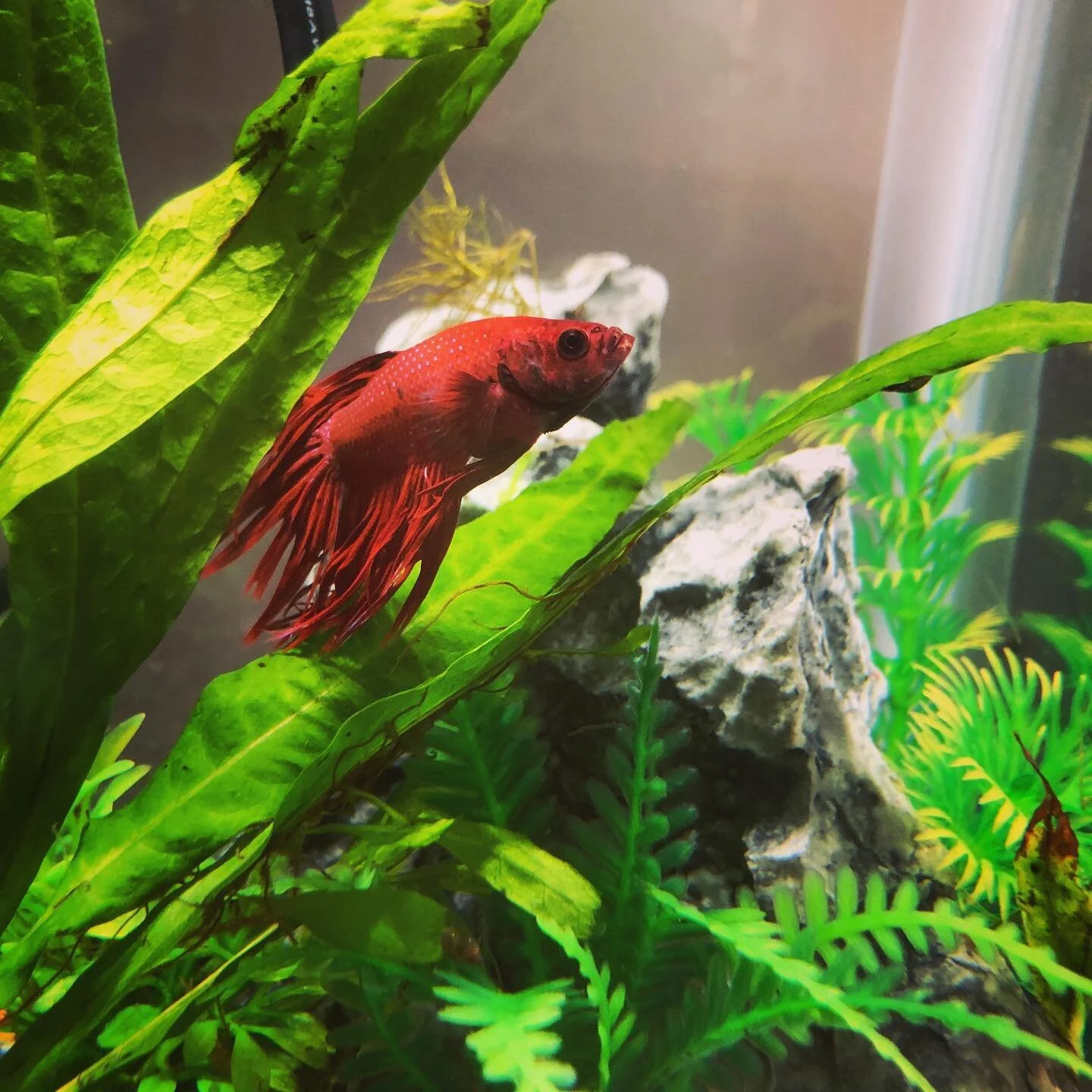
Rescued betta fish Diego at Ahimsa Safe Haven in Michigan, United States.
ALI followers might already be familiar with the concept of animal sanctuaries generally: Sanctuaries are places where individual animals can live out their lives in safety under human care, typically after they are rescued from situations of harm. From an advocacy perspective, sanctuaries provide several benefits beyond simply the wellbeing of the individual animals they save, from a greater understanding of the medical and care needs of these species, to a more authentic assessment of their behaviors and preferences, to further motivation to advocate on their behalf, as the abstractions of an industry are transformed into individuals with names and faces. We know a connection to an individual animal can have a significant effect, as in the case of Ireland’s famous dolphin Fungie, who became an international tourist attraction and was mourned globally upon his passing.
The first sanctuaries for formerly-farmed terrestrial animals opened over thirty years ago, yet the sanctuary movement (like the broader animal advocacy movement) has largely failed to provide sanctuary to aquatic animals. This has unfortunately resulted in two parallel and mutually reinforcing phenomena: (1) The animal welfare movement is decades behind in our understanding of aquatic animals relative to terrestrial animals and this makes advocates all the more hesitant to focus on species they know little about, meaning a continued disinterest in generating that knowledge; (2) Advocates are often motivated in their advocacy by a connection to an individual animal, like Fungie, and the sanctuary focus on terrestrial animals--compounded by the land-water divide and assumed relative “charisma” of a crayfish vs. a cow--results in a perpetuated focus on terrestrial animals.
The good news is the tides are turning! Just as the larger animal advocacy movement is increasingly focusing on aquatic animals, so too are animal sanctuaries. Some sanctuaries care for both terrestrial animals and aquatic animals, such as Maridan’s Menagerie in Australia and Ahimsa Safe Haven in the U.S. Some focus specifically on aquatic animals, like Friends of Philip Fish Sanctuary and Fish Comrades. And groups like Microsanctuary Resource Center and Vegans with Fishes are encouraging more people to rescue aquatic animals and then supporting them in aquatic animal care, whether that be hundreds of animals at a large sanctuary or one or two fishes in someone’s apartment microsanctuary.
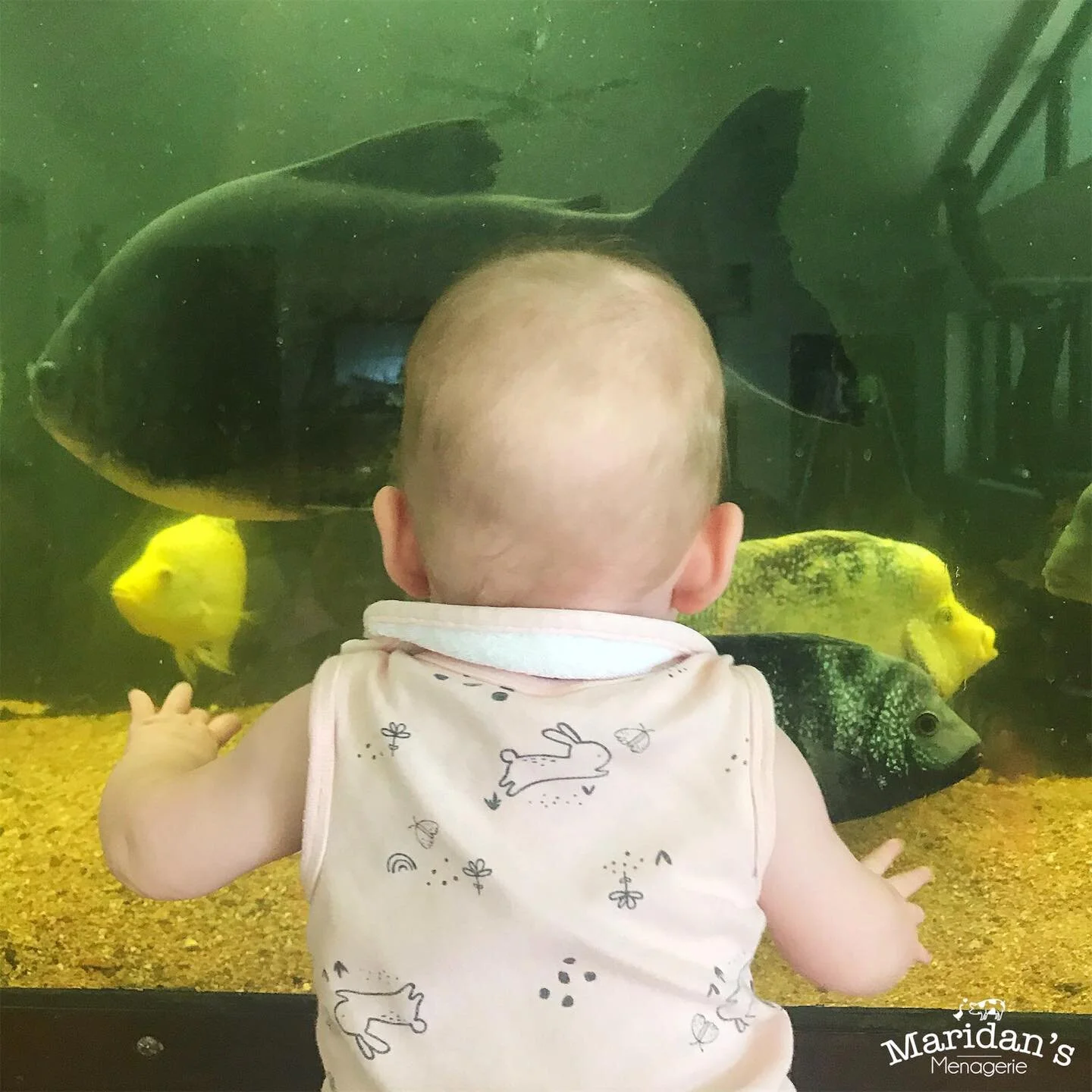
Rescued fishes as watched by human baby at Maridan’s Menagerie in Queensland, Australia