Interpreting “Blue Loss”
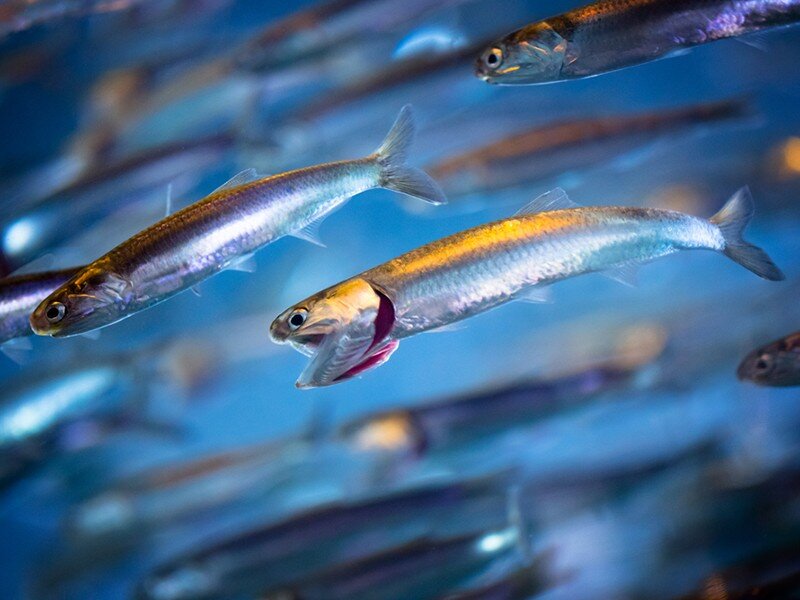
Image of anchovies from evantravels/Shutterstock
As an exhilarating month of feedback comes to a close, ALI is in the midst of shifting the spotlight to the release of our illuminating and striking report, “Blue Loss”: Estimating How Many Aquatic Animals are Hidden in the Food System, exposing a startling amount of aquatic animals that are habitually concealed from the public eye in our food system and therefore out of welfare considerations. In this report conducted by ALI’s research team, we have calculated that approximately 1.2 trillion aquatic animals comprise this “Blue Loss” every single year. In other words, between one-third to one-half of all wild-caught fish are ultimately fed to farmed aquatic animals.
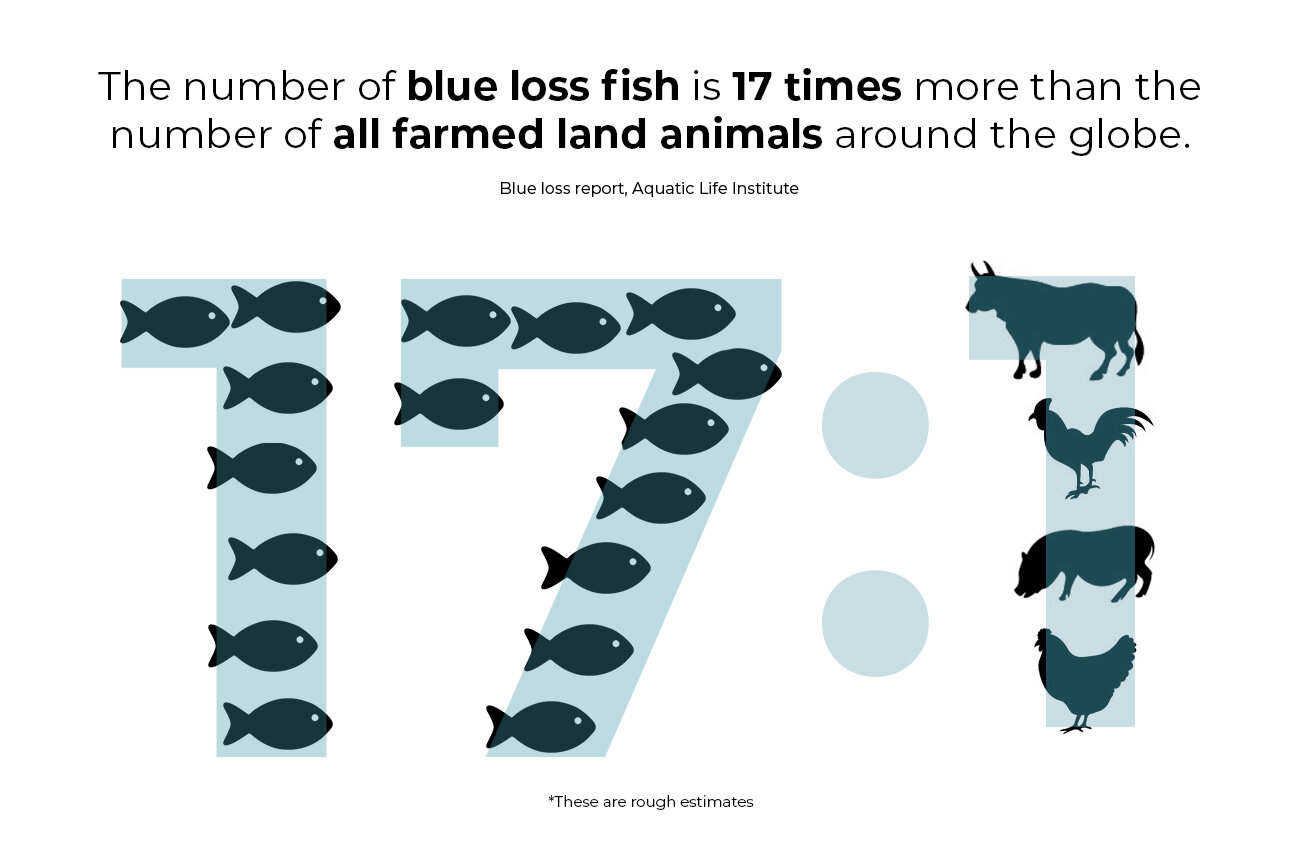
The aquaculture industry is booming. Global seafood production has skyrocketed in the past 50 years in an attempt to alleviate some of the demanding pressure on wild fisheries. Now, billions of aquatic animals are being raised in high-suffering conditions with minimal compassion in terms of ethical treatment and humane slaughter. While we have started to generate a wave of industry awareness and interventions as it relates to farmed fish welfare, we must not forget the wild aquatic animals being exploited for farmed fish.
The overall objective of ALI’s research paper was to deliver an estimate for the number of wild fish that are caught and killed to feed farmed fish, who are subsequently raised and slaughtered to fuel our own dietary necessities. There was a gap in the existing research related to blue loss that we intend to fill. Based on a 2007-2016 range previously calculated by Fishcount, ALI provides up-to-date annual estimates of the number of wild-caught fish reduced down to farmed animal feed using the Food and Agriculture Organization’s (FAO) most recent State of the World Fisheries Report (2020). We also record and account for several industry practices that have not been formerly listed as blue loss such as bycatch, discard, and live feed. The knowledge we obtained can be used as fuel to alter innovations within the feed industry and jumpstart enhanced welfare implications for all beings involved in our complex food system.
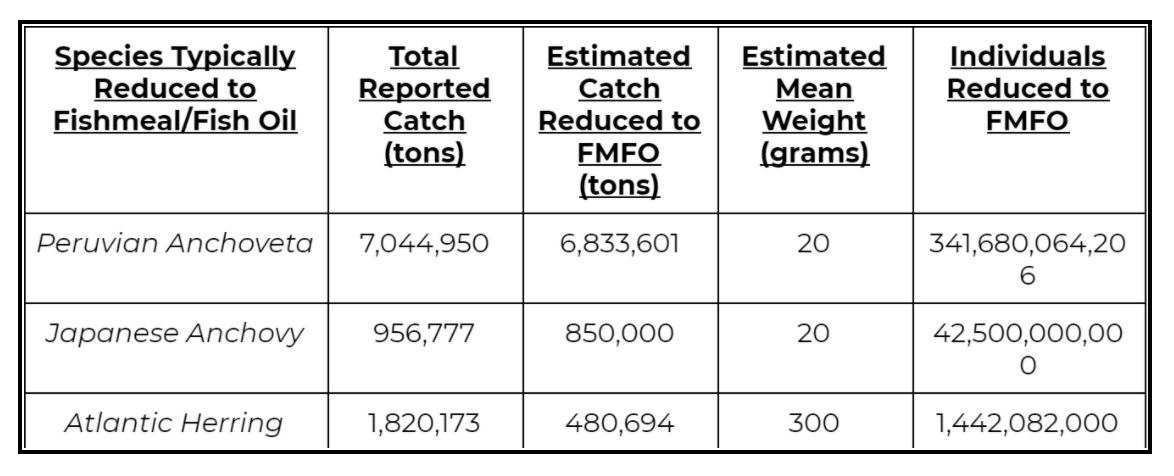
“Feed fish” can include animals that are captured then either manufactured into fish food, commonly referred to as “fishmeal”, or reduced to fish oil given to promote a nutritionally-balanced diet in both terrestrial and aquatic farmed animals. Wild-caught “feed fish”, the primary victims, are unseen in the supply chain due to the fact that they are not being used explicitly for human consumption. Dominant species typically reduced to fishmeal/fish oil are Peruvian Anchoveta, Japanese Anchovy and Atlantic Herring.
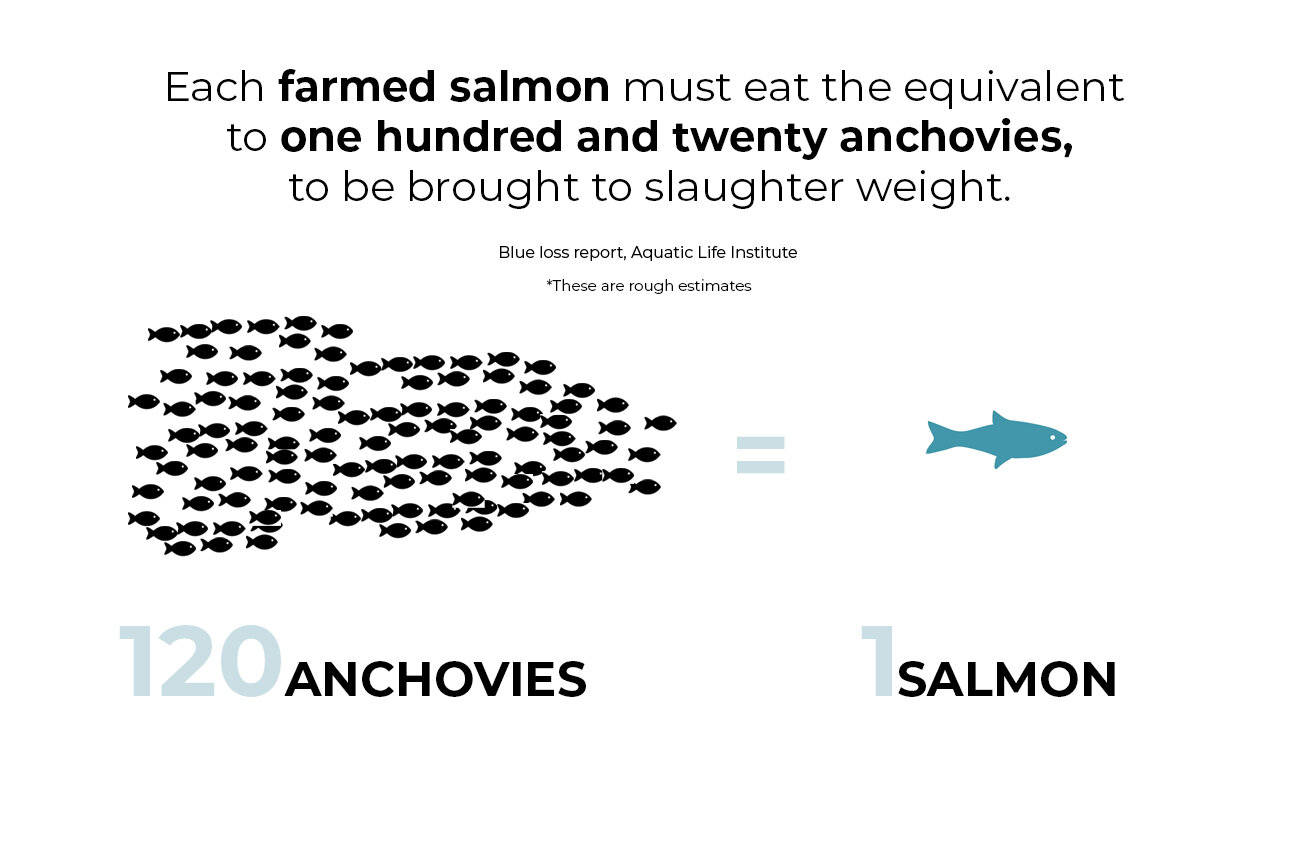
Atlantic salmon are one of the most popular farmed species of fish, predominantly cultured in Norway and other parts of Europe. The average salmon typically weighs around 5 kg at the time of harvest. Under this assumption, each farmed salmon must eat the biomass equivalent to 9 herring, or 120 anchovies, throughout its lifetime in captivity, creating a unique and damaging “welfare pyramid”. Therefore, if 1 whole salmon feeds around 8 people, in reality, these individuals could actually be eating up to 15 fish each.
But “feed fish” also refers to animals that are collected and fed directly to farmed fish while they are still alive. We have incorporated both populations into our calculation of “blue loss.”
Some possible interventions that are discussed in this report include the promotion of plant-based or other advanced protein alternatives in order to help mitigate some of the adverse environmental and welfare impacts imposed by the extensive use of fishmeal and fish oil products. Encouraging the development of nutritionally complete aquafeeds could possibly have a positive effect on billions of lives. We also recommend moving away from farming carnivorous fish, such as Atlantic salmon, in order to create less need for fishmeal/fish oil products altogether.
Quite often, humans may be guilty of possessing an “out of sight, out of mind” mentality. This is especially true when it comes to behind the scene activities that support various portions of terrestrial agriculture. However, we attempt to emphasize that these practices are also happening in the aquaculture industry, but to a much greater extent in terms of both the sheer amount of individual animals involved as well as the welfare consideration, or lack thereof, that these animals are given. We encourage you to read the full report to see what activities contribute to “blue loss,” the species involved, and the welfare implications of this issue.