Aquaculture-fishing with Selene Magnolia
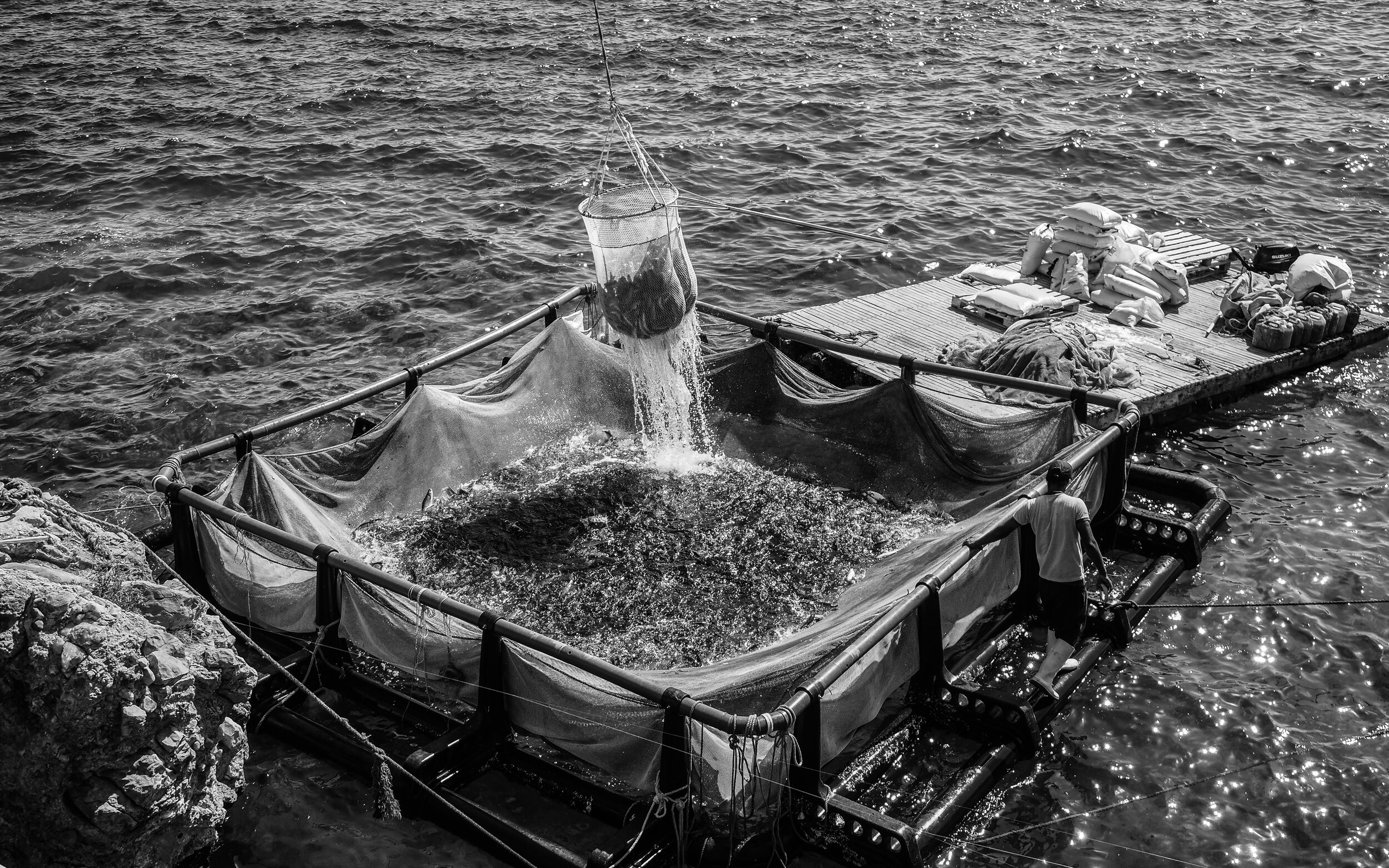
Greece, 2018. Sea-farmed sea bass are hauled from floating pens and dumped into ice containers, then transferred to the slaughter and packing plant. (Selene Magnolia/ CIWF)
Here at ALI, we were inspired to see this important project by Selena Magnolia so we decided to interview her about the photo project focusing on aquaculture in the Mediterranean with Ecostorm and Compassion In World Farming. This interview will give an important insight into the life on a fish farm.
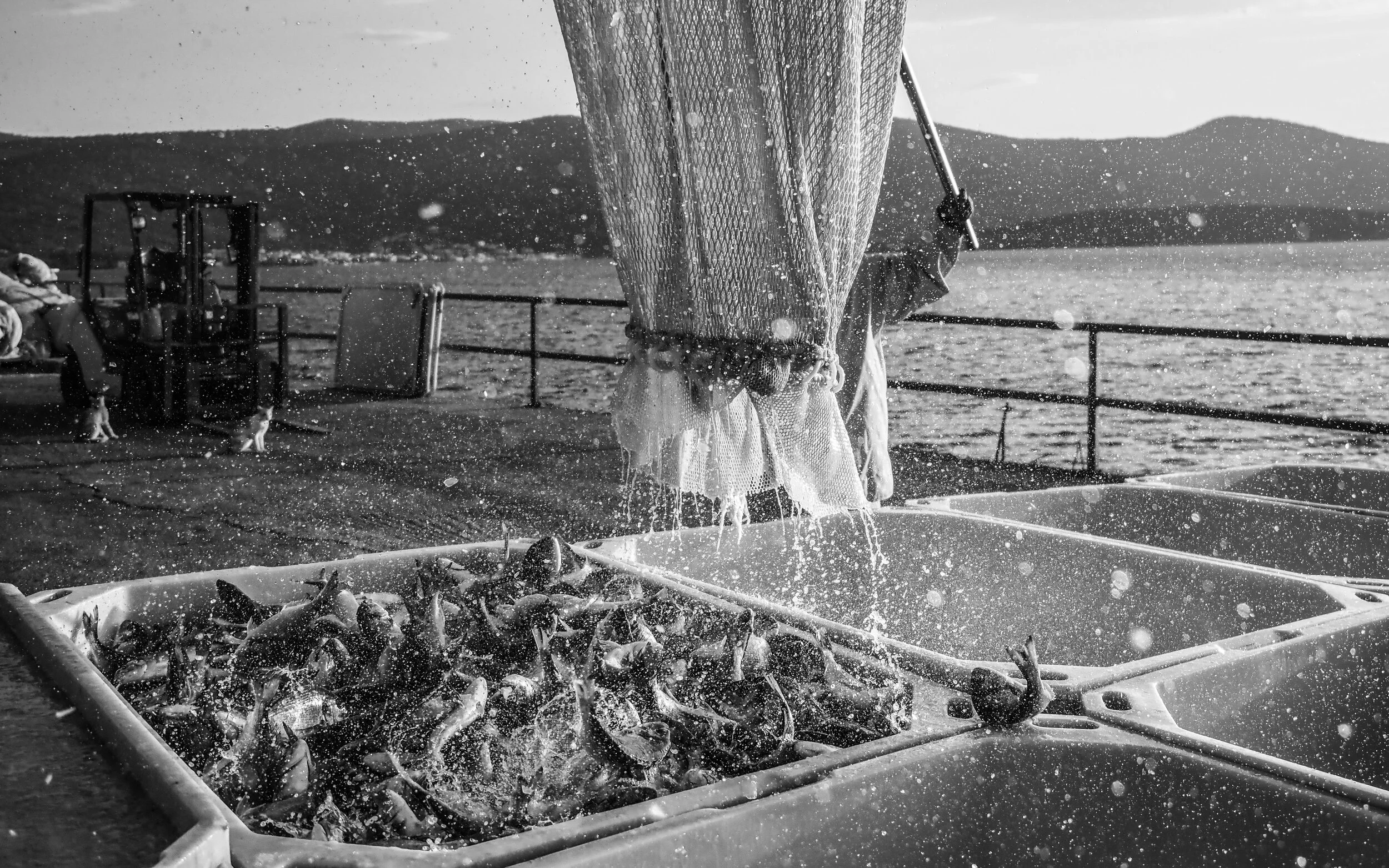
Greece, 2018. After being moved from the floating pens of a sea bass and sea bream farm, thousands of sea bass are dumped into ice containers. The shock of ice is meant to kill the fish quickly but the process is in fact painful and slow. The fish are then processed and packed, some remaining conscious even after this ordeal. (Selene Magnolia/ CIWF)
Introduction
My name is Selene, and I got passionate about photography very early in my life, as I was a child. Photography soon became a political tool to me and my way to express my views and make a difference. This led me to document animal abuse in different areas, including farming and fishing. Exposing aquaculture is important for me because the fish industry is harming the planet tremendously while not being really recognized in any discourse, and the suffering of the fish is silent and relatively invisible.
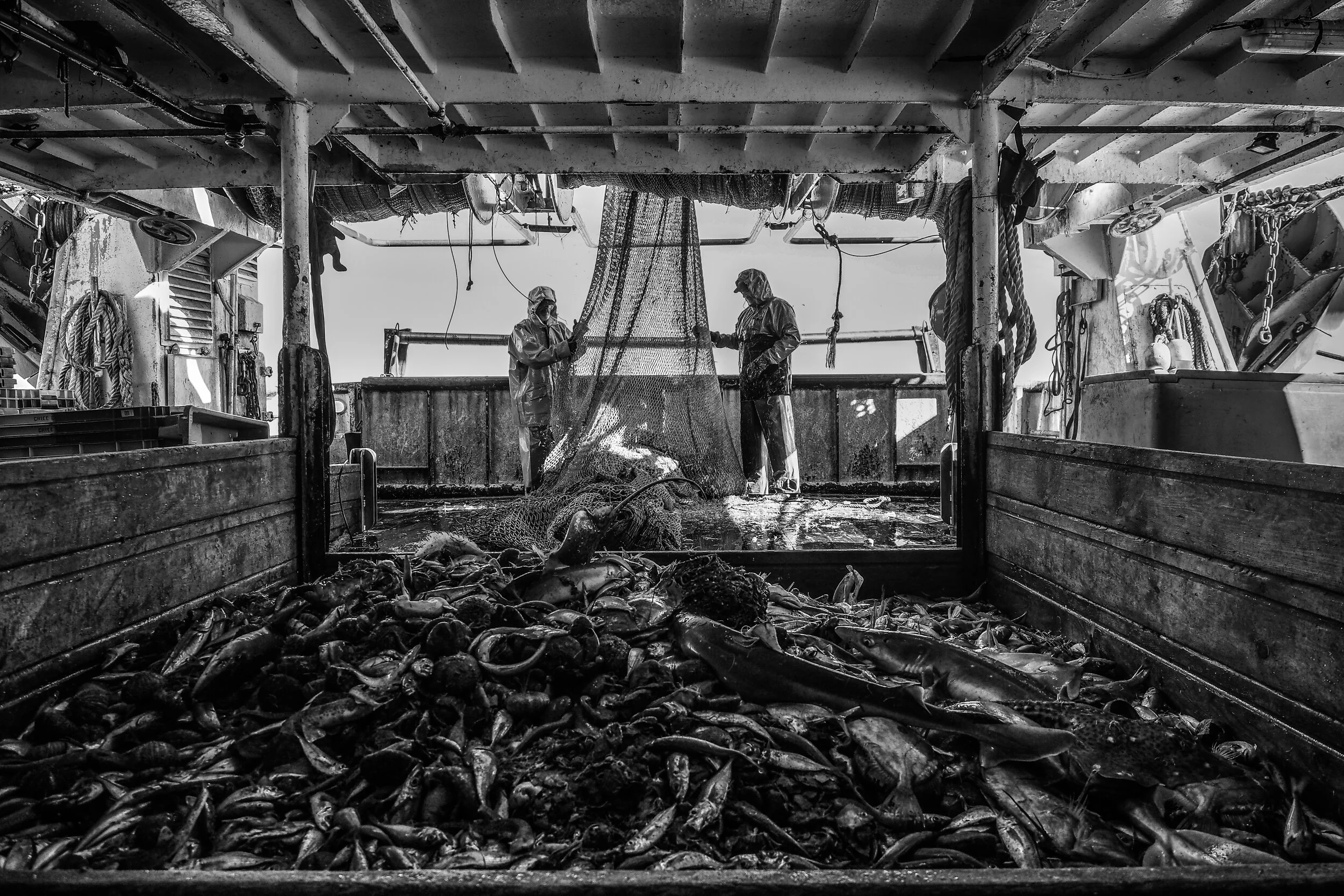
France, 2018. The deck of a trawler fishing vessel after their nets have been pulled aboard with fish from the French Mediterranean Sea. Nets are deployed with a camera and sensor that send information to the bridge of the vessel, indicating the fullness of the nets. Bycatch - animals who are not the fishing target - are numerous. (Selene Magnolia/ CIWF)
What did you learn from this experience?
The neglect is probably what shook me the most from this experience. I learned that such a thing as fish welfare simply does not exist, and that all regulations are blurry. Fish are brutally killed or left agonizing for long without any attention, they are packed while still alive, and this is normalised. Their living conditions are poor but since this is happening underwater it doesn’t bother much. I learned that it’s easy to cause damage or to fish what is not allowed when you’re out at sea. I learned that fishermen literally do whatever they want and cover up the harm because there are no eyes watching. Most importantly, I learned that the suffering of fish is completely invisible to most people. I cannot imagine the amount of fished animals, by-catch and the damage caused by only the one fishing vessel I’ve been on, multiplied by all the fishing boats, big and small, that are operating daily worldwide. We’re literally destroying our habitat and failing to see it.
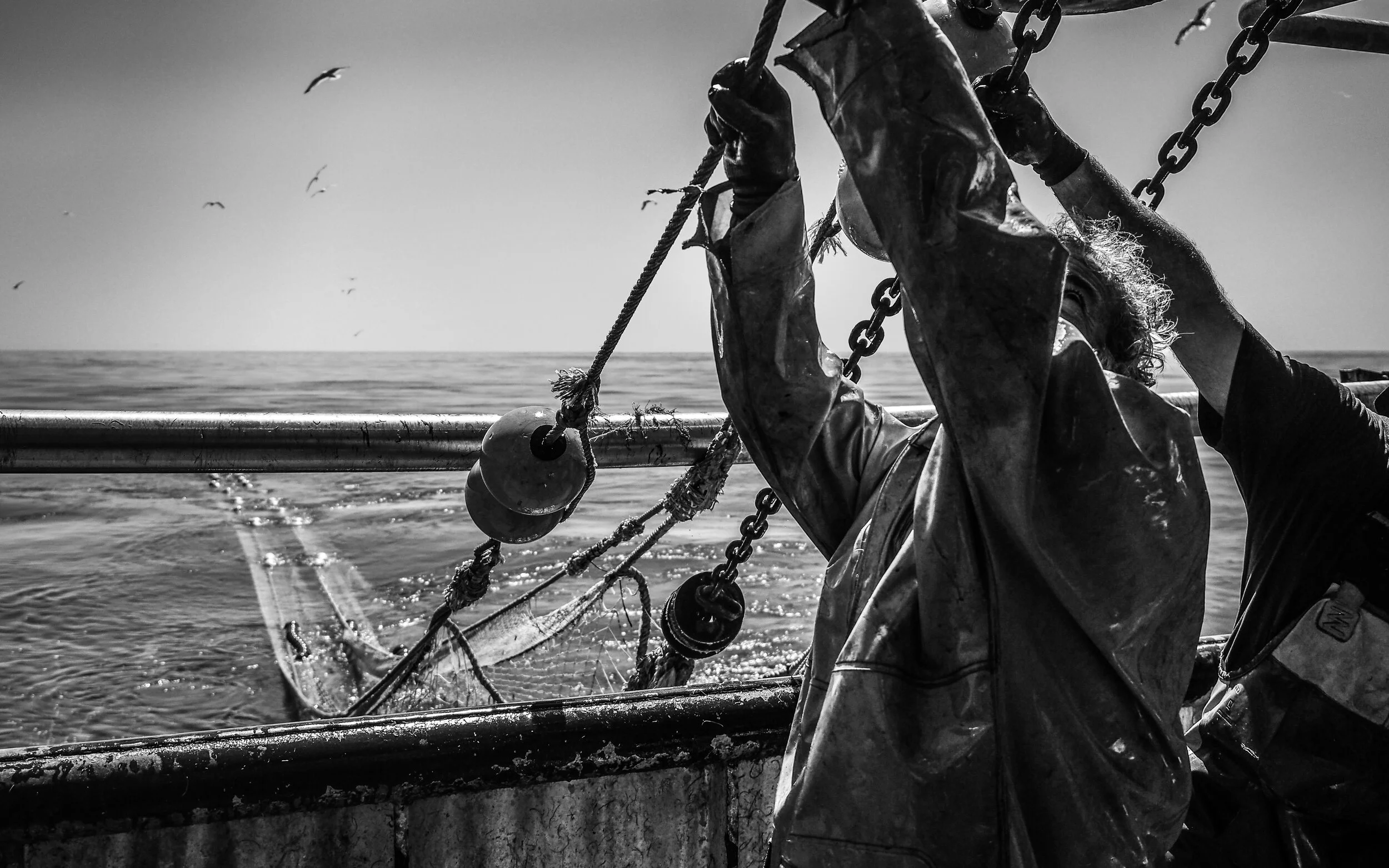
France, 2018. Workers aboard a trawler reel in nets loaded with target fish and bycatch after a few hours of fishing in the French Mediterranean Sea. (Selene Magnolia/ CIWF)
Do fish feel pain?
Questioning whether fish can feel is very anthropocentric. I strongly believe that fish are emotionally intelligent, feel pain and suffer. Why shouldn’t they? They might experience those things in a way that’s different from what we call emotion and feelings, but we should stop recognising as valid only what we can understand.
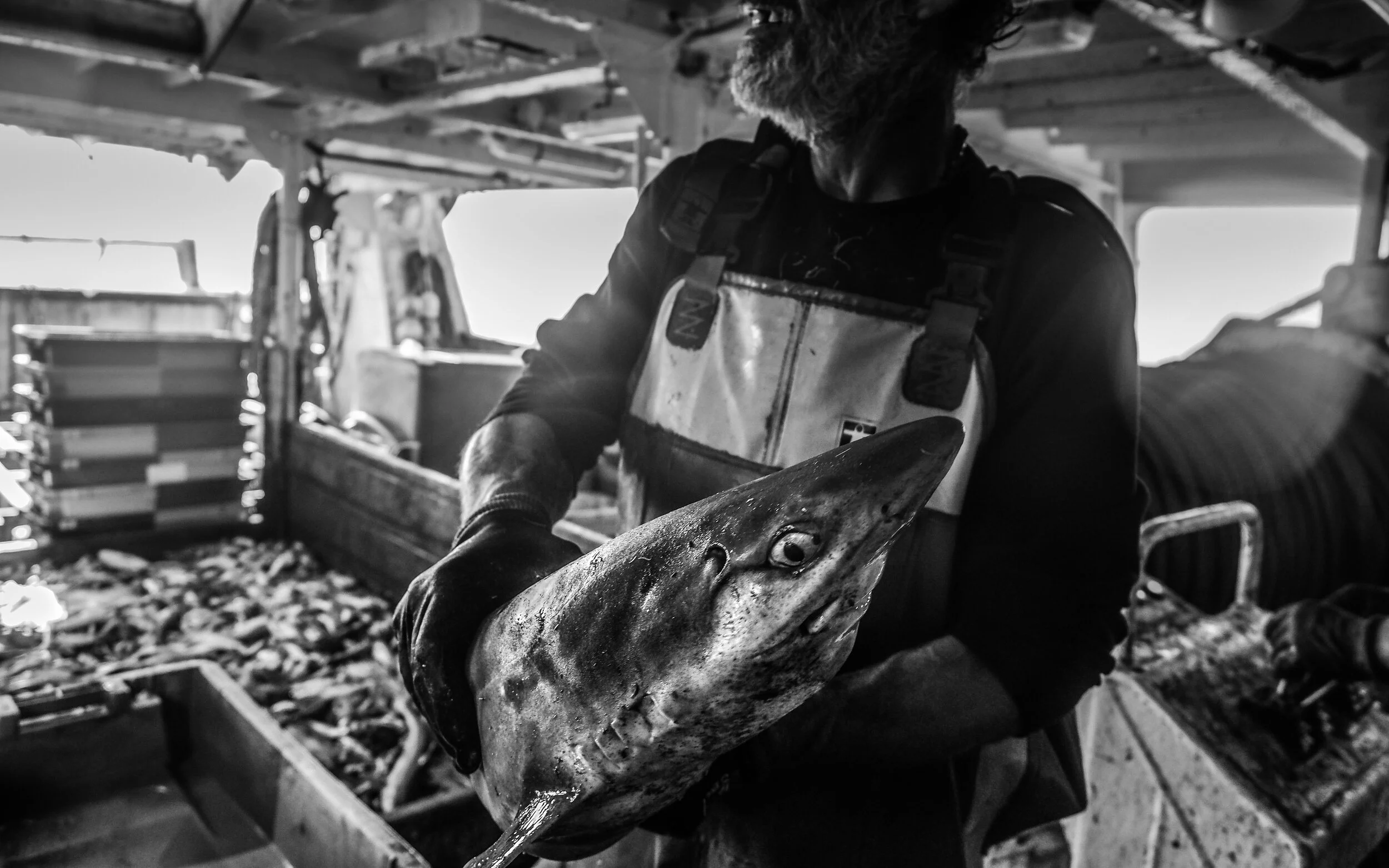
France, 2018. A worker on a trawler holds one of thousands of bycatch - a shark - that has been caught in its nets in the French Mediterranean Sea. The shark will asphyxiate along with the other marine life. The fish are sorted by species and then stored in refrigeration units onboard. (Selene Magnolia/ CIWF)
How can we use photos/videos to educate the public?
Photography is surely a good tool to expose the reality of aquaculture and fishing. It shows all the brutality and the lies of an industry based on oppression and destruction. Visual evidence is fundamental to support campaigns demanding better fish welfare. However, I believe that photography and art go beyond that. My purpose is to put together images that inspire a change of perspective, awareness of what’s around us, and a desire to take action.
I definitely hope for fish welfare standards to improve. But as the fish industry is destroying our planet and causes suffering on many levels, I think that better welfare really is not enough. In fact, it doesn’t even impact many areas that make aquaculture and fishing nasty.
What we need is radical change that comes through radical actions, like refusing to contribute to oppression systems causing human and suffering and environmental damage. I hope that the next steps towards better welfare, sustainability and most importantly the end of the fish industry as it is now don’t come from above but rather from the individual political responsibility of those who can exercise it.
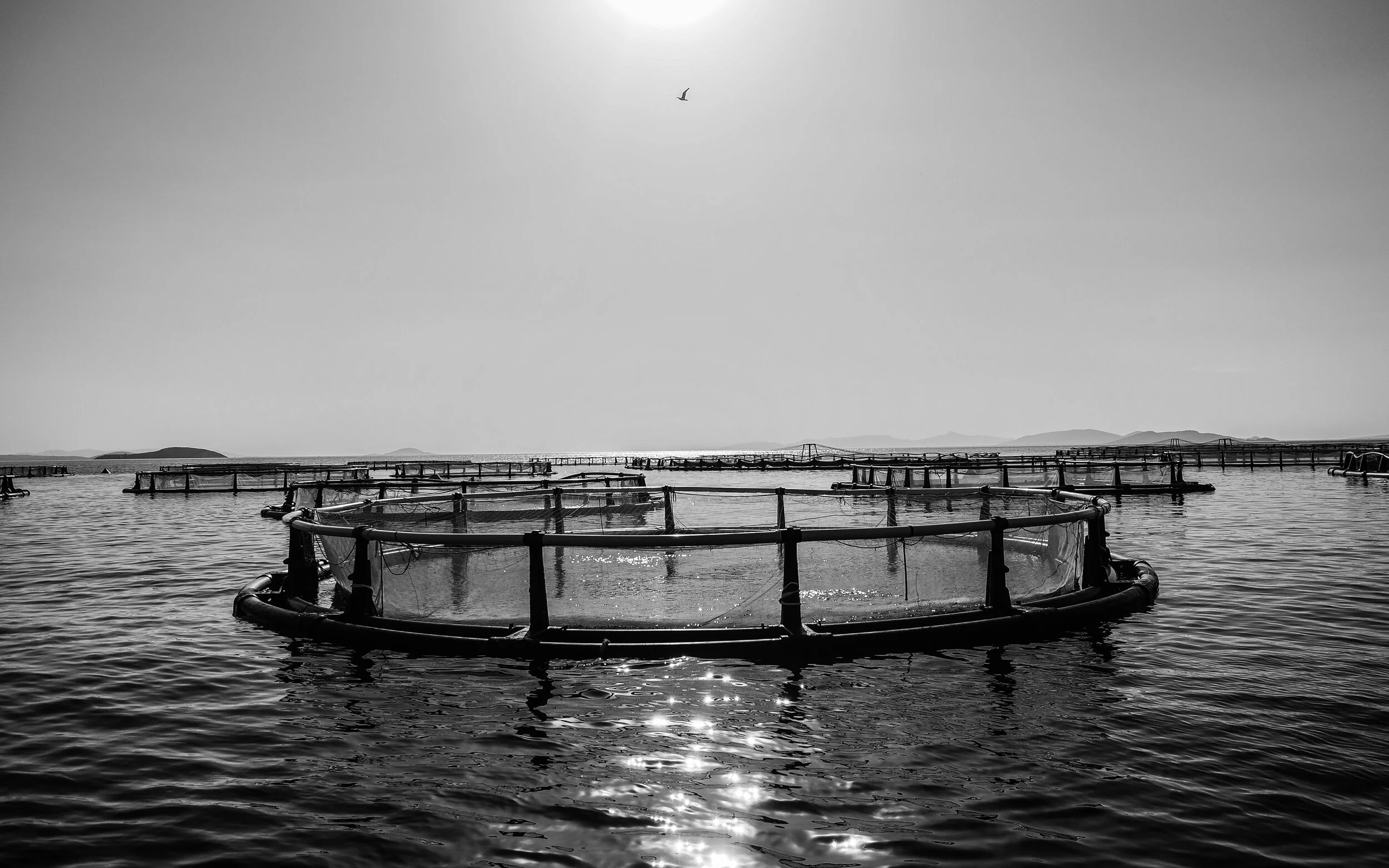
Greece, 2018. Floating pens of a sea bass and sea bream farm. The pens can be a high risk for environmental degradation to the local oceanic ecosystem and lethal to the fish due to overcrowding. (Selene Magnolia/ CIWF)
What is the hope for your work?
I want these topics to become more known, I want people to understand the implications of their choices. It is difficult to photograph something that is difficult to see, however I hope that my work is able to both show reality objectively while also capturing the individuals and the subjectivity of their stories and suffering effectively.
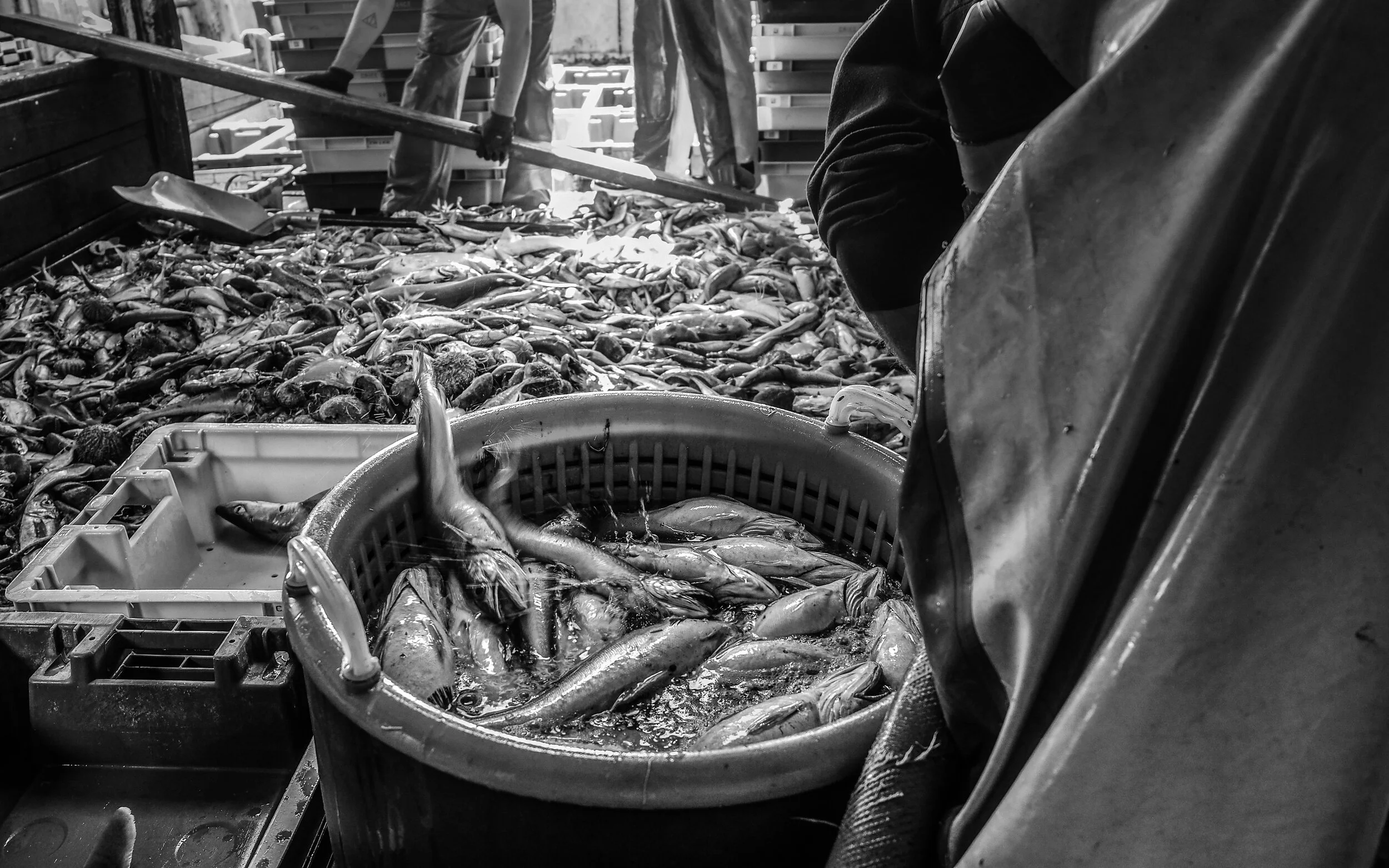
France, 2018. Fish are pulled up from the sea and dumped from trawling nets onto the deck of a fishing vessel. Workers then sort the fish by species. (Selene Magnolia/ CIWF)